
Hear from Our Customers

You’re looking at concrete work because something needs fixing or upgrading. Maybe water pools near your foundation after every storm. Maybe your driveway edges are crumbling and making the whole property look tired. Or maybe you’re ready to add a Belgian block apron that actually makes people slow down when they drive past.
Here’s what matters: the work needs to last. Not just look good for a season, but hold up through winters that crack asphalt and springs that turn clay soil into mush.
Proper concrete curb installation keeps mulch where it belongs, guides water away from your foundation, and creates clean lines that make landscaping pop. A well-installed Belgian block driveway apron adds instant polish and can increase your property value by several thousand dollars. Sidewalk repair done right means no more tripping hazards or water damage eating away at your walkways.
The difference between concrete work that lasts and concrete work that fails in three years comes down to grading, base prep, and understanding how Long Island’s soil behaves when it freezes and thaws.
We’ve spent over 15 years working on properties across Suffolk County. We’re based in Smithtown, and we know exactly what Lake Grove’s clay-heavy soil does to concrete work when it’s not installed correctly.
Your neighbors’ properties were built mostly in the 1950s and 60s. That means foundations settling, drainage systems that weren’t designed for today’s storm intensity, and driveways that were poured before anyone thought about proper base preparation.
We show up with the heavy equipment needed to grade your property correctly the first time. Licensed, insured, and focused on doing the job right instead of doing it fast. You’ll get a clear assessment, a transparent estimate, and work that actually solves the problem instead of covering it up for a few years.

First, we assess your property’s drainage and grading situation. Most concrete problems start with water going the wrong direction, so we figure out where water flows now and where it needs to flow after we’re done.
Next comes excavation and base prep. This is where most contractors cut corners, and it’s why their work fails. We use heavy machinery to remove unstable soil, compact the base properly, and create the right slope for drainage. For Belgian block installations, we build a solid foundation that can handle vehicle traffic without shifting or rutting.
Then we install the concrete, curbing, or masonry flatwork. For Belgian blocks, we use hard joints and proper spacing so the blocks don’t shift when cars roll over them. For concrete curbing, we pour to the right height and finish it so water flows where you want it.
After installation, we make sure grading around the new work directs water away from your foundation and toward proper drainage points. We clean up completely, and you’re left with work that looks sharp and functions correctly.

Ready to get started?
Concrete curb installation creates clean borders between your lawn and garden beds, prevents mulch from washing into the grass, and guides water toward drainage points instead of your foundation. Curbing also makes mowing easier and gives your property defined edges that increase curb appeal.
Sidewalk repair fixes cracked, uneven, or sunken sections that create tripping hazards and let water seep toward your foundation. We don’t just patch the surface—we address the base issues causing the problem so the repair actually lasts.
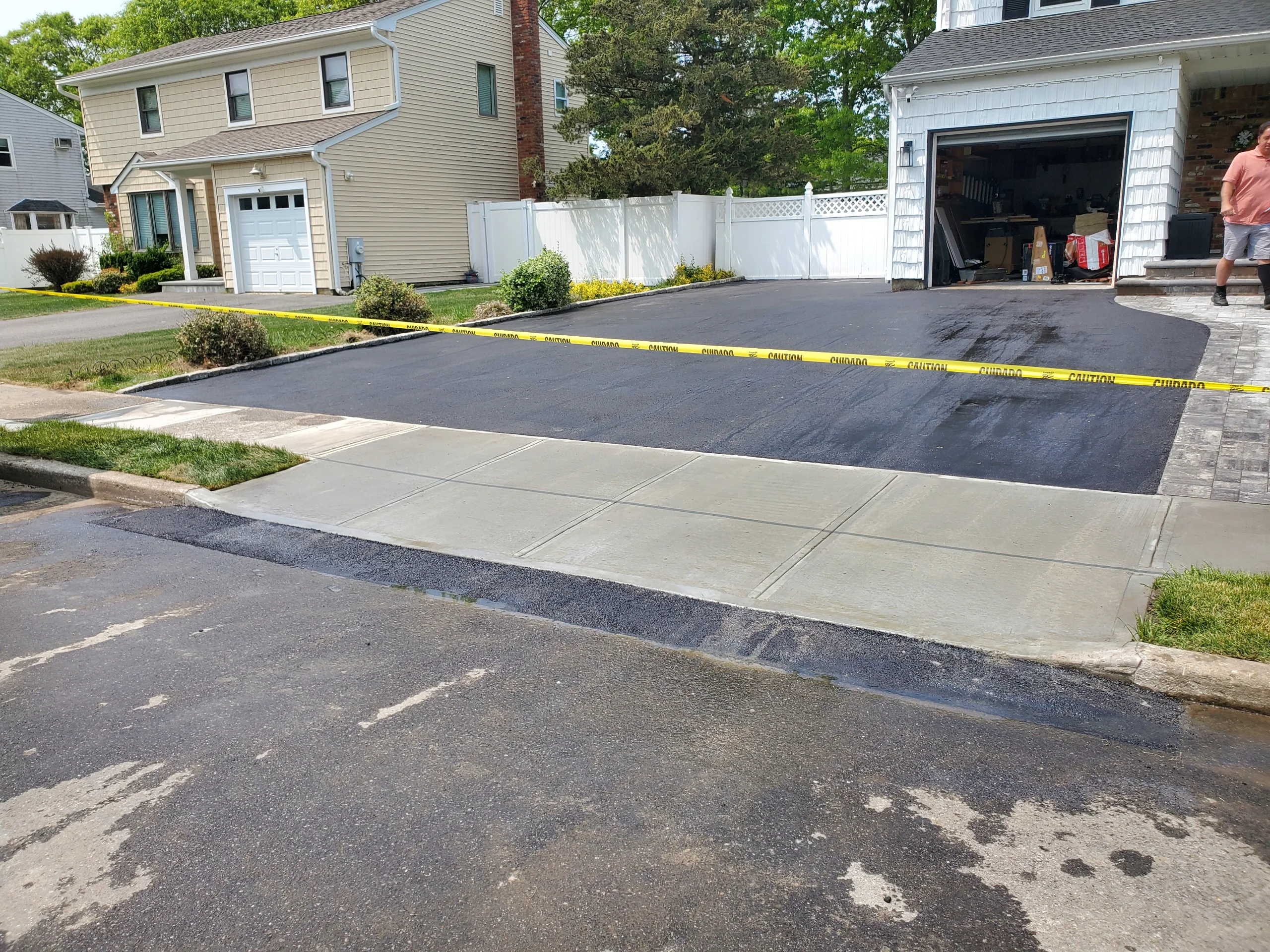
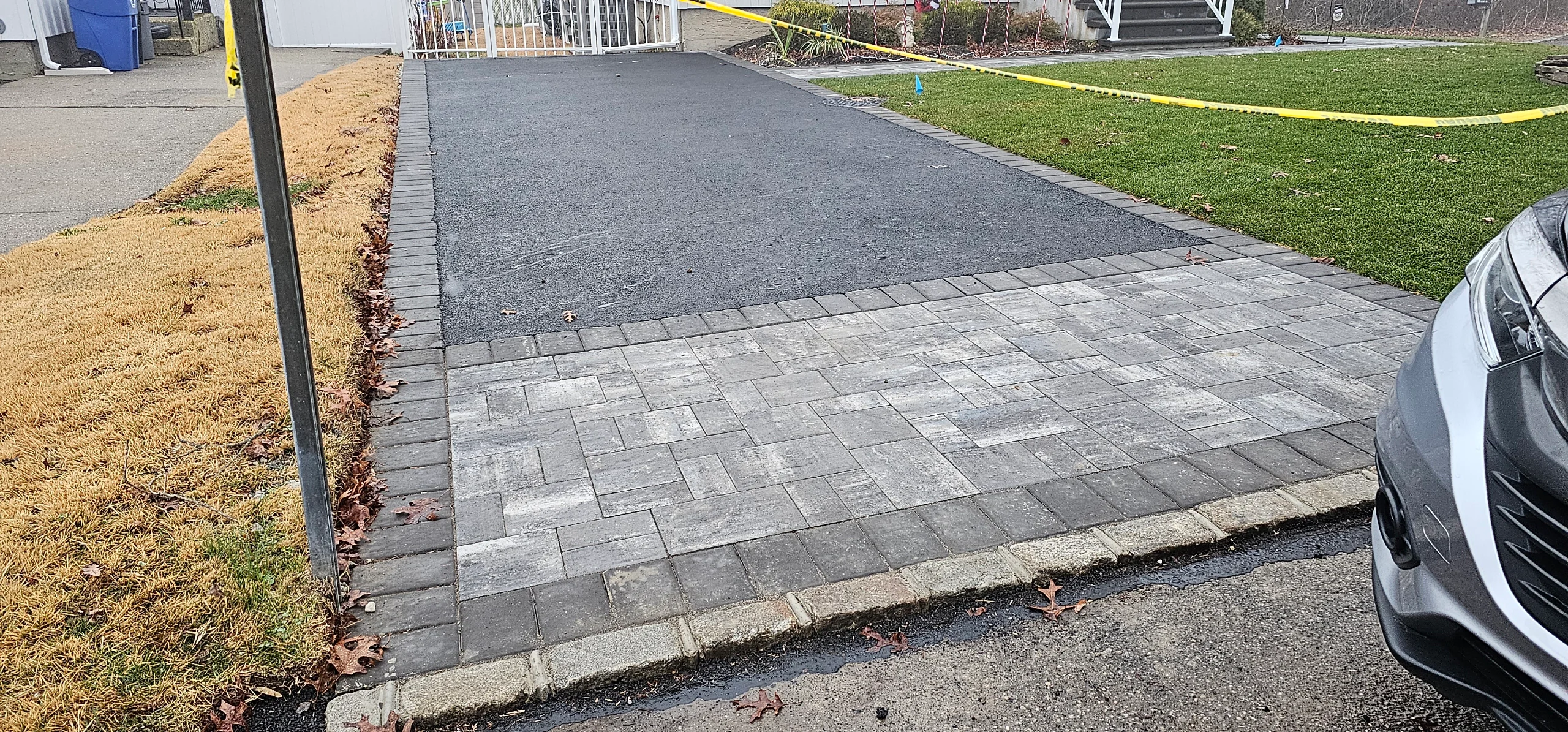
Belgian block driveway aprons add serious visual impact and durability. These installations run $30-70 per square foot because they require precision base work and proper joint setting. When done correctly, they handle heavy vehicle traffic for decades and add $1,000-$3,000 in property value.
Local concrete grading and prep work is critical in Lake Grove because of Suffolk County’s soil composition. Clay-heavy soil expands when wet and contracts when dry, which destroys concrete that’s not installed on a properly prepared base. We use the right equipment to compact soil, create stable bases, and ensure proper drainage slope.
Masonry flatwork includes patios, walkways, and other horizontal concrete surfaces. The key is creating a base that won’t settle unevenly and grading that prevents water from pooling on the surface or seeping underneath where it can cause frost heave damage.
Properly installed concrete work should last 20-30 years in Suffolk County, even with our freeze-thaw cycles and coastal moisture. The lifespan depends entirely on base preparation and drainage design.
Concrete fails when water gets underneath and freezes, causing the base to heave and crack the surface. Lake Grove’s clay soil holds water, which makes proper grading and base compaction critical. If the base isn’t stable and water isn’t directed away from the concrete, you’ll see cracking within 3-5 years.
Belgian block installations can last even longer—often 40+ years—because the individual blocks can shift slightly without cracking. But they still need a solid base and proper drainage to prevent rutting and settling. The blocks themselves are incredibly durable; it’s the foundation underneath that determines how long the installation stays level and functional.
Concrete curbing is poured in place to create a continuous border, while Belgian blocks are individual granite stones set in a pattern. Both serve similar purposes but have different looks, costs, and installation requirements.
Concrete curbing costs less and installs faster. It works well for creating clean edges around garden beds, guiding water flow, and separating lawn from landscaping. It’s durable and low-maintenance, but if it cracks, you’ll see a visible line across the curb.
Belgian blocks cost significantly more—usually $30-70 per square foot—but they add a high-end look that increases property value. They’re popular for driveway aprons because they create a polished entrance and can handle heavy vehicle traffic without cracking. Belgian blocks need a deeper, more stable base than concrete curbing, and they require hard joints to prevent shifting. When installed correctly, they’re nearly indestructible.
Water pools when your property’s grading directs water toward low spots instead of away from them. Lake Grove’s clay-heavy soil makes this worse because clay doesn’t absorb water quickly, so it sits on the surface until it finds somewhere to go.
Most properties built in the 1950s and 60s have settled over time, creating new low spots that weren’t there originally. Add in landscaping changes, soil compaction from foot traffic, and drainage systems that weren’t designed for today’s storm intensity, and you get standing water that threatens your foundation and kills your grass.
Fixing drainage problems requires regrading the property to create positive slope away from your foundation and toward drainage points. Sometimes that means installing French drains to intercept groundwater before it surfaces. Sometimes it means adding concrete curbing or swales to direct surface water. The solution depends on your specific property’s topography and soil conditions, but it always starts with proper grading using heavy equipment that can move and compact soil correctly.
Belgian block driveway aprons typically cost $30-70 per square foot in Suffolk County, depending on the size of the apron, the pattern you choose, and site conditions. A standard apron might add $1,000-$3,000 to your property value while creating a high-end entrance.
The cost is higher than concrete because Belgian blocks require more labor and precision. We excavate deeper to create a stable base, use specific gravel and sand layers to prevent shifting, and set each block individually with hard joints that can handle vehicle weight. Cutting corners on base prep leads to rutting and shifting within a few years, which is why you see some Belgian block installations that look terrible.
The investment makes sense if you’re looking to increase curb appeal in Lake Grove’s upscale neighborhoods where property values average over $550,000. A well-installed Belgian block apron adds instant polish and durability that asphalt or standard concrete can’t match. It’s one of those upgrades that makes people slow down when they drive past your house.
We can often repair individual sections if the damage is localized and the base underneath is still stable. But if multiple sections are cracked or sunken, or if the base has failed, replacing the entire sidewalk usually makes more sense.
Sidewalk damage happens when the base settles unevenly, tree roots push up from below, or water erodes the soil underneath. If only one or two sections are affected and the surrounding concrete is still level and solid, we can remove and replace just those sections. We’ll excavate to stable soil, rebuild the base properly, and pour new concrete that matches the existing height and finish.
If the whole sidewalk is showing age—multiple cracks, uneven sections, surface scaling—replacing it all at once gives you a uniform appearance and ensures the entire base is properly prepared. Patching old concrete often creates a patchwork look that doesn’t age well. We’ll assess your specific situation and give you an honest recommendation about whether repair or replacement makes more sense for your property and budget.
Look for contractors who own heavy grading equipment, understand Suffolk County’s soil conditions, and can explain exactly how they’ll handle drainage. Those three factors separate contractors who do lasting work from contractors who create problems you’ll pay to fix in three years.
Proper concrete work requires excavation and base preparation that you can’t do with hand tools. Contractors who show up without machinery are limited in how well they can prepare the site. Ask specifically about their grading process and what equipment they’ll use.
Make sure they’re licensed and insured in New York. Ask how they handle Long Island’s freeze-thaw cycles and clay soil. A good contractor will talk about base depth, compaction methods, and drainage slope before they talk about the concrete itself. They should assess your property’s drainage situation and explain how their work will direct water away from your foundation.
Get a detailed written estimate that breaks down excavation, base prep, materials, and installation. Be skeptical of prices that seem too low—they usually mean shortcuts on base preparation that lead to early failure. And ask for references from jobs they completed at least five years ago so you can see how their work holds up over time.
Other Services we provide in Lake Grove