
Hear from Our Customers

Cracked driveways and settling sidewalks don’t just look bad. They tell potential buyers that bigger problems are hiding underneath. In Kings Park, where the median home value sits at $614,457, that’s a risk you can’t afford to take.
Long Island’s sandy soil and high water table create drainage issues that most contractors don’t understand. Water doesn’t just disappear—it travels sideways, pools under concrete, and freezes when temperatures drop. That’s when you get the cracks, the settling, and the trip hazards that make your home look neglected.
Professional concrete grading fixes the problem at the source. Heavy machinery creates the slope your property needs to move water away from foundations and hardscapes. The right base preparation—deep excavation, proper aggregate, and compaction that accounts for Suffolk County’s soil conditions—means your concrete stays level for decades, not years.
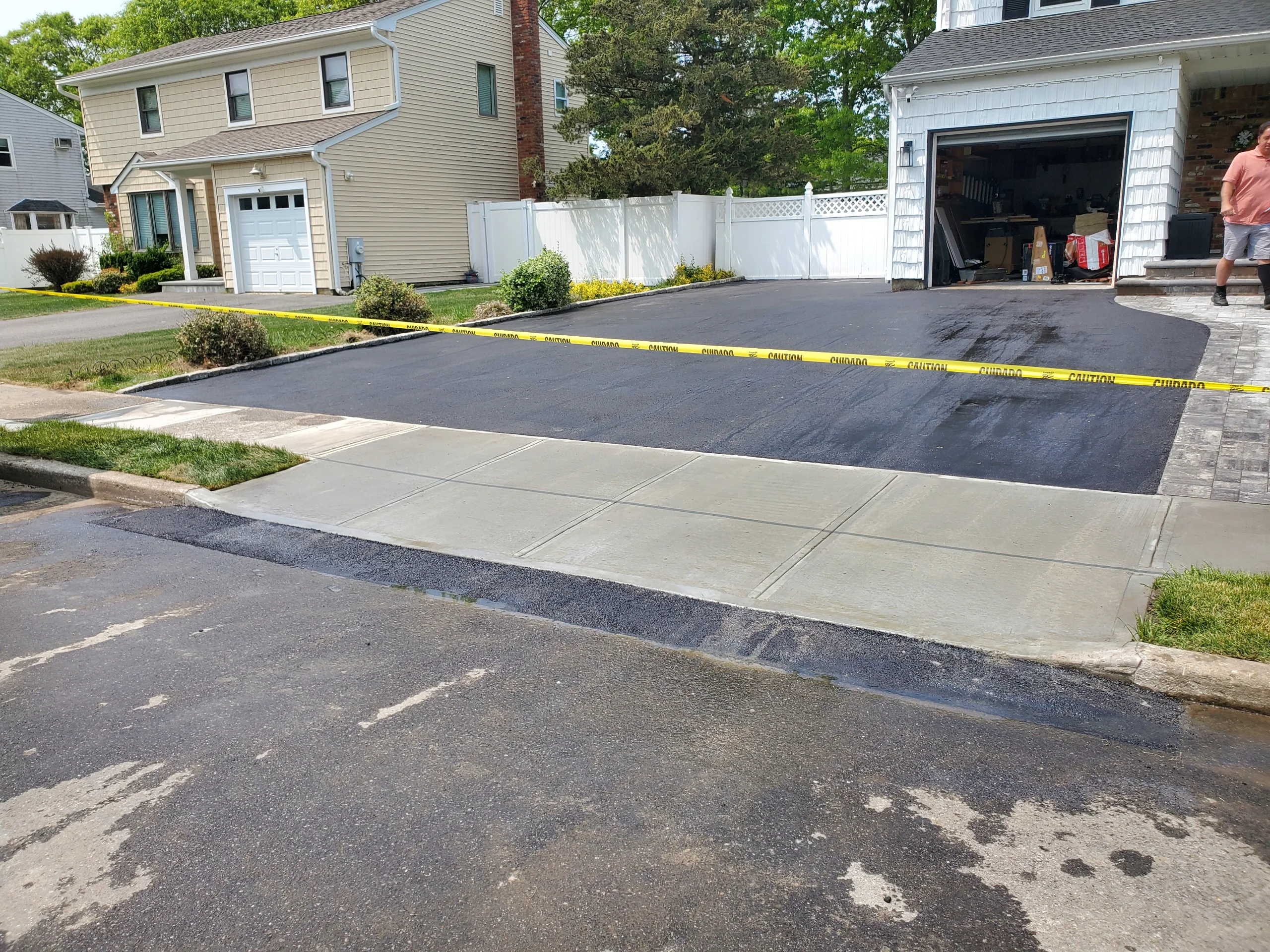
A Belgian block driveway apron adds more than curb appeal. It’s a structural upgrade that handles the weight of vehicles while giving your entrance the polished look that fits Kings Park’s high-end neighborhoods. When it’s done right, it increases your property value and eliminates the maintenance headaches that come with cheap installations.
We’re based in Smithtown, which means we’re not learning about Long Island’s conditions on your dime. We know what happens when you skip base prep in sandy soil. We’ve seen what freeze-thaw cycles do to concrete that wasn’t installed with the right materials.
Our equipment includes excavators and grading machinery sized for residential properties in Kings Park. We’re fully licensed and insured, and every client gets an ACCORD certificate of insurance before work starts. That’s not extra—it’s standard.
Suffolk County homeowners and property managers call us because we handle the full scope: excavation, grading, concrete installation, and masonry flatwork. You’re not coordinating between multiple crews or wondering who’s responsible when something doesn’t line up. One team, one timeline, one point of contact.

First, we assess your property’s drainage and soil conditions. Kings Park sits in an area where water table levels and soil composition vary block by block. We look at how water currently moves across your property, where it’s pooling, and what’s causing your concrete to crack or settle.
Next comes excavation and grading. This is where heavy machinery makes the difference. We dig deep enough to reach undisturbed soil, then build up the base in layers—each one compacted to create a stable platform that won’t shift over time. The slope is calculated to move water away from your foundation and hardscapes, accounting for Long Island’s frequent rainfall.
Base preparation is where most contractors cut corners. We use aggregate gradations that lock together under compaction, creating a foundation that can handle both the weight of vehicles and the expansion that happens during freeze-thaw cycles. This step takes longer, but it’s the reason your concrete doesn’t crack in two years.
Finally, we install the concrete or masonry. For Belgian block aprons, that means a reinforced concrete base, a mortar bed, and mortar-jointed granite blocks—about 12 inches thick total, built to last. For sidewalk repair or concrete curb installation, we match the existing grade and finish, so the new work blends seamlessly with what’s already there.

Ready to get started?
Concrete curb installation creates a clean edge between your lawn and driveway while improving drainage. In Kings Park, where properties are close together and water runoff affects your neighbors, proper curbing directs water where it needs to go. It’s functional first, aesthetic second.
Sidewalk repair addresses trip hazards and prevents further damage. When one section settles, it puts stress on adjacent slabs. We remove the damaged concrete, regrade the base, and pour new sections that match your existing walkway. The goal is to make the repair invisible while fixing the drainage issue that caused the problem.
Belgian block driveway aprons are a permanent upgrade. These granite blocks handle the transition from street to driveway better than asphalt or poured concrete because they’re designed to flex slightly without cracking. In areas with freeze-thaw cycles like Long Island, that flexibility matters. The installation requires precision—three layers, proper mortar joints, and a thickness that can support vehicle weight without settling.
Masonry flatwork includes patios, walkways, and retaining walls built to handle Suffolk County’s climate. We use materials that resist salt air corrosion and temperature swings. Every project starts with proper base prep and ends with joints that allow for thermal expansion, so you’re not dealing with cracks after the first winter.
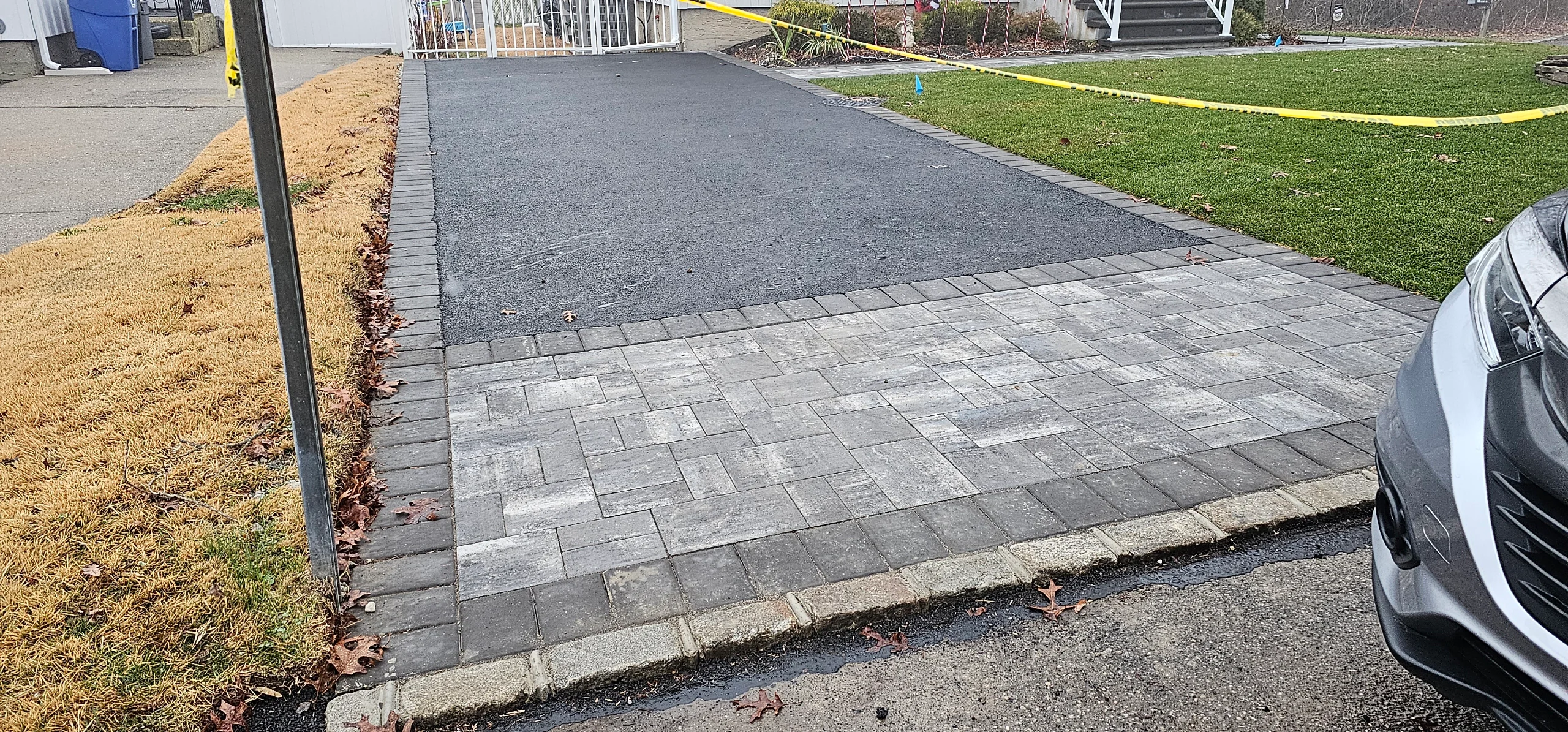
Most concrete curb installations take two to three days, depending on the length and site conditions. Day one is excavation and base prep—we dig out the existing soil, grade for drainage, and compact the base material. This step can’t be rushed because it determines how long your curbing lasts.
Day two is forming and pouring. We set forms to create the curb shape, pour the concrete, and finish the surface. The concrete needs 24 to 48 hours to cure before you can drive near it or put weight on it.
Weather affects the timeline. If we’re working during Long Island’s wet season, we may need extra time for the base to dry out before pouring. We’ll let you know upfront if conditions are going to delay the schedule.
Belgian blocks are individual granite pieces, which means they can shift slightly without cracking. Regular poured concrete is one solid slab—when the ground underneath moves or freezes, the concrete cracks. That’s just physics.
The installation is more involved. A proper Belgian block apron has three layers: a reinforced concrete base, a mortar bed, and the granite blocks set in mortar. The total thickness is about 12 inches, built on undisturbed soil. This creates a structure that can handle heavy vehicles and Long Island’s freeze-thaw cycles without falling apart.
Granite also handles salt and moisture better than concrete. In Kings Park, where you’re dealing with coastal humidity and winter road salt, that durability shows up over time. Belgian blocks don’t flake, spall, or deteriorate the way poured concrete does after a few hard winters.
Kings Park sits on sandy soil with a high water table. When water gets under your concrete and freezes, it expands. That expansion pushes the slab up. When it thaws, the slab settles—but not always evenly. Over time, this creates cracks and uneven surfaces.
Poor drainage makes it worse. If your property doesn’t have the right slope, water pools under driveways and sidewalks instead of running off. Sandy soil lets water travel sideways, so even if the surface looks dry, moisture is still moving underneath.
The fix is proper base preparation and grading. We excavate deep enough to reach stable soil, then build up layers of aggregate that drain water away from the concrete. The base is compacted in stages, so it doesn’t settle later. This approach costs more upfront, but it’s the reason some concrete lasts 30 years while other installations crack in three.
Sidewalk repair typically runs $8 to $15 per square foot, depending on how much base work is needed. If the concrete cracked because of settling, we’re not just replacing the slab—we’re fixing the drainage issue that caused it. That means excavation, regrading, and base compaction before we pour new concrete.
Smaller repairs cost more per square foot because mobilization and setup are the same whether we’re fixing 10 square feet or 100. If you have multiple sections that need work, it’s usually more cost-effective to handle them all at once.
We’ll give you a detailed estimate after looking at your property. The price depends on access (can we get equipment close to the work area?), the condition of the existing base, and whether we need to match a specific finish or texture. No surprises, no vague ranges—just a clear number based on what your property actually needs.
Spring through fall—April to October—gives you the best conditions for concrete work in Kings Park. The ground is softer, which makes excavation easier. Temperatures are warm enough for concrete to cure properly, and you’re less likely to hit weather delays.
Summer is the busiest season, so if you’re planning work for June through August, schedule early. Contractors book up fast, and material availability can be tight during peak season.
We can work in cooler weather, but it requires extra steps. Concrete needs to stay above 50 degrees while curing, which means blankets, heaters, or additives when temperatures drop. That adds cost and complexity. If your project isn’t urgent, waiting until spring usually makes more sense.
Most concrete work in Kings Park requires a permit, especially if you’re changing drainage patterns or working near the street. Driveway aprons, curb installations, and sidewalk replacements typically need approval from the Town of Smithtown building department.
We handle the permit process as part of the project. That includes submitting plans, coordinating inspections, and making sure the work meets local codes. Suffolk County has specific requirements for base depth, drainage, and setbacks—we know what inspectors look for because we’ve been doing this locally for years.
Skipping permits is a risk. If the town finds unpermitted work, they can make you tear it out and start over. When you sell your property, unpermitted improvements can hold up the closing or reduce your home’s value. It’s not worth the headache. We pull permits, do the work right, and make sure everything passes inspection the first time.
Other Services we provide in Kings Park