
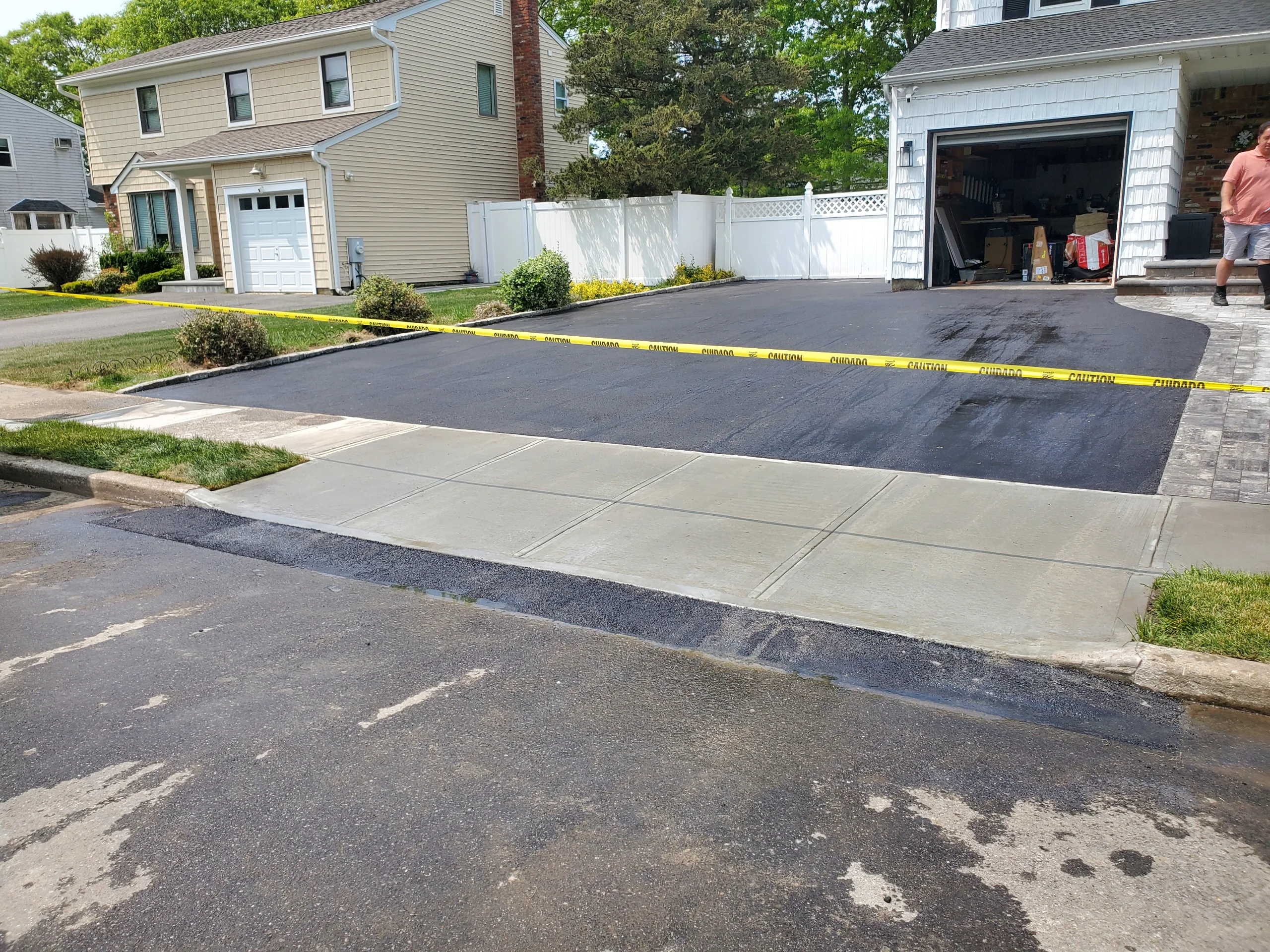
Hear from Our Customers

Your driveway, walkways, and curbing aren’t just functional. They’re the first thing people see when they pull up to your home—and in Hampton Bays, where median property values sit around $605,000, that first impression matters.
Cracked concrete doesn’t just look bad. It collects water, creates tripping hazards, and signals to buyers that maintenance has been deferred. When water pools under slabs during winter, it freezes, expands, and damages adjacent sections. One crack becomes three.
Professional concrete work fixes drainage at the source. Proper grading moves water away from your foundation and prevents the freeze-thaw damage that wrecks driveways across Suffolk County every winter. Belgian block aprons add traction where your driveway meets the street and create a clean visual transition that buyers notice. Sidewalk repair eliminates liability before someone gets hurt on your property. This is about protection, safety, and making sure your home’s exterior matches its value.
We operate out of Smithtown and serve homeowners throughout Suffolk County. We’re not a franchise or a crew that shows up once and disappears—we’re here, and we’re coming back for the next job.
Hampton Bays has specific drainage challenges. Properties near the water deal with high water tables. Inland homes sit on sandy soil that shifts. We use GPS-guided graders and professional excavation equipment to get the slope right the first time, so water moves where it’s supposed to go.
You’re not hiring a handyman with a wheelbarrow. You’re hiring a team with bulldozers, compactors, and the equipment needed to prep a site correctly. That’s what makes concrete last in this climate.

We start with a site visit to assess grading, drainage, and any existing damage. If your driveway slopes toward your foundation or water pools near your walkway, we identify it before we dig.
Next comes excavation and prep. We remove old concrete if needed, grade the base using heavy machinery, and compact the soil to prevent settling. For Belgian block driveway aprons, we set each granite block by hand to ensure a tight fit and proper alignment. For sidewalk repair or new pours, we build forms, reinforce with rebar where needed, and pour concrete mixed for Long Island’s freeze-thaw cycles.
After the pour, we finish the surface based on your preference—broom finish for traction, smooth for a clean look. Then it cures. Depending on the scope, you’re looking at a few days to a week before you can use the surface fully.
We handle permits if Suffolk County requires them for grading work. We don’t leave until the site is clean and the job meets code. You get updates throughout, and you’ll know the timeline before we start.

Ready to get started?
You’re getting full-service concrete and masonry work. That means driveways, walkways, patios, curbing, and Belgian block aprons. We handle grading and excavation with professional equipment—not hand tools. If your property needs drainage correction, we fix the slope so water moves away from structures.
Sidewalk repair is common in Hampton Bays, especially on older properties where tree roots or settling have caused sections to lift. We remove damaged slabs, regrade the base, and pour new concrete that’s level and code-compliant. This eliminates trip hazards and liability.
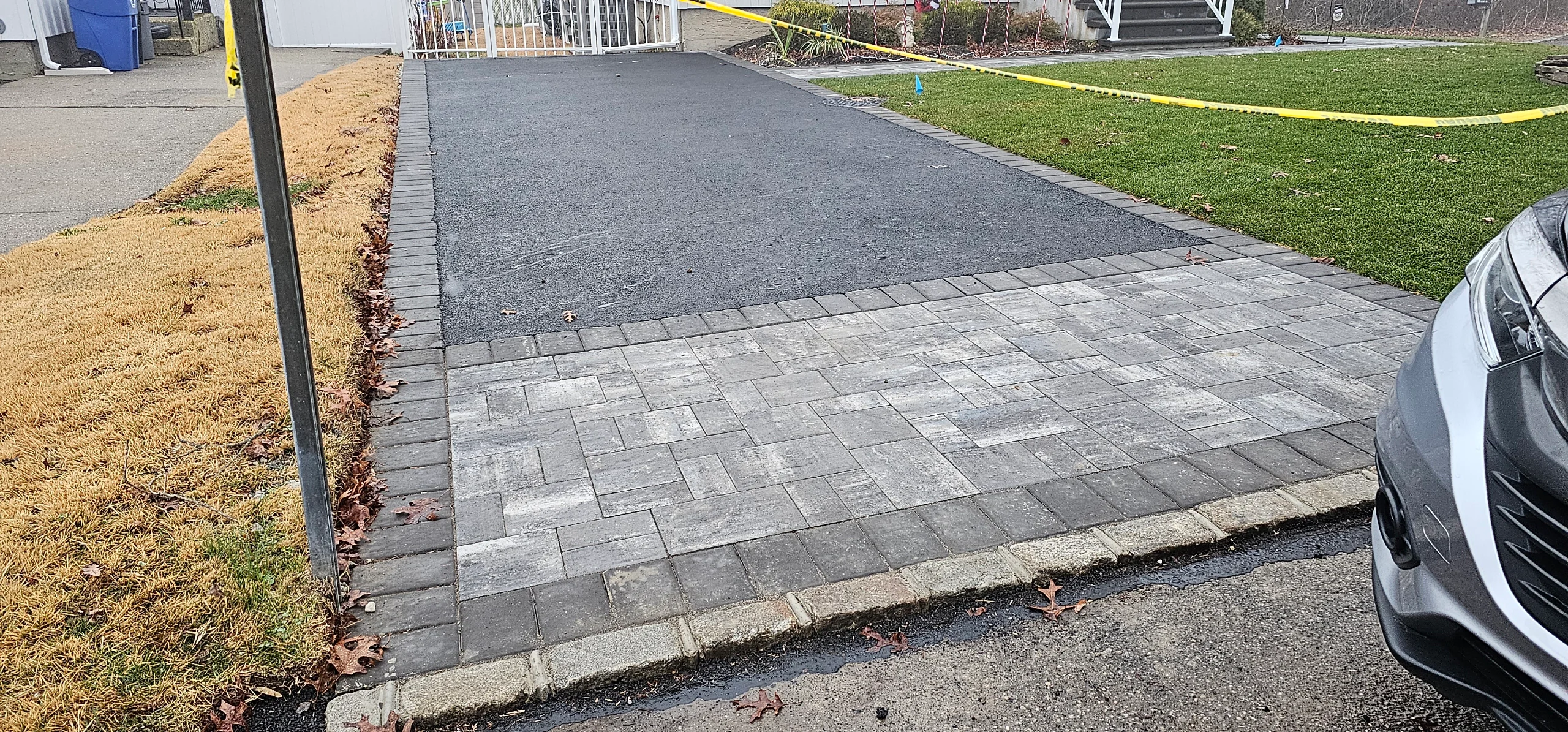
Belgian block aprons are popular here because they’re durable and they look sharp. These are heavy granite blocks that frame the end of your driveway where it meets the street. They add curb appeal and they last decades. We source blocks locally from Long Island stone yards and install them with the same precision we use for structural work.
For properties with grading issues—water pooling near the foundation, erosion along driveways, uneven settling—we bring in excavators and compactors to regrade the site properly. This isn’t cosmetic. It’s structural. And in a market where property taxes average over $7,000 annually, protecting your investment makes sense.
You can walk on new concrete after about 24 to 48 hours, but you shouldn’t drive on it for at least seven days. Full strength takes about 28 days, though most driveways can handle normal vehicle traffic after a week.
If you drive on it too early, you risk cracking or surface damage that won’t show up immediately but will shorten the lifespan of the slab. We’ll give you a specific timeline based on weather conditions and the mix we use. Cooler temperatures slow curing, so jobs completed in late fall or early spring may need a few extra days.
During that first week, keep heavy equipment, trailers, and delivery trucks off the new concrete. Regular cars and SUVs are fine after seven days as long as the surface feels solid and there’s no give when you press on it.
It depends on the scope of the project. Suffolk County requires permits for land grading and excavation work, especially if you’re changing drainage patterns or working near property lines. For basic concrete repairs like replacing a section of sidewalk, you typically don’t need a permit.
For new driveways, driveway extensions, or significant grading work, you’ll likely need to pull a permit and submit a site plan. We handle that process if it’s required. The county wants to make sure water runoff doesn’t impact neighboring properties and that the work meets local building codes.
If you’re adding a Belgian block apron or doing curb work in the right-of-way near the street, there may be additional requirements. We check with the town before starting any job that could involve permits, so you’re not dealing with fines or having to redo work later.
An apron is the section of your driveway that connects to the street. It’s usually the first 10 to 15 feet, and it takes the most abuse—heavy vehicles, snowplows, constant traffic. That’s why many homeowners in Hampton Bays install Belgian block aprons instead of pouring concrete in that section.
Belgian blocks are thick granite pieces that hold up better than concrete in high-traffic areas. They don’t crack as easily, they provide better traction, and they add a finished look that plain concrete doesn’t. You’ll see them on higher-end properties throughout Suffolk County because they last and they look intentional.
A regular driveway is typically one continuous concrete pour from the street to your garage. An apron with Belgian blocks creates a transition zone that’s more durable and visually distinct. It also makes future repairs easier—if the apron gets damaged, you’re replacing blocks, not cutting out and repouring a section of concrete.
Proper grading is everything. Before we pour, we use GPS-guided equipment to set the slope so water drains away from your home and toward the street or a drainage area. Concrete should slope at least 1/8 inch per foot—that’s enough to move water without being noticeable when you’re walking or driving on it.
If your property has drainage issues, we may need to regrade the base or install a drainage system before pouring concrete. On some Hampton Bays properties, especially near the water, the water table is high and soil doesn’t absorb runoff quickly. In those cases, we’ll recommend a French drain or channel drain to move water off the surface.
We also make sure the subbase is compacted correctly. If soil settles unevenly after the pour, you’ll get low spots where water collects. That leads to freeze damage in winter. Compaction prevents settling, and proper slope prevents pooling. Both are non-negotiable if you want concrete that lasts.
If the damage is isolated to one or two sections, we can remove and replace just those slabs. This works well for driveways where tree roots have lifted a section or where one area has cracked but the rest is still solid.
We cut out the damaged section, regrade and compact the base, and pour new concrete to match the height and finish of the existing driveway. The seam where old meets new will be visible, but it’s clean and it’s a lot cheaper than replacing the entire driveway.
If more than half the driveway is cracked, settling, or showing surface damage, replacement usually makes more sense. Patching multiple sections gets expensive, and you’ll still have an aging driveway with a patchwork appearance. We’ll walk the site with you and give you an honest assessment of whether repair or replacement is the better move based on the condition of the concrete and your budget.
Concrete cracks because it shrinks as it cures, because the ground beneath it settles or shifts, or because freeze-thaw cycles create pressure inside the slab. You can’t prevent all cracking, but you can minimize it with proper prep and materials.
We use control joints—intentional shallow cuts in the concrete—to control where cracks form. If the slab is going to crack, it’ll crack along the joint line where it’s less visible. We also reinforce with rebar or wire mesh on larger pours to hold the concrete together if minor cracking does occur.
The base matters just as much as the concrete itself. If the soil isn’t compacted properly, the slab will settle unevenly and crack along stress points. We compact in layers using heavy equipment to prevent that. And we use concrete mixes designed for Long Island’s climate, which means they’re formulated to handle freeze-thaw cycles without breaking apart. Cheap concrete cracks faster. The right mix, the right base, and the right grading give you the longest lifespan possible.
Other Services we provide in Hampton Bays