
Hear from Our Customers

Water pooling near your foundation isn’t just ugly. It’s expensive. And on Long Island, where clay-heavy soil holds moisture and freeze-thaw cycles crack poorly installed concrete within a few years, you can’t afford to get grading wrong.
When concrete work is done right, you’re not calling someone back in three seasons to fix sunken sections or standing water. Your driveway apron sits level. Your sidewalks stay even. Water moves away from your house the way it’s supposed to.
That’s what proper grading does. It protects your foundation, eliminates trip hazards, and keeps your property looking sharp year-round. You get a surface that handles Long Island weather without cracking, shifting, or turning into a maintenance headache. And if you’re thinking about selling, buyers notice clean curbs, level walkways, and driveways that don’t look like they’re sinking into the ground.
We’ve been handling property maintenance across Suffolk County for years. We’re based in Smithtown, fully licensed and insured, and we’ve seen what happens when concrete gets installed without accounting for local conditions.
Centereach sits in an area where drainage matters more than most homeowners realize. The soil composition, seasonal moisture, and freeze-thaw patterns here will destroy improperly prepped surfaces faster than you’d think. We use heavy machinery to grade correctly the first time, so you’re not dealing with water damage or cracked slabs two winters later.
You’re hiring people who understand the difference between doing it fast and doing it right. We show up on time, communicate clearly, and don’t leave until the job meets the standard you’re paying for.

First, we assess your property. That means looking at existing drainage, soil conditions, and what needs to happen for water to move away from your foundation. If you’ve got pooling issues or uneven surfaces, we identify why before we touch anything.
Next comes grading and prep. This is where most companies cut corners, and it’s why you see driveways sinking or sidewalks cracking after one winter. We use the right equipment to create a 2-5% slope away from structures—the standard that actually works for Long Island’s soil and weather. Base materials get compacted properly so nothing shifts or settles over time.
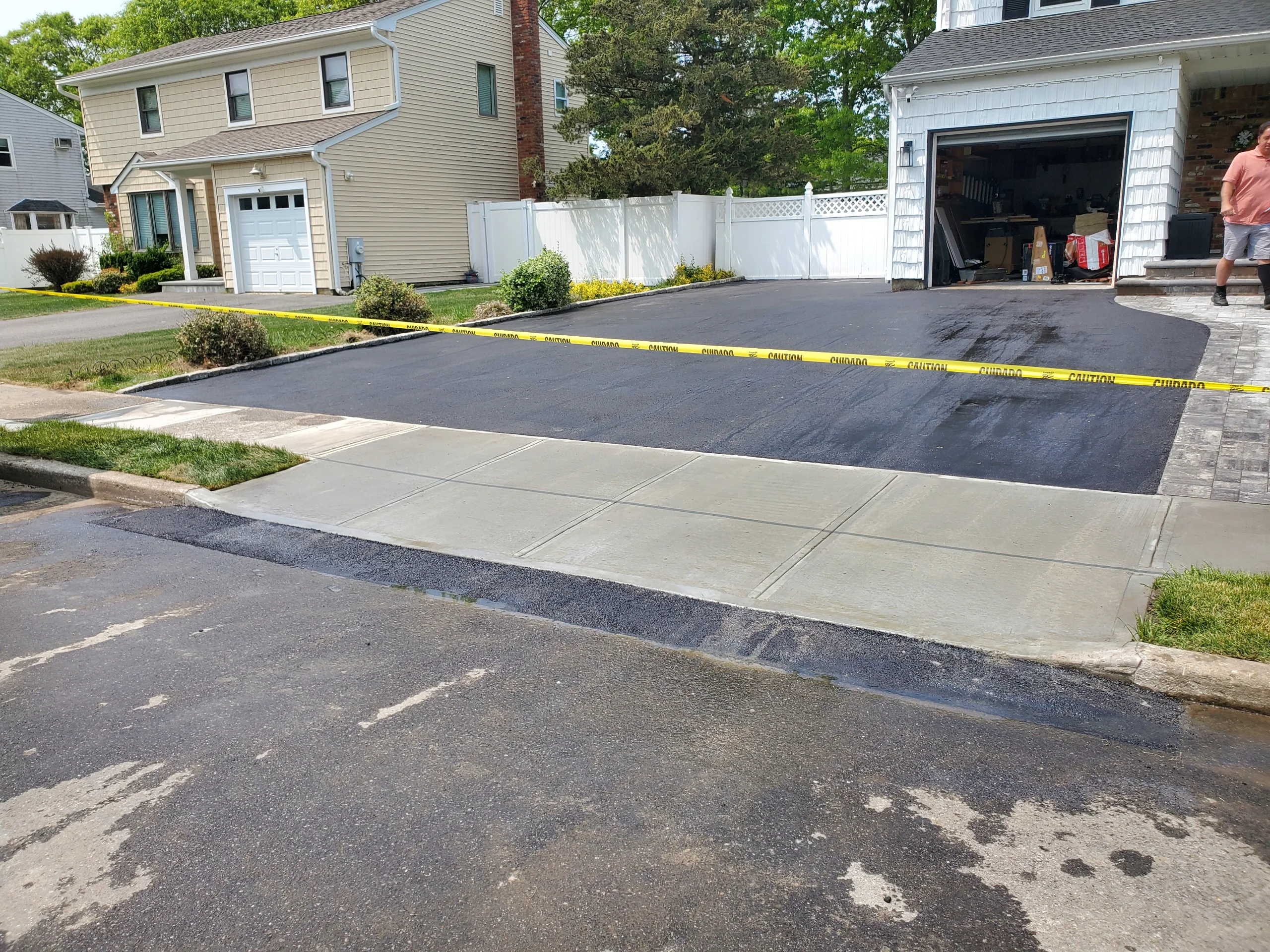
Then we install. Whether it’s a concrete curb, sidewalk repair, or a Belgian block driveway apron, the work gets done with precision. Belgian blocks, for example, don’t interlock like pavers, so they need a solid concrete base—not gravel and sand. That’s the difference between an apron that lasts decades and one that ruts out in a few years.
You’ll know what’s happening at every stage. No surprises, no vague timelines. Just clear communication and work that holds up.

Ready to get started?
Belgian block driveway aprons add traction at street entrances and give your property that clean, finished look that stands out in Centereach neighborhoods. They’re durable—granite cobblestones that won’t crack or erode easily—but only if they’re installed on a proper concrete base. We don’t lay them on gravel. That’s how you get shifting and rutting.
Concrete curb installation defines your driveway edges and prevents erosion. It’s functional and it improves curb appeal, which matters if you’re trying to compete in Suffolk County’s real estate market. Buyers notice details like clean curbs and level walkways.
Sidewalk repair addresses trip hazards and cracks before they become liability issues. Uneven sections don’t just look bad—they’re dangerous. And cracks wider than a quarter-inch let water seep under the surface, which expands when it freezes and makes the damage worse. We fix it before it costs you more.
Masonry flatwork covers patios, walkways, and other horizontal surfaces that need to handle foot traffic and weather without constant maintenance. You’re getting surfaces built to last, not just look good for a season.
All of this gets done with attention to Centereach’s specific drainage needs. Long Island’s sandy soil, coastal moisture, and temperature swings require a different approach than what works inland. We account for that.
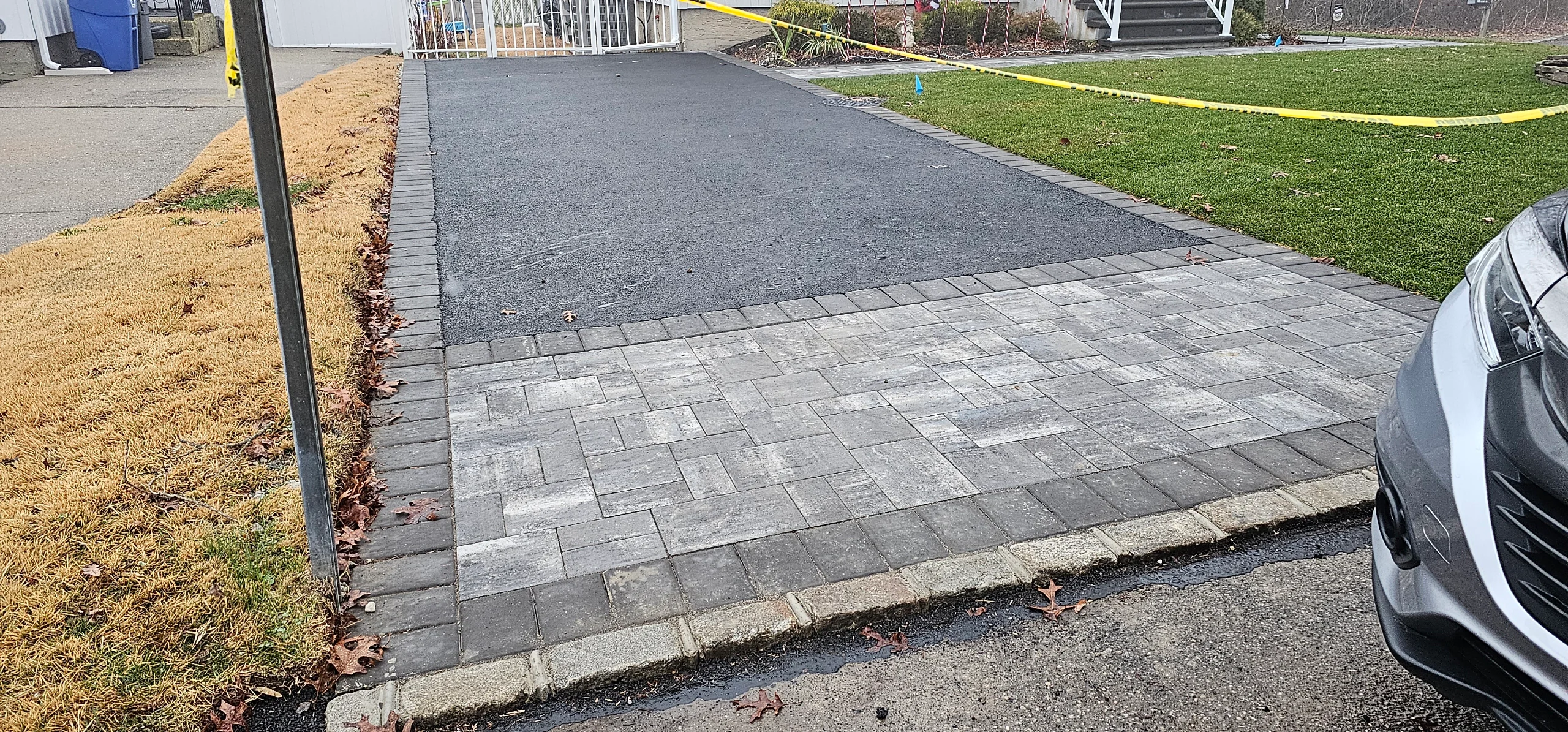
If it’s installed correctly, you’re looking at 20 to 30 years or more. That assumes proper grading, a solid base, and materials that match Long Island’s conditions.
The problem is most concrete work around here doesn’t hit that mark because the prep work gets rushed. If the base isn’t compacted right or the grading doesn’t account for drainage, you’ll see cracks, sinking, or water pooling within a few years. Freeze-thaw cycles on Long Island are brutal—water gets into cracks, freezes, expands, and makes everything worse.
Belgian block aprons last even longer if they’re set on a concrete base instead of gravel. Granite cobblestones are incredibly durable, but they don’t interlock like pavers, so they need that solid foundation to stay level under traffic and weather.
Usually, yes—especially if you’re changing the footprint of your driveway, adding impervious surface, or doing work on the apron where your property meets the street. Most Long Island towns require permits for this type of work, and fees typically run between $100 and $500.
Apron work can add another $1,000 to $3,000 depending on the scope. It’s not optional, and skipping it can cause problems down the line if you sell your home or if the town notices unpermitted work.
We handle permit coordination as part of the process, so you’re not dealing with town offices or figuring out what paperwork you need. It’s one less thing on your plate, and it keeps the project moving without delays.
Asphalt costs less upfront—usually $7 to $15 per square foot installed. Concrete runs around $3 to $7 per square foot for basic work, but that number climbs if you’re adding decorative finishes or Belgian block edging.
The real difference is durability and maintenance. Asphalt needs resealing every few years and doesn’t handle Long Island’s freeze-thaw cycles as well as concrete. You’ll see cracks and surface wear faster, especially with heavy traffic or snow removal equipment.
Concrete lasts longer with less upkeep. It handles the weather better, doesn’t need regular resealing, and holds up under the kind of conditions we get here. If you’re planning to stay in your home long-term or you want something that boosts property value, concrete makes more sense. If you need the cheapest option right now and don’t mind maintenance, asphalt works—but you’ll pay for it over time.
We create a slope that moves water away from your foundation—typically 2 to 5% grade, which is the standard that works without being so steep it’s noticeable or uncomfortable to walk on. That means for every foot of horizontal distance, the ground drops between a quarter-inch and half an inch.
Before we pour anything, we assess where water is pooling and why. Sometimes it’s because the existing grade is flat or sloped the wrong way. Other times, the soil underneath has settled or wasn’t compacted properly during the original install. We fix the base first, then grade the surface so water flows toward the street, a drainage system, or another safe outlet.
Long Island’s clay-heavy soil makes this even more important. Clay holds water, so if your grading is off, you’re going to have standing water, foundation issues, or erosion. We use the right equipment to compact the base and set the grade correctly, so you’re not calling us back in two years because the concrete has sunk or water is pooling again.
Materials and labor. Belgian blocks are granite cobblestones, and they cost significantly more than poured concrete—usually $30 to $70 per square foot installed. They’re also more labor-intensive because each block has to be set individually on a concrete base.
That concrete base is critical. Belgian blocks don’t interlock like pavers, so if they’re laid on gravel and sand, they’ll shift and rut under traffic. A proper install means pouring a solid concrete foundation first, then setting the blocks in mortar. That takes time and skill.
What you’re paying for is durability and appearance. Belgian blocks add a European aesthetic that stands out in Centereach’s higher-end neighborhoods. They handle heavy traffic and harsh weather without cracking or eroding, and they last decades longer than asphalt. If curb appeal and property value matter to you, the upfront cost makes sense. If you just need a functional apron and don’t care about the look, standard concrete is a better fit.
It depends on the size and cause of the crack. Hairline cracks or small surface cracks can usually be repaired with patching or resurfacing. Anything wider than a quarter-inch is a bigger problem because it means water is getting underneath, and once that happens, freeze-thaw cycles make it worse every winter.
If the concrete has sunk, shifted, or if there are multiple large cracks, replacement is usually the better option. Repairs might buy you a year or two, but you’ll end up replacing it anyway—and spending more in the long run.
We assess the damage and tell you what makes sense. If the base is still solid and the cracks are minor, repair works. If the grading was wrong from the start or the base has failed, you’re better off replacing the section and doing it right. Either way, you’ll know what you’re dealing with before we start.
Other Services we provide in Centereach