
Hear from Our Customers

Here’s what happens when concrete work is done right: water flows away from your foundation instead of pooling near your house. Your driveway apron doesn’t crack after two winters. Your landscape beds stay contained without constant mulch replacement.
Most concrete problems in Aquebogue come down to two things: poor grading and installers who don’t understand Long Island’s freeze-thaw cycles. When water sits on concrete through a winter, it seeps into microscopic cracks, freezes, expands, and turns small issues into expensive replacements.
Proper concrete work starts below the surface. The sub-base needs compaction. The grade needs to slope away from structures—typically a quarter-inch per foot minimum. And the mix itself needs to handle salt air and temperature swings without deteriorating. That’s the difference between a driveway that lasts 10 years and one that lasts 30.
We’re based in Smithtown and work throughout Suffolk County. We’re licensed, insured to industry standards, and we’ve spent years learning how Aquebogue’s soil drains, where water tends to collect, and what actually holds up through Long Island winters.
You’ll find us at community events and on job sites where precision matters more than speed. We use heavy machinery for grading because eyeballing a slope doesn’t cut it when you’re protecting a $500,000 property. Every concrete pour, every Belgian block apron, every sidewalk repair gets the same attention—because your home’s value depends on it.

First, we assess your property’s drainage patterns and soil conditions. Aquebogue sits on varied terrain, and what works three streets over might not work for your lot. We identify where water naturally wants to go and design the grade accordingly.
Next comes excavation and sub-base prep. We remove existing materials, compact the soil, and add a gravel base that won’t shift or settle. This step determines whether your concrete lasts 10 years or 30. We use machinery to ensure the grade is exact—not close, exact.
Then we form, pour, and finish the concrete using mixes designed for coastal climates. For Belgian block driveway aprons, we set each stone individually on a concrete base with proper mortar joints. For curbing, we install continuous concrete edging that contains your landscape beds and eliminates trimming along edges. Everything gets time to cure properly before you drive on it or landscape around it.

Ready to get started?
Concrete curb installation creates permanent landscape borders that don’t shift, rot, or need replacement every few years. We install continuous concrete edging in various profiles, including options that let your mower wheel extend over the edge so you never trim again.
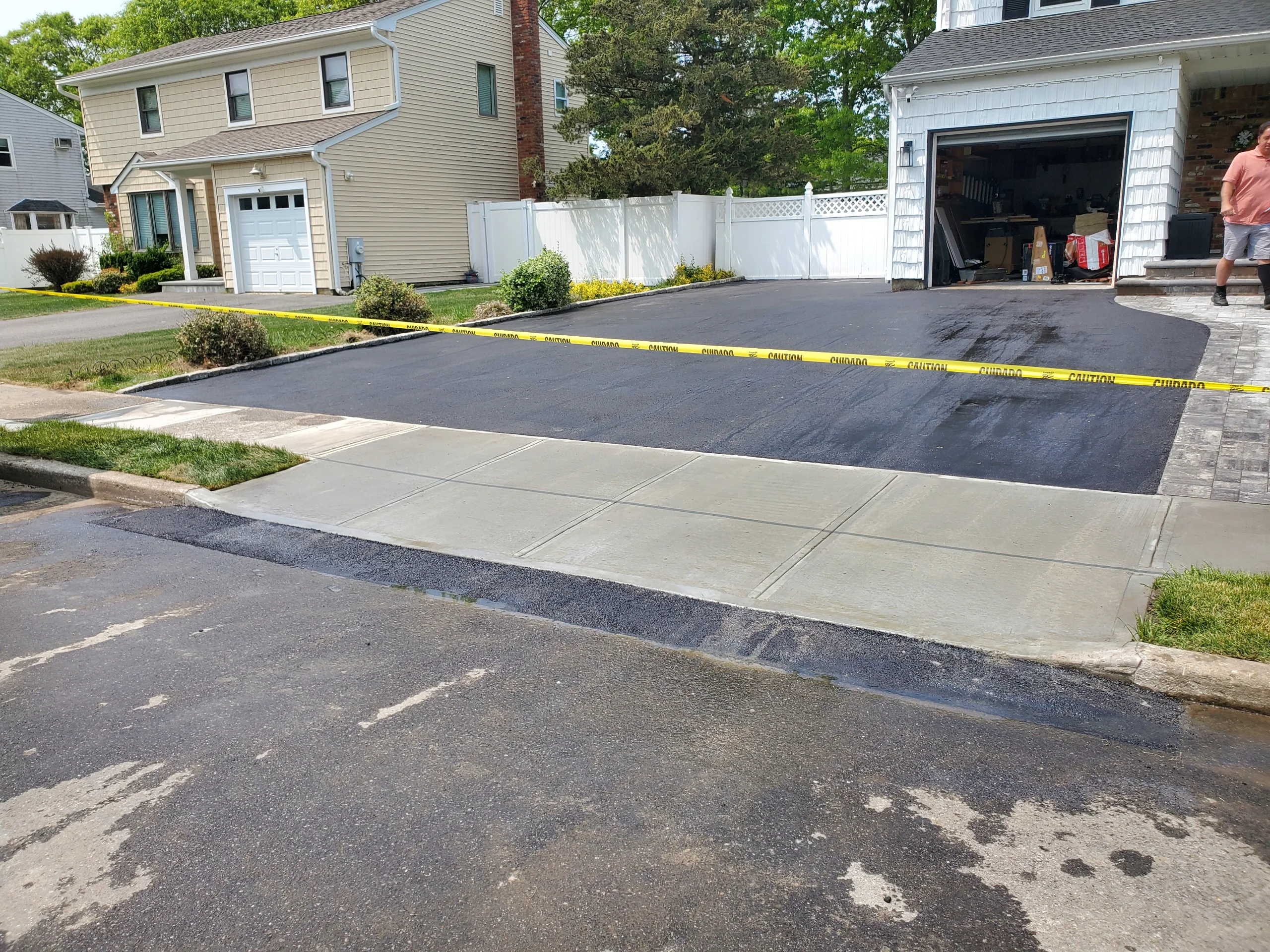
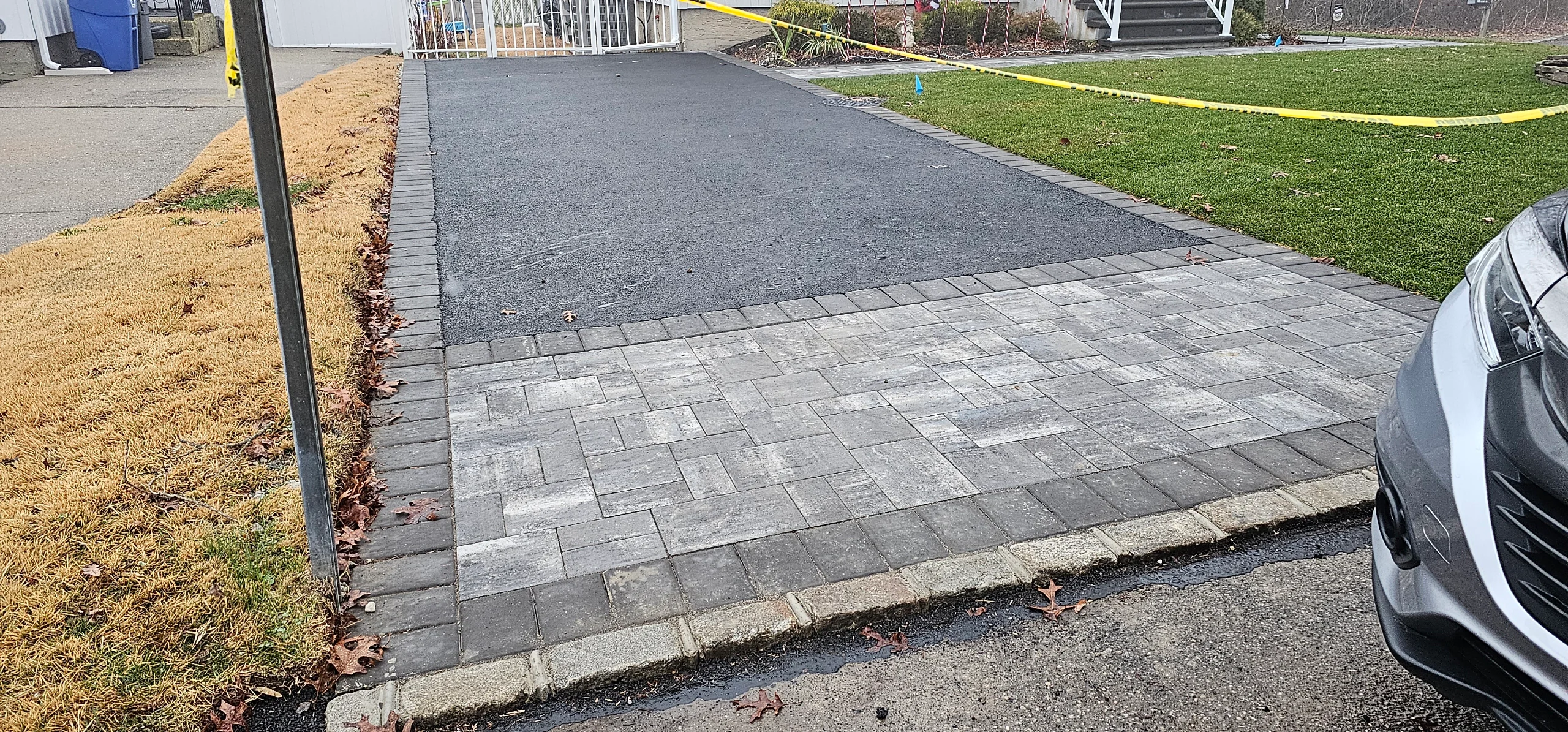
Belgian block driveway aprons add serious curb appeal while handling the transition from street to driveway without cracking like asphalt. These granite blocks resist salt, freeze-thaw cycles, and the weight of vehicles better than any poured surface. They’re especially popular in Aquebogue’s higher-end neighborhoods where appearance matters as much as function.
Sidewalk repair and masonry flatwork cover everything from front walkways to patio foundations. We handle crack repairs, full replacements, and new installations. Each project includes proper drainage design because flat concrete that pools water won’t last, regardless of how well it’s poured. Suffolk County’s building codes require specific standards for residential concrete work, and we meet them on every job—not because we have to, but because your property value depends on it.
Properly installed concrete in Aquebogue should last 25 to 30 years or more. The key word is “properly.” Long Island’s coastal climate is tough on concrete—salt air accelerates corrosion of any embedded metal, freeze-thaw cycles stress the surface, and summer humidity can cause efflorescence if the mix isn’t right.
The lifespan depends on three factors: sub-base preparation, proper drainage design, and using concrete mixes formulated for marine environments. A driveway poured directly on clay soil with no gravel base might crack within five years. The same driveway with six inches of compacted gravel, proper slope, and a salt-resistant mix will outlast your mortgage.
We see a lot of concrete in Suffolk County that fails early because installers skip the boring parts—compaction, grading, cure time. Those shortcuts save a day of work but cost you years of lifespan. When we tell you concrete will last decades, we mean it, because we’re doing the work that makes that possible.
Belgian block aprons don’t crack, fade, or need resurfacing. They’re individual granite stones set in concrete, so they handle ground movement without the structural failure you get with monolithic poured surfaces. When asphalt cracks, you’re looking at patching or replacement. When a Belgian block apron settles slightly, the stones move together without breaking.
They’re also significantly more durable against the specific challenges of driveway aprons: constant vehicle weight, salt exposure from winter roads, and the transition stress between two different surfaces. Granite doesn’t absorb water like concrete or deteriorate like asphalt, so freeze-thaw cycles that destroy other materials barely affect Belgian block.
From a curb appeal standpoint, there’s no comparison. A well-installed Belgian block apron signals quality and permanence. In Aquebogue neighborhoods where home values average near $500,000, that visual difference matters. You’re making a one-time investment in something that will still look sharp in 20 years while your neighbors are on their third asphalt redo.
Drainage design happens before we pour anything. We survey your property to identify existing water flow patterns, low spots where water collects, and the natural grade of your lot. Then we design the concrete work to direct water away from your foundation and toward appropriate drainage areas—never toward your house or into areas where it will pool.
The standard is a quarter-inch drop per foot of concrete, minimum. For properties with challenging drainage, we might increase that slope or incorporate drainage channels, French drains, or catch basins into the design. Aquebogue’s varied terrain means some properties drain naturally while others need help. We figure out which situation you’re in before we start digging.
Poor drainage is the number one reason concrete fails early in Suffolk County. Water that sits on concrete finds its way into tiny cracks, freezes, expands, and turns minor surface issues into structural problems. We’ve repaired enough failed driveways to know that spending extra time on drainage design upfront saves you from expensive replacements later. It’s not the exciting part of the job, but it’s the part that determines whether your concrete lasts 10 years or 30.
Most residential concrete work in Aquebogue requires permits from the Town of Southold, which has jurisdiction over the area. Driveway aprons, sidewalks, and any concrete work that affects drainage or connects to public right-of-way typically need approval. The town wants to ensure work meets code requirements for structural integrity, drainage management, and accessibility standards.
We handle permit applications as part of the project. It adds some time to the schedule—usually a few weeks for review and approval—but it protects you from code violations that could complicate future property sales or trigger fines. Suffolk County takes building codes seriously, and unpermitted work can become a problem when you try to sell or refinance.
The permit process also ensures your concrete work meets current standards for things like slope, thickness, and reinforcement. These aren’t arbitrary rules—they’re based on decades of data about what holds up in Long Island’s climate and what fails. When we pull permits, you get documentation that the work was done right, which adds value when it’s time to sell. Buyers and their inspectors care about that paper trail.
Basic concrete curbing in Suffolk County typically starts around $14 per linear foot, but your actual cost depends on site conditions, curb profile, and project complexity. A simple 100-foot landscape border on level ground costs less than a curved decorative curb on a sloped lot that requires extensive grading.
The price includes excavation, sub-base prep, forming, concrete, finishing, and cleanup. If your property needs drainage improvements or significant grading work, that adds to the cost. Belgian block aprons run higher—usually $30 to $50 per linear foot depending on stone selection and installation complexity—but they last longer and add more curb appeal than standard concrete.
We provide detailed estimates after seeing your property because quoting concrete work sight-unseen leads to surprises nobody wants. Soil conditions, access for equipment, existing drainage issues, and the current state of your landscape all affect the final number. What we can tell you is this: proper concrete work costs more upfront than quick installations, but it saves you money over time because you’re not replacing it every decade. You’re paying once for something that lasts as long as you own the house.
It depends on the extent of damage and what caused it. Surface cracks, minor spalling, and small sections of broken concrete can often be repaired if the underlying sub-base is still solid and the damage hasn’t compromised structural integrity. We can patch, resurface, or replace individual sections in many cases.
Full replacement makes sense when you’re dealing with widespread cracking, significant settling, or drainage problems that affect the entire installation. If your driveway has multiple large cracks and water pools in several spots, patching won’t fix the underlying issues—poor sub-base prep or inadequate drainage. In those situations, repair work is just delaying the inevitable replacement.
We’ll give you an honest assessment after inspecting the concrete. Sometimes repair is the smart financial move. Sometimes it’s throwing money at a problem that needs a real solution. We’ve seen homeowners spend thousands on repairs over five years when replacement would have cost less and actually solved the problem. Our job is to tell you which situation you’re in, not to sell you the most expensive option. You make the call based on complete information about what’s realistic for your specific concrete and your budget.
Other Services we provide in Aquebogue