
Hear from Our Customers

Your driveway apron cracks every few winters. Water pools near your foundation after heavy rain. Your sidewalk has that sunken section everyone trips over.
These aren’t cosmetic issues. They’re drainage failures, and in Amagansett’s coastal environment, poor drainage destroys more concrete than anything else. When water can’t escape, it sits. It freezes. It expands. Your concrete cracks, your property value drops, and you’re looking at a full replacement years earlier than you should be.
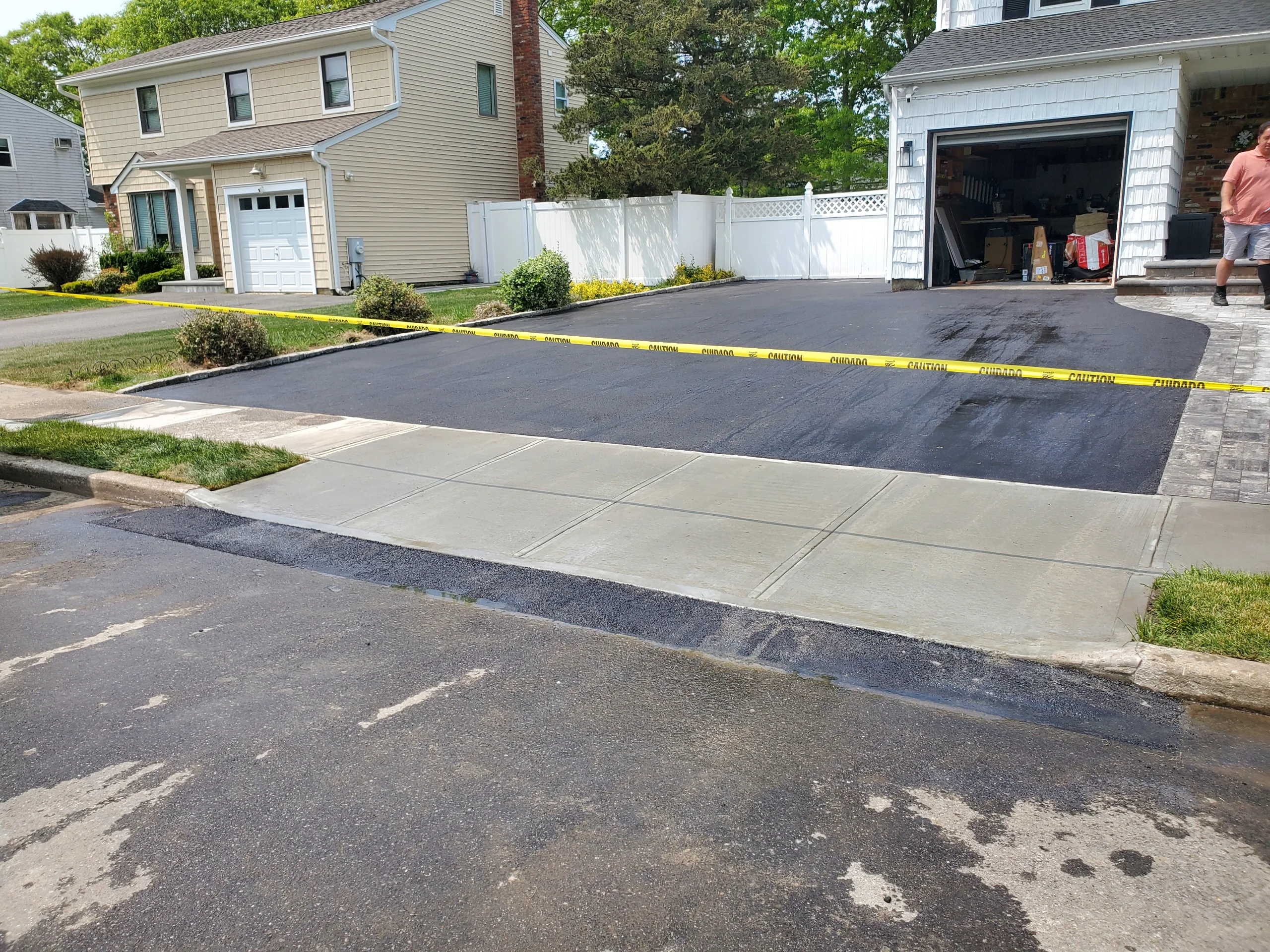
Proper concrete work starts below the surface. We’re talking precision grading with heavy machinery to ensure water moves away from your home, not toward it. We’re talking reinforced bases that handle Long Island’s freeze-thaw cycles without cracking into pieces. We’re talking about Belgian block driveway aprons that add sophistication while actually performing better than standard concrete in coastal weather.
When the work is done right, you get a driveway that handles salt air without deteriorating. You get sidewalks that stay level and safe. You get curb appeal that makes your property stand out in a neighborhood where appearance directly impacts resale value. And you get 25 to 30 years of performance instead of patching cracks every spring.
We’ve been handling property maintenance across Suffolk County for years, and we’ve seen what works in Amagansett’s specific conditions. Salt air from the Atlantic. Soil that doesn’t drain like it should. Temperature swings that crack poorly installed concrete in one season.
We’re based in Smithtown, fully licensed and insured, and we bring heavy machinery and precision methods to every concrete job. That means proper base prep, correct reinforcement placement, and grading that accounts for your property’s actual drainage patterns. Not guesswork. Not shortcuts.
Amagansett properties demand more than basic flatwork. You’re investing in homes where curb appeal isn’t optional, and where a cracked driveway apron or sunken sidewalk affects what buyers will pay. We treat your concrete work like the permanent upgrade it should be.

First, we assess your property’s drainage situation. Where does water go when it rains? What’s the soil composition? What grade do we need to move runoff away from your foundation? This isn’t a quick eyeball job. We’re looking at how your property sits, what challenges the coastal location creates, and what base materials will actually hold up long-term.
Next comes excavation and base prep. We remove existing damaged concrete or unsuitable soil, then bring in the right base materials. For Belgian block aprons, that means a reinforced concrete base about a foot thick, designed to handle vehicle weight without settling. For sidewalks and curbs, it means compacted aggregate and proper depth to prevent the cracking you see on older installations.
Then we grade everything precisely. This is where heavy machinery matters. We’re creating slopes that move water exactly where it needs to go, setting forms that ensure clean edges, and placing reinforcement that prevents cracking under load. For Belgian block work, we set each block in mortar with hard joints, not sand. That’s what keeps them in place when trucks roll over them.
Finally, we pour, finish, and cure properly. Concrete needs time to reach full strength, especially in coastal humidity. We don’t rush it. When we’re done, you get a walkthrough showing exactly what we did and what to expect as your new concrete settles into place.

Ready to get started?
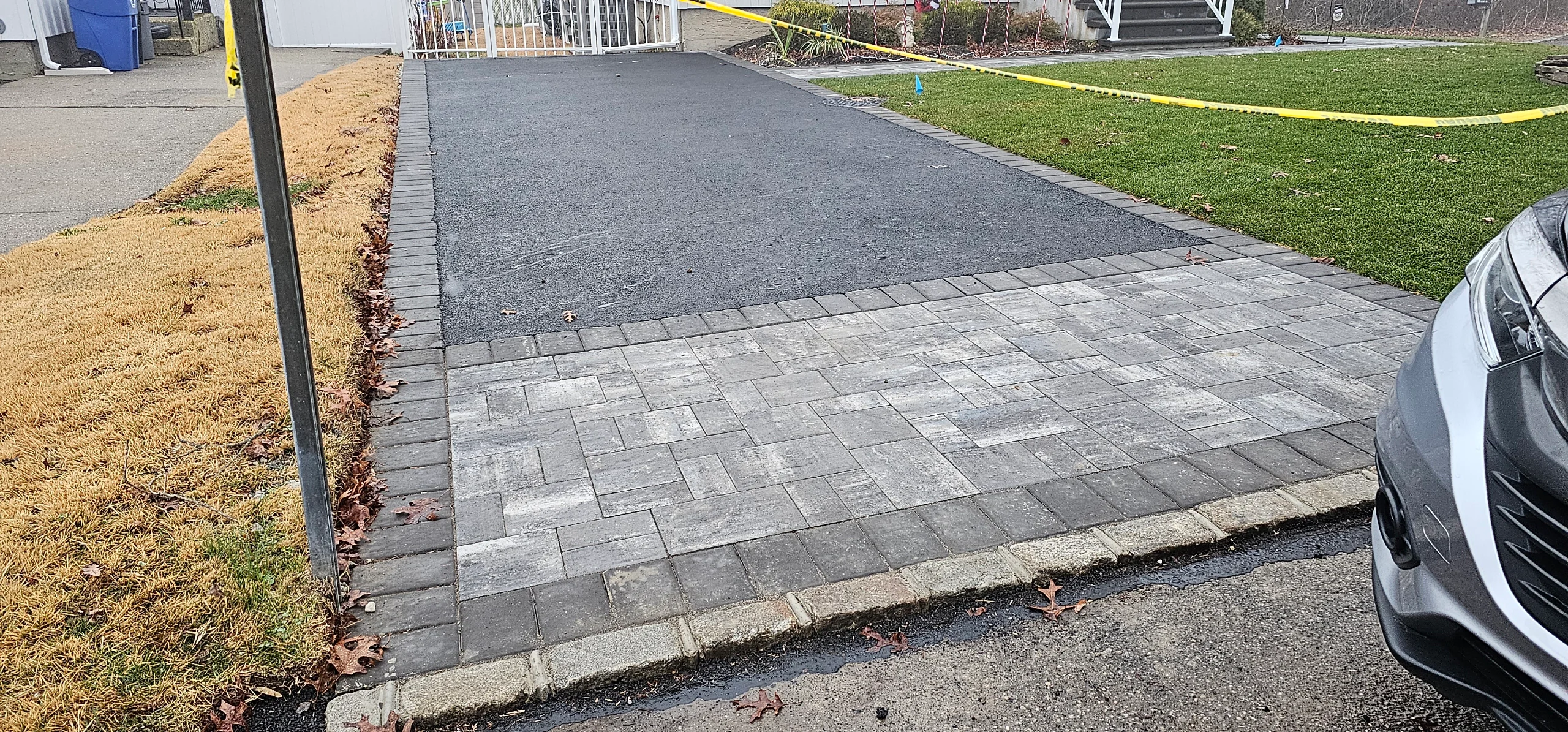
Belgian block driveway aprons are one of our most requested services in Amagansett. They add immediate sophistication to your entrance while outperforming standard concrete in weather resistance. Each installation includes a three-layer system: reinforced concrete base, mortar bed, and mortar-jointed blocks. They don’t crack like asphalt, they resist stains, and they handle the freeze-thaw cycles that destroy other materials.
Concrete curb installation and sidewalk repair address the safety and drainage issues that come with aging flatwork. Sunken sidewalks create tripping hazards and standing water. Damaged curbs let runoff flow where it shouldn’t. We remove the problem sections, regrade for proper drainage, and install new concrete that matches your existing work or upgrades the entire run for consistency.
Masonry flatwork covers patios, walkways, and other hardscape features where you need durability and appearance. In Amagansett’s coastal environment, that means sealed surfaces to resist salt damage, proper pitch for drainage, and materials that complement your home’s style. We’re not just pouring concrete. We’re creating permanent improvements that increase your property value in a market where buyers notice every detail.
Every project includes transparent pricing, a clear timeline, and communication throughout the job. You’ll know what’s happening, when it’s happening, and what to expect when we’re finished.
Properly installed concrete lasts 25 to 30 years in coastal areas like Amagansett, sometimes longer with the right maintenance. The key word is “properly installed.” That means correct base materials, precise grading for drainage, adequate reinforcement, and sealed surfaces to resist salt damage from ocean air.
Most concrete failures happen because of poor drainage, not material quality. When water can’t escape, it sits under your driveway or sidewalk. It freezes in winter, expands, and cracks the concrete from below. In Amagansett, where you’re dealing with coastal moisture and temperature swings, drainage isn’t optional.
We use premium-grade concrete mixes designed for Long Island’s climate, and we seal surfaces to prevent salt penetration. Belgian block aprons last even longer because they’re constructed in three layers with mortar joints, giving them flexibility that solid concrete doesn’t have. When one block settles slightly, it doesn’t crack the entire apron. You just reset that block. That’s why you see Belgian block installations from decades ago still performing perfectly.
Belgian block aprons handle coastal weather better than standard concrete because they’re not one solid piece. They’re individual blocks set in mortar over a reinforced concrete base, which means they can flex slightly without cracking. When Long Island’s freeze-thaw cycles hit, standard concrete cracks as one unit. Belgian block adjusts.
They’re also significantly more resistant to stains, salt damage, and erosion. The blocks themselves are dense and non-porous, so oil, salt, and other substances don’t penetrate like they do with concrete. They don’t need sealing every few years. They don’t develop the surface spalling you see on older concrete driveways.
From a curb appeal standpoint, Belgian block adds sophistication that standard concrete can’t match. In Amagansett’s high-end neighborhoods, your driveway apron is one of the first things people notice. Belgian block signals quality and permanence. It complements both traditional and modern architecture. And because the blocks are mortared with hard joints, they stay in place under vehicle traffic for decades. When you’re investing in your property’s entrance, Belgian block is the upgrade that actually performs better while looking better.
Recurring cracks usually mean one of three things: poor drainage, inadequate base prep, or insufficient reinforcement. In Amagansett, drainage is the biggest culprit. When water can’t escape from under your concrete, it creates pressure during freeze-thaw cycles that cracks even thick slabs.
If your concrete was poured without proper grading, water pools instead of running off. It seeps into the base material, weakens it, and causes settling. That settling creates stress points where cracks form. Once a crack starts, water gets in, freezes, and makes it worse every winter. You patch it, but the underlying problem hasn’t changed, so new cracks appear.
The fix isn’t another patch job. It’s removing the failed concrete, addressing the drainage issue with proper grading, installing a stable base that won’t settle, and pouring new concrete with adequate reinforcement. For coastal properties, that also means sealing the surface to resist salt damage. When we install concrete, we’re solving the drainage problem first. That’s why our installations last 25 to 30 years instead of cracking in five. You’re not paying for concrete. You’re paying for concrete that won’t fail because the foundation work was done right.
Grading is everything when it comes to drainage. It’s the slope we create that moves water away from your foundation, your driveway, and your landscaping. In Amagansett’s coastal environment, where you’re dealing with sandy soil and occasional heavy rainfall, incorrect grading causes water to pool, seep under concrete, and eventually destroy your flatwork from below.
Proper grading means we’re using heavy machinery to create precise slopes—usually a minimum of 2% grade—that direct water toward drainage areas, not toward your home. We’re looking at how your entire property sits, where water naturally flows during storms, and what adjustments need to happen so runoff doesn’t undermine your concrete or create standing water.
When grading is wrong, you see the symptoms quickly. Water pools in your driveway after rain. Your sidewalk stays wet for days. You get ice patches in winter that don’t melt. Eventually, that water works its way under your concrete, weakens the base, and causes settling or cracking. Fixing drainage issues after concrete is poured is expensive and disruptive. Getting the grading right during installation means your concrete performs the way it should for decades. That’s why we spend time on site assessment before any concrete work begins.
Absolutely, especially in Amagansett’s market where curb appeal directly impacts buyer perception and sale prices. A well-installed Belgian block apron, smooth driveway, and level sidewalks signal that your property has been maintained properly. Cracked concrete signals deferred maintenance and gives buyers negotiating leverage.
Real estate agents will tell you that first impressions matter enormously in high-end coastal markets. Your driveway apron and front walkway are part of that first impression. When they look sharp, buyers assume the rest of the property has been cared for. When they’re cracked and sunken, buyers start questioning what else has been neglected.
Beyond perception, functional concrete work solves problems buyers don’t want to inherit. Nobody wants to buy a home where water pools near the foundation or where the driveway needs immediate replacement. When your concrete is in excellent condition, you remove objections during the sale process. You’re not offering credits or dropping your price to account for needed repairs. Quality concrete work pays for itself in resale value, and in Amagansett’s competitive market, every detail counts. Buyers expect properties to be pristine, and permanent curb appeal upgrades like Belgian block aprons or freshly installed sidewalks meet that expectation.
First, make sure they understand coastal concrete requirements. Long Island’s salt air, freeze-thaw cycles, and drainage challenges aren’t the same as inland areas. Ask how they handle base prep, what reinforcement they use, and how they address drainage. If they can’t give you specific answers about grading and water management, keep looking.
Second, verify they’re licensed and insured. Concrete work involves heavy machinery, excavation, and structural considerations. You need protection if something goes wrong, and you need assurance that the crew knows what they’re doing. Ask for proof of insurance and licensing before any work starts.
Third, look at their process transparency. Do they provide detailed proposals outlining scope, materials, and timeline? Do they explain what’s included and what’s not? Vague estimates and unclear timelines usually mean problems during the job. You should know exactly what’s happening at each stage, from excavation through final curing. We provide complete transparency because concrete work done right requires precision at every step, and you deserve to understand what you’re paying for. Finally, ask about their experience with Belgian block installations, sidewalk repair, and drainage solutions specific to your property type. Coastal properties have unique needs, and contractors who’ve solved those problems before bring knowledge that saves you money and headaches long-term.
Other Services we provide in Amagansett