Oak burns longest, maple dries faster, and ash heats up quick, but Long Island's pest rules shape what you can buy. Here's how to choose.
Share:
Summary:
You searched for the best firewood to burn, and what you probably want to know is which wood won’t let you down halfway through January. Oak, maple, and ash are the three you’ll hear about most around Suffolk County, and each one has a catch that most firewood guides skip. On Long Island, a couple of pest rules also decide what you can legally buy and burn. We sell firewood and work around trees every week at Rolling Hills Property Services Inc, so here’s the plain version. We’ll start with how the three woods compare.
Which Firewood Burns Best In Suffolk County? Oak, Maple, And Ash Compared
Short answer: any properly seasoned hardwood beats the wrong wood at any price. Seasoned means split, stacked, and dried down to roughly 20% moisture or less, which usually takes six to twelve months.
Past that, the three species behave differently. Oak is the heavyweight. It burns long, holds good coals, and leaves little creosote, but it’s the slowest to dry. Maple burns long too, with good heat, though it’s less dense than oak, and it seasons faster. Ash heats up quickly, burns clean, and does well in a fireplace insert. Pine and other softwoods are fine for kindling or a quick shoulder-season fire, but they burn fast and smoke more.
Out here on Long Island, coastal humidity and the occasional nor’easter add two wrinkles. Storage matters more than it would inland, and what’s legal to buy depends on where the wood was cut.
Is Oak Or Maple Better Firewood In Suffolk County?
Oak is the safe answer on paper, and it earns that reputation. It gives you the longest burn and the best coals for overnight fires, which is why it’s the default recommendation almost everywhere. The catch is time. A load of oak that was split this spring isn’t ready this fall, no matter what the sign at the end of the driveway says.
If you want oak, order it in late summer or earlier, and ask when it was split. Maple gives you most of the heat and a long burn, and it dries faster. That makes it a smart pick if you’re ordering later than you’d like.
Maple has two weak spots, though. It doesn’t forgive a bad stack, and it can rot if it’s stored poorly, which matters near the North Shore and out toward Wading River and Westhampton, where the air stays damp. It’s also one of the trees the Asian longhorned beetle targets, and Nassau and Suffolk counties fall within the federal regulated area.
In practice, you want maple that came from around Suffolk County and stayed here. Don’t haul it out of the regulated area yourself. The boundaries have shifted over the years, so check the current NYS Agriculture and Markets or USDA APHIS map rather than relying on what a neighbor remembers.
If you’re planning ahead and want the longest burn, go with oak. If it’s already October and you need something that dries sooner, maple works as long as you see a moisture reading first. Either way, dryness matters more than the species on the invoice.
Is Ash Good Firewood, And Can You Still Burn It In New York?
Ash is the one people hesitate over, usually because they’ve heard about the emerald ash borer and assume the wood must be off-limits. It isn’t. Ash heats up quickly, burns clean, and works well in inserts and stoves. It won’t match oak for coals through the night, but for everyday evening fires it’s solid wood.
The beetle is a question about moving the wood, not about burning it. The borer has been killing ash trees across New York, which is a big reason ash firewood is easy to find in Suffolk County. Standing-dead ash also dries fast, which adds to its appeal. Just keep it local.
Untreated firewood in New York cannot legally travel more than 50 miles from where it came from, and dealers are supposed to give you documentation showing the source. If a seller cannot tell you where the ash came from, you have your answer.
There’s a flip side if you have ash on your property. Dead ash turns brittle, and brittle trees don’t fall the way you expect them to. Taking one down near a house, a fence, or a driveway in Smithtown, Commack, or anywhere else in Suffolk County isn’t a Saturday chainsaw project. That’s where our tree service and tree trimming crews come in. We’re fully licensed and insured, we’ll give you a free estimate, and we’ll tell you plainly if a tree needs to come down now or can wait.
Buying Seasoned Firewood In Suffolk County: Where The Law And The Moisture Meter Meet
Want live answers?
Connect with a Rolling Hills Property Services Inc expert for fast, friendly support.
Picking a species is the easy part. Buying it is where people get shorted, and two things protect you: knowing the New York rules and doing a little checking yourself.
The rules first. Untreated firewood cannot move more than 50 miles from its source, and wood from out of state cannot come in at all unless it’s heat-treated and labeled “New York Approved Heat-Treated Firewood/Pest Free.” That’s why most legal firewood on Long Island is local by necessity.
Then comes seasoned versus kiln-dried. Kiln-dried is convenient and can travel farther. For most Suffolk County homeowners, though, properly seasoned hardwood performs very well at a better value, and that’s what we recommend for a typical fireplace. The word “seasoned” on a sign still doesn’t prove anything, so check it yourself.
How Can You Tell If Firewood Is Seasoned Before You Pay?

There’s no certification for “seasoned,” so the proof is yours to collect. Ask the seller if you can split a few pieces and read the fresh face with a moisture meter. Test three to five random pieces rather than the nice ones on top, and look for 20% or lower.
Before the meter even comes out, the wood tells you plenty. Gray, dull color, cracks across the ends, and a hollow clack when you knock two pieces together are good signs. Heavy logs that hiss and smoke in the fireplace are not.
Then check the amount. A full cord is 4 by 4 by 8 feet, or 128 cubic feet. A face cord, sometimes called a rick, is a single row usually about 16 inches deep, which works out to roughly a third of a cord. A lot of “I was shorted” stories start with that mix-up, so ask for a full cord and look at the stack.
Most regular fireplace users in Suffolk County go through two to four cords over a winter. First-time buyers tend to order small, then scramble during a cold snap when every yard is out of wood. Ordering in late summer or early fall is the simplest way to avoid that, since wood bought in January is almost always wetter.
Ask for the paperwork on where it came from. A seller who lets you meter the wood and shows you the source is usually one you can trust.
Where Should You Stack Firewood On Your Suffolk County Property?
Good wood can go bad in a bad spot. Stack it off the ground, with air moving through it, and a few feet away from the house. A stack against your foundation holds moisture and invites pests. Keep it off the lawn, too.
Grass under a woodpile stays damp and tends to leave a dead rectangle by spring, and that’s a lawn care problem we’d rather you skip. Keeping weeds and brush trimmed back around the stack helps air move through, and dry wood needs that airflow.
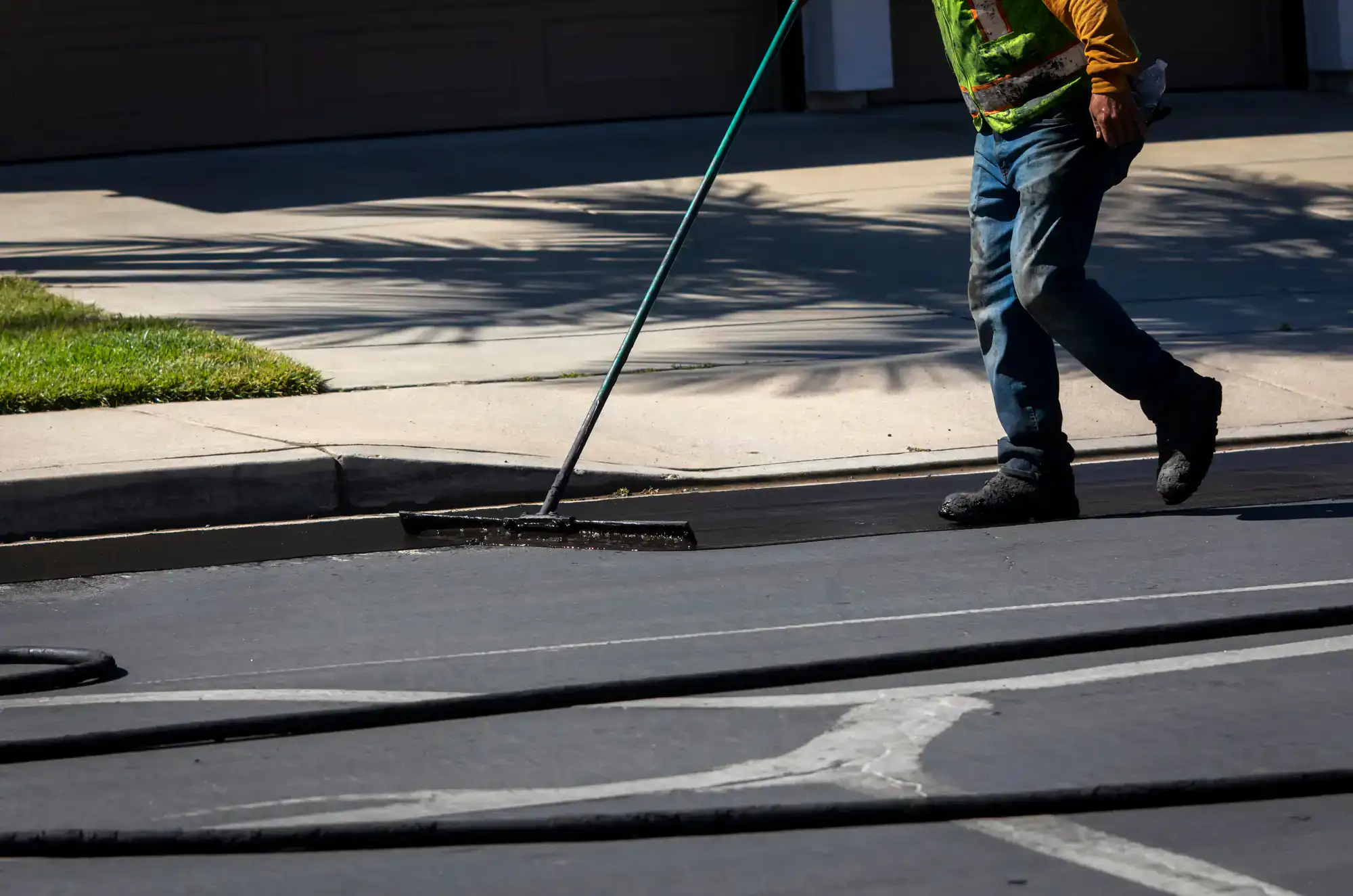
Then think about the driveway. A delivery truck with a full load of wood is heavy, and a driveway with open cracks or potholes doesn’t take that well. Fall is when we crack-seal ahead of Long Island’s freeze-thaw cycles. We also fix potholes before winter by checking the base, patching, compacting, and sealing. If your driveway sealing is due, we recommend sealcoating every two to three years.
Fall is also storm season, with nor’easters and strong winds that find every dead limb. Trimming those branches now beats cleaning up after the next storm, and we offer 24/7 emergency storm cleanup if one gets ahead of you anyway. The nice thing about firewood season is that it overlaps with everything else your property needs before winter. You can sort the wood, the driveway, the lawn, and the trees with one call.
Order Seasoned Firewood In Suffolk County Before The First Cold Snap
The best firewood to burn is dry, local, and measured honestly. Oak gives you the longest burn if you plan ahead, maple dries faster but needs good storage and a local source, and ash burns well as long as it stays inside New York’s 50-mile rule. Check for 20% moisture or lower, ask for a full cord, and order before the January rush.
Reach out to Rolling Hills Property Services Inc today to get a free estimate and ensure your property is fully prepared for the upcoming winter season.
Article details:
Share:
Continue learning: