Most homeowners ask about price. These seven questions are the ones that actually protect you — before anyone sets foot on your property.
Share:
Summary:
Most people hiring a landscaper for the first time ask two things: How much does it cost, and when can you start? Those are fair questions. They’re just not the ones that protect you. The questions that actually matter — the ones that tell you whether a company is legitimate, accountable, and worth trusting with your property — rarely get asked at all. That’s what this page is for. Whether you’re in Smithtown, Holbrook, Centereach, or anywhere else in Suffolk County, here’s what you should be asking before you sign anything or hand over a deposit.
These two topics get lumped together a lot, but they protect you in different ways and both deserve a direct answer. Licensing tells you whether the company is legally qualified to do certain types of work. Insurance tells you whether you’re exposed if something goes wrong while they’re doing it.
In New York State, there’s no general landscape contractor license — meaning almost anyone can call themselves a landscaper without passing an exam or proving any competency. What does matter is whether they hold a NYSDEC Commercial Pesticide Applicator Certificate if they’re applying any fertilizers, herbicides, or or pest treatments on your property. Operating without that certification is a misdemeanor in New York, with civil penalties up to $5,000 per violation. You’re not just trusting them with your lawn — you’re trusting them to stay on the right side of state law.
Ask for a Certificate of Insurance before work begins. Not after the estimate, not once you’ve agreed on a price — before anyone shows up on your property. A legitimate company will hand it over without hesitation. If there’s any resistance or vague reassurance that they’re “covered,” that’s your answer.
There are two types of coverage that matter here. General liability insurance protects your property if the crew causes damage — a branch lands on your fence, a mower clips your irrigation head, heavy equipment leaves ruts in your lawn. The second is workers’ compensation insurance, and this one matters even more than most homeowners realize. In New York State, workers’ comp is mandatory for any W-2 employee. If a crew member is injured on your property and the company doesn’t carry it, you could be held personally liable for their medical costs. That’s not a hypothetical. It happens.
This is especially worth asking about in the Suffolk County market, where a large portion of landscaping work is done by small, informal operations — two or three people, a truck, and a trailer — that may not carry either type of coverage. The price difference between a properly insured company and an uninsured one can look attractive on a quote. It stops looking attractive the moment something goes wrong.
We carry full general liability and workers’ compensation coverage on every job, and we’re happy to show you the documentation before we touch a single blade of grass.
This question doesn’t come up on most landscaper lists because most of those lists were written for a national audience. But if you live in Suffolk County, it matters.
Long Island relies on a sole-source aquifer for its drinking water — meaning there’s no backup supply. Because of that, Suffolk County enforces some of the strictest fertilizer and pesticide regulations in the state. Under ECL §17-2101, nitrogen fertilizer cannot be applied between October 15 and April 1. Phosphorus is prohibited on established turf. There are mandatory 20-foot buffers from any water body, and pesticide-free zones exist around sensitive drinking water supply areas. Violations carry fines up to $1,000 per incident, and the county enforces these rules actively.
A landscaper who doesn’t know this — or worse, knows and ignores it — is creating a problem that lands on your property record, not theirs. If you have a pond, a drainage area, or you’re in one of the county’s designated protection zones, you need a company that understands where the lines are drawn.
Ask any company you’re considering: Are you familiar with Suffolk County’s fertilizer restriction schedule? Are you NYSDEC-certified for pesticide application? A local company with genuine Long Island experience won’t need to look that up. We’ve been working in these neighborhoods long enough that compliance isn’t a checkbox for us — it’s just how the job gets done correctly.
Want live answers?
Connect with a Rolling Hills Property Services Inc expert for fast, friendly support.
The most common source of frustration in this industry isn’t bad workmanship — it’s a final bill that looks nothing like the original estimate. Or a crew that finishes and disappears, leaving debris, ruts, or unresolved damage behind. Both of those problems are preventable if you ask the right questions before work begins.
A written, itemized estimate isn’t just paperwork. It’s a shared understanding of what’s included, what it costs, and what “done” actually looks like. Any company that resists putting it in writing is telling you something important.

A solid estimate breaks down the scope of work clearly enough that there’s no room for interpretation later. It should specify what’s being done, what materials are being used, how debris will be handled, and what the final price is. If there are conditions that could change the cost — like hitting roots during excavation or discovering a tree is larger than it appeared — those should be flagged upfront, not added to the bill at the end.
Most reputable contractors ask for no more than 30 to 50 percent as a deposit before work begins. If someone asks for full payment before they’ve done anything, that’s a serious red flag. Contractor fraud in the landscaping space often follows a predictable pattern: a low bid, a request for a large upfront payment, and then nothing. It happens on Long Island the same as everywhere else.
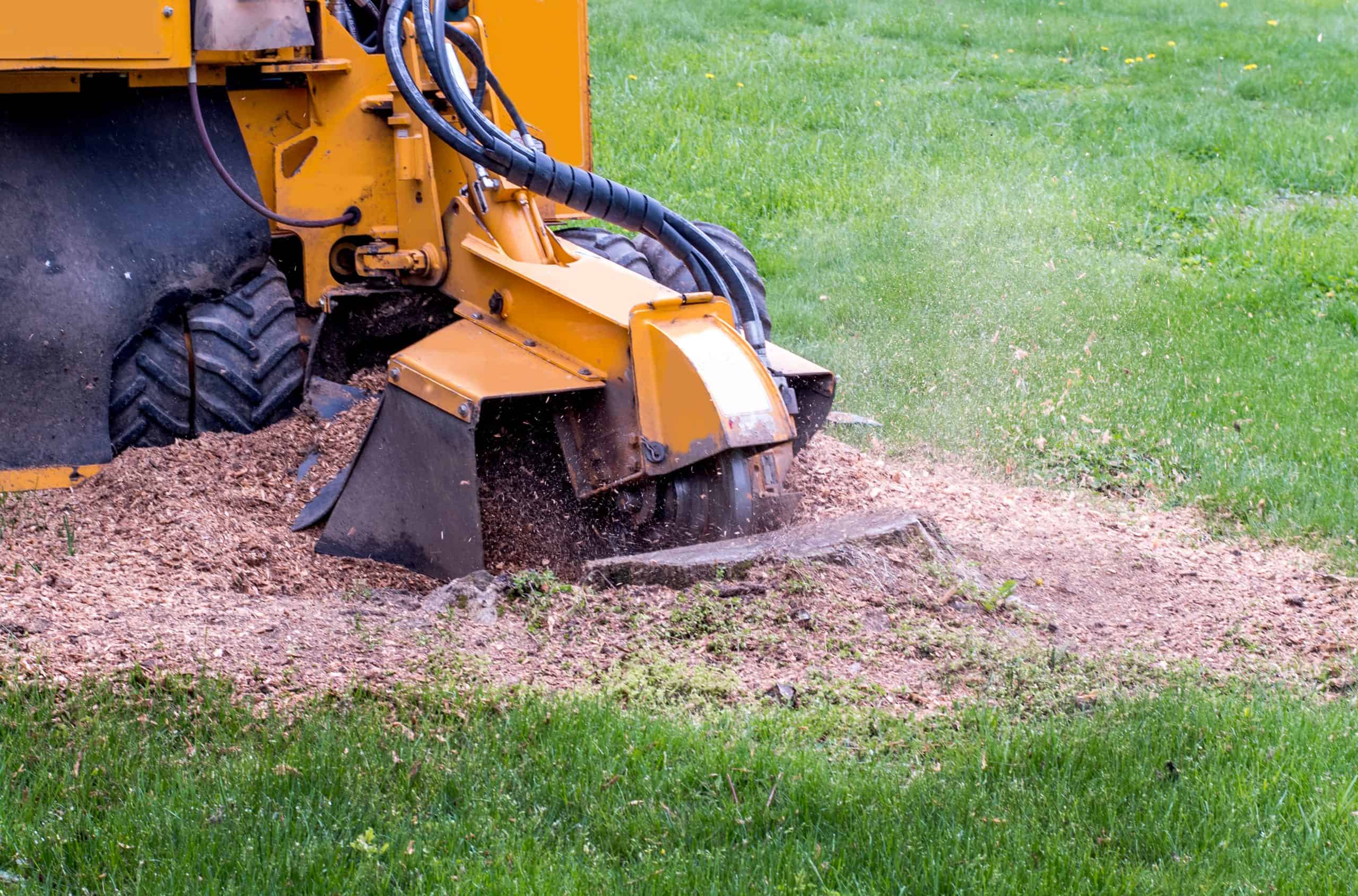
Ask specifically whether the estimate covers cleanup. In Suffolk County, where many properties have mature oaks, maples, and pines with significant canopy, a tree removal or major pruning job can leave behind a substantial amount of material. “We’ll remove the tree” and “we’ll remove the tree and haul everything away and grind the stump” are very different scopes of work. Know which one you’re getting.
Our estimates are written, itemized, and clear. The final bill matches it. That’s not a selling point — it’s just how business should work. Our clients in Northport, Brookhaven, and Westhampton consistently mention in their reviews that there were no surprises on the bill.
This question gets skipped more than any other, and it’s the one that determines whether the experience of hiring a landscaper is smooth or miserable. Ask them directly: How will you communicate with me during the project? Who do I contact if I have a question or concern? Will someone walk the property with me when the job is finished?
Communication breakdown mid-project is one of the most common complaints in the home services industry. You hire someone, they start the job, and then you can’t get a straight answer about when they’re coming back, what’s left to do, or why something looks different than expected. By the time you’re frustrated enough to push back, the job is either done or partially done and you’ve lost your leverage.
The final walkthrough question is equally important and almost never asked. A company that walks the property with you at the end of the job — before they pack up and leave — is a company that’s accountable to the quality of their own work. It’s the moment where any issue can be addressed while the crew is still there, rather than becoming a back-and-forth over email or a dispute about what was agreed to.
Long Island homeowners, especially those commuting into the city, don’t have time to chase down a landscaping crew for updates. We keep clients updated throughout every project. Our owner is personally involved in coordinating jobs and stays in contact from start to finish. We don’t consider a job complete until we’ve walked the property and you’re satisfied with the result.
The right landscaper shows up when they said they would, does what the estimate described, communicates when something changes, and leaves your property cleaner than they found it. That’s not a high bar. It just requires asking the right questions before you commit.
Ask for proof of insurance — both general liability and workers’ comp. Ask whether they’re NYSDEC-certified if any chemical applications are involved. Ask for a written estimate that covers cleanup and debris removal. Ask how they’ll communicate during the job and whether they do a final walkthrough.
If the answers are clear, confident, and verifiable, you’re probably talking to the right company. If there’s hesitation, vagueness, or a request for full payment upfront, keep looking. We’re happy to answer every question on this list — and if you want to start with a free estimate, give us a call or send us a text at 631-652-8035.
Article details:
Share:
Continue learning: