The organic versus chemical lawn care debate isn't just about getting green grass—it's about what works in Suffolk County's coastal soil, what's safe for your family, and what protects Long Island's water.
Share:
Summary:
You want a lawn that looks good without second-guessing every product you put on it. That shouldn’t be complicated. But when you’re choosing between organic and chemical lawn treatment options in Suffolk County, the decision involves more than just green grass. You’re dealing with Long Island’s coastal soil conditions, strict fertilizer restrictions that ban applications from November to April, and the reality that whatever you apply eventually reaches the sole-source aquifer that supplies your drinking water. One approach promises quick results and effective weed control. The other promises safety, soil health, and environmental protection. Both require time and money. So which one actually delivers? Let’s break down what organic lawn care really means versus traditional chemical treatments, and how each performs in Suffolk County’s unique conditions.
Organic lawn care uses naturally derived materials—compost, bone meal, seaweed extracts, corn gluten meal—to feed your grass and manage weeds. The approach focuses on building healthy soil that supports strong grass naturally, rather than just feeding the grass itself. Chemical lawn care relies on synthetic fertilizers and herbicides engineered in labs to deliver concentrated nutrients and kill weeds quickly. The difference isn’t just philosophical—it affects how your lawn grows, what lives in your soil, and what eventually reaches Long Island Sound.
Suffolk County’s regulations make this choice more significant than in many other places. The county bans fertilizer applications between November 1 and April 1, with $1,000 fines for violations. That’s because Long Island sits over a sole-source aquifer—your drinking water comes entirely from groundwater. Fertilizers contribute approximately 50% of nitrogen loads to the Peconic Estuary, and in 2006, 15 community public water supply wells in Suffolk County violated safe nitrate levels. What goes on your lawn doesn’t stay there.
Both organic and chemical approaches can give you a green lawn. The question is what else you get—or what you’re trading off—in the process.
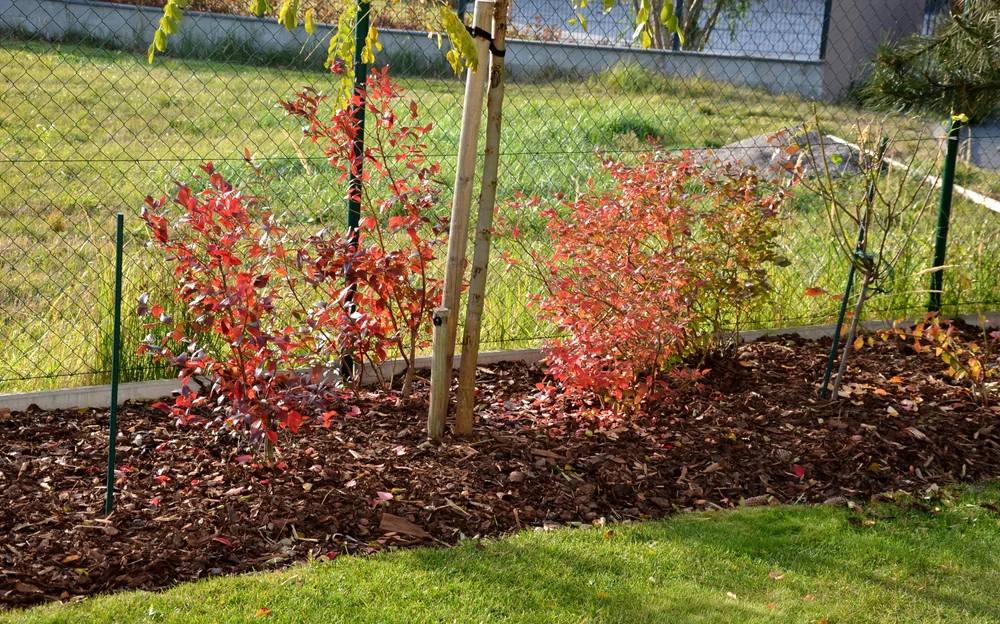
Organic lawn treatment is a soil-first strategy. Instead of feeding grass directly, you feed the soil ecosystem. Organic fertilizers break down slowly as microorganisms—bacteria, fungi, earthworms—do their work. This creates a living system underground that naturally supports healthy grass growth, improves water retention, and builds drought resistance over time.
Here’s what that actually looks like in Suffolk County. You apply organic fertilizer in spring once soil temperatures reach 55 degrees, typically mid-April on Long Island. The grass greens up gradually over two to three weeks, not overnight. Corn gluten meal goes down as a natural pre-emergent to suppress crabgrass, though it’s less effective than synthetic options. Compost adds organic matter to Haven Loam soil—the most common soil type in Suffolk County—improving its structure and ability to hold nutrients.
You overseed in early fall when cool-season grasses like tall fescue, Kentucky bluegrass, and perennial ryegrass are actively growing. September is ideal timing for Long Island. You aerate to relieve soil compaction, which is common in coastal areas with heavy clay content and foot traffic. And you accept that a few weeds are part of the deal, because no organic herbicide works as consistently as chemical options.
The trade-off is time. Organic methods take longer to show full results—typically three to four growing seasons if you’re starting with poor soil or a lawn that’s been chemically dependent. But once soil health improves, the lawn requires less water, fewer applications, and less intervention. You’re building a self-sustaining system instead of one that needs constant chemical inputs to stay green. Organic fertilizers also won’t burn your grass if applied incorrectly, unlike concentrated synthetic fertilizers.
Organic lawn care means rethinking what “perfect” looks like. Clover, often treated as a weed, actually fixes nitrogen in the soil, stays green with minimal water, and supports pollinators. In an organic approach, some clover might be welcome. That mindset shift—from eliminating everything that isn’t grass to supporting a healthy, diverse lawn ecosystem—is part of what makes organic care work long-term in Suffolk County’s environmental conditions.
Chemical lawn treatment delivers visible results quickly. Synthetic fertilizers contain nitrogen, phosphorus, and potassium in concentrated forms that grass roots absorb immediately. You see the lawn green up within three to seven days of application. Chemical herbicides like 2,4-D kill broadleaf weeds on contact, and pre-emergent herbicides like prodiamine prevent crabgrass and annual weeds from sprouting at all.
The speed is the main advantage. If your lawn is thin, weedy, or struggling through Long Island’s hot summers and compacted soil, chemical treatments can turn it around fast. A spring application of pre-emergent stops crabgrass before it emerges. A shot of synthetic nitrogen in late May pushes growth when grass is most active. Spot-treating dandelions or clover with a selective herbicide clears them in one to two weeks. For homeowners who need immediate improvement or want to address specific problems quickly, chemicals work.
But that speed comes with trade-offs. Chemical fertilizers don’t improve soil health—they bypass it entirely. The grass gets fed, but the soil doesn’t. Over time, this can lead to compaction, reduced microbial activity, and a lawn that’s dependent on regular chemical applications to maintain color. If you stop treating, the grass fades quickly because the soil can’t support it on its own. Chemical fertilizers also increase the risk of nitrogen runoff during Suffolk County’s heavy spring rains.
Chemical herbicides are effective, but they’re not selective in their broader environmental impact. A broadleaf herbicide kills dandelions, clover, and other flowering plants that support bees and pollinators. Pre-emergent herbicides prevent all seeds from germinating, including grass seed, which means you can’t overseed in spring if you’ve applied a pre-emergent in April. Timing and application rates matter—too much burns the grass, and applying at the wrong time wastes money and increases runoff risk.
In Suffolk County, chemical lawn treatment requires navigating local regulations carefully. No fertilizer applications between November 1 and April 1, even during mild weather. Phosphorus is restricted in fertilizers to reduce nutrient pollution. And because Long Island’s drinking water comes entirely from groundwater, every application carries potential to reach the aquifer. That’s not theoretical—it’s why fertilizers are estimated to contribute 50% of nitrogen pollution to local waterways and why Suffolk County enacted strict fertilizer laws.
Chemical treatments work fast and effectively. But they require careful application, regular reapplication, and an understanding that you’re treating symptoms—green grass and no weeds—without necessarily addressing the underlying cause, which is soil health and ecosystem balance.
Want live answers?
Connect with a Rolling Hills Property Services Inc expert for fast, friendly support.
Weeds are the main reason most Suffolk County homeowners consider chemical lawn treatment. Dandelions, clover, crabgrass, broadleaf plantain—they show up, spread fast, and resist most organic control methods. Chemical weed control is effective and delivers fast results. Organic weed control is slower, less consistent, and requires more manual effort. That’s the honest reality.
Chemical herbicides work by disrupting plant growth at the cellular level. Selective herbicides target broadleaf weeds without harming grass. Pre-emergent herbicides create a chemical barrier in the soil that prevents weed seeds from germinating. Post-emergent herbicides kill existing weeds. You can treat your entire lawn or spot-spray individual weeds. Results appear in days to two weeks, and with repeated applications, you can keep most weeds under control throughout the growing season.
Organic weed control relies on prevention, cultural practices, and manual removal. Corn gluten meal can suppress some annual weeds like crabgrass, but it’s significantly less effective than synthetic pre-emergents. Vinegar-based sprays and other natural herbicides work on very young weeds, but they’re non-selective—they’ll damage grass too if you’re not careful. The most effective organic weed control is maintaining a thick, healthy lawn that crowds out weeds naturally, combined with hand-pulling weeds when they appear.

The best organic weed control is prevention through proper lawn maintenance. A dense, healthy lawn doesn’t leave space for weeds to establish. That means mowing at the right height—at least three inches for cool-season grasses in Suffolk County—so grass shades the soil and prevents weed seeds from germinating. It means overseeding in early fall to fill thin areas before winter, giving grass a competitive advantage in spring. And it means improving soil health so grass grows thick and strong enough to outcompete weeds.
Corn gluten meal is the most common organic pre-emergent weed control. It works by releasing proteins that inhibit root formation in germinating seeds. Timing is critical—it needs application before weed seeds sprout, usually early April in Suffolk County when forsythia blooms. But corn gluten is also a nitrogen source containing about 10% nitrogen, which means applying it at rates high enough for weed control can exceed Suffolk County’s fertilizer restrictions. And it’s only 60-80% as effective as synthetic pre-emergents, so you’ll still see breakthrough weeds.
For weeds already growing, organic options are limited and labor-intensive. Hand-pulling works, especially for broadleaf weeds like dandelions with taproots. You need to remove the entire root, or the weed regrows within weeks. A long-handled weeding tool makes this easier on your back, but it’s still time-consuming. Vinegar-based herbicides containing acetic acid burn the tops of weeds, but they don’t kill roots, so perennial weeds regrow. Boiling water works for weeds in sidewalk cracks and driveways, but it’s not practical for lawns.
Cultural practices matter more in organic weed control than in chemical approaches. Proper watering—deep and infrequent rather than shallow and frequent—encourages deep grass roots that outcompete shallow-rooted weeds. Core aeration in early fall relieves soil compaction, which is common in Suffolk County’s Haven Loam soil and allows grass roots to grow stronger. Leaving grass clippings on the lawn adds nitrogen naturally and helps grass stay thick.
The reality is that organic weed control requires accepting a different standard. A few dandelions or some clover in the lawn aren’t failures—they’re normal in an organic system. Clover actually benefits your lawn by fixing nitrogen from the air into the soil and staying green during Long Island’s summer droughts when grass goes dormant. If you can shift your mindset from “zero weeds” to “mostly grass with occasional other plants,” organic weed control becomes manageable. If you need a completely weed-free lawn, chemicals are the more effective option.
Organic weed control is also a long-term strategy. The first year or two, you’ll see more weeds than with chemical treatments. But as soil health improves and the lawn thickens from overseeding and proper maintenance, weeds have a harder time competing. By year three or four, a well-maintained organic lawn can be as weed-resistant as a chemically treated one—not because you’re killing weeds, but because the grass is strong enough to outcompete them naturally.
Chemical weed control is effective because it’s been engineered to target specific plant processes. Selective herbicides like 2,4-D, dicamba, and MCPP kill broadleaf weeds by mimicking plant hormones, causing uncontrolled growth that eventually kills the plant. Grass isn’t affected because it has a different cellular structure. Pre-emergent herbicides like prodiamine and dithiopyr prevent cell division in germinating seeds, stopping crabgrass, foxtail, and other annual weeds before they emerge from the soil.
These products work consistently and predictably. A single spring application of pre-emergent can prevent crabgrass for the entire growing season in Suffolk County. A post-emergent application on dandelions, clover, or broadleaf plantain clears them out in one to two weeks. You can buy these products at any garden center or hire a professional lawn care company to apply them. The cost is reasonable—typically $50-100 for DIY products covering 5,000 square feet—and results are visible quickly.
But chemical herbicides come with important considerations. They’re not harmless to all plants or organisms. Glyphosate, the active ingredient in Roundup, is non-selective and kills everything it contacts, including grass and beneficial plants. It’s useful for clearing an area before reseeding, but it’s not for use on existing lawns. Selective herbicides are safer for grass, but they still kill all broadleaf plants, including clover and other flowering species that support pollinators like bees and butterflies.
In Suffolk County, chemical weed treatment means working within local environmental regulations. The county restricts fertilizer applications between November 1 and April 1, but herbicides aren’t subject to the same seasonal ban. You can still apply pre-emergent in early April when it’s most effective for crabgrass prevention. However, you need careful attention to application rates, especially with combination products that include both fertilizer and herbicide. Over-application increases nitrogen runoff risk during spring rains, contributing to pollution in Long Island Sound and the Peconic Estuary.
Weather conditions also matter for chemical weed control effectiveness. Apply herbicides when temperatures are between 60-85°F and when no rain is forecast for 24-48 hours. Suffolk County’s maritime climate means unpredictable spring weather, so timing applications around rain events requires planning. Windy conditions can cause drift, where herbicide particles move to unintended areas, potentially damaging gardens, shrubs, or neighbors’ plants.
Chemical weed control is the faster, more effective option if your goal is a weed-free lawn with minimal manual labor. It requires less physical effort than hand-pulling, and it delivers consistent results season after season. But it also means introducing synthetic chemicals to your property, and it doesn’t address why weeds show up in the first place—thin grass coverage and poor soil health. If you stop chemical treatments, weeds return quickly because the underlying conditions that favor weeds haven’t changed.
The choice between organic and chemical weed treatment often comes down to priorities and timelines. If you need fast results, have a severe weed problem, and don’t want manual removal, chemicals make sense. If you’re willing to accept a less-than-perfect lawn in exchange for avoiding synthetic herbicides and building long-term soil health, organic methods can work—but you need patience and realistic expectations about what they achieve.
There’s no universally right answer between organic lawn care and chemical treatments. Organic approaches build long-term soil health, avoid synthetic chemicals, and protect Long Island’s water quality, but they take three to four years to show full results and require accepting some weeds. Chemical treatments deliver fast results and effective weed control, but they don’t improve soil health and require ongoing applications to maintain results. Many Suffolk County homeowners choose a hybrid approach—organic fertilizers for soil health combined with spot-treatment of problem weeds using reduced-risk herbicides when absolutely needed.
What matters most is understanding what you’re choosing and why. If you’re in Suffolk County, your lawn care decisions affect more than just your property—they impact Long Island’s sole-source drinking water, the health of the Peconic Estuary, and the environment where your family and pets spend time. Both approaches can give you a green lawn. The question is what else you’re getting—or giving up—in the process, and whether the results align with your priorities for safety, environmental responsibility, and long-term property health.
If you’re looking for lawn care that works with Suffolk County’s regulations, understands Long Island’s coastal soil conditions, and respects environmental priorities, we can help you determine the right approach for your specific property and goals.
Article details:
Share:
Continue learning: