Hiring concrete contractors in Suffolk County requires verifying licenses, understanding permits, and knowing which materials withstand Long Island's harsh climate. Learn what separates qualified contractors from costly mistakes.
Share:
Summary:
Your driveway is crumbling. The patio has cracks spreading like spiderwebs. That sidewalk everyone trips on has become a liability you can’t ignore anymore. You start getting estimates, and suddenly you’re comparing prices that range from reasonable to “are you kidding me?” Some contractors can start tomorrow. Others are booked until next season. One mentions licensing. Three don’t.
Here’s what catches most Suffolk County homeowners off guard: hiring unlicensed concrete contractors isn’t just risky—it’s illegal in Suffolk County, and when things go wrong, you’re left with zero recourse. Beyond licensing, Long Island’s coastal climate creates concrete challenges that require specific expertise most contractors don’t have. Let’s walk through what actually matters when you’re choosing concrete contractors for work that needs to last.
Suffolk County law requires every home improvement contractor performing concrete work to hold a valid license before touching your property. This applies to concrete driveway contractors, concrete repair contractors, concrete resurfacing contractors, and anyone else doing concrete installations or repairs. Under § 563-5 of the Suffolk County Code, operating without licensing is illegal and carries penalties including fines and criminal charges.
For homeowners, hiring unlicensed contractors creates immediate problems. If work goes sideways—incomplete projects, substandard materials, code violations, or contractors who disappear mid-job—you have zero protection through the Suffolk County Office of Consumer Affairs. No complaint process. No restitution fund. No oversight. Whatever mess gets left behind is yours to fix, at your expense.
Licensed contractors have met requirements including insurance coverage, bonding, and testing on local building codes. They’re subject to complaint resolution processes that protect you when issues arise. Verification takes minutes and could save thousands in repairs, legal fees, and the headache of dealing with unlicensed operators who leave you holding the bag.

Ask every contractor for their Suffolk County home improvement license number before discussing project details or pricing. Legitimate contractors provide this immediately. If they dodge the question, claim they don’t need one, or say it’s “being processed,” you’re looking at someone operating illegally or with a suspended license. Walk away.
Verify that license through the Suffolk County Office of Consumer Affairs. Don’t rely on their word alone. The verification shows whether the license is current and active, but more importantly, it reveals complaint history. Many Office of Consumer Affairs violations start with homeowner complaints about performance issues, incomplete work, or contract disputes. That history shows you what you’re actually dealing with before you sign anything.
Insurance verification protects you from liability. Suffolk County requires contractors to carry public liability and property damage insurance. Request current certificates and verify them directly with the insurance company. If concrete pourers or concrete subcontractors get injured on your property, or if they damage your home during installation, proper insurance coverage protects you from medical bills, property damage claims, and legal costs.
References matter, especially recent ones in Suffolk County. Ask for projects completed within the last year, then contact those homeowners directly. Ask about work quality, communication, timeline adherence, and how the contractor handled problems that came up. Pay attention to how contractors respond to your reference request. Hesitation or vague excuses are red flags worth noting.
Local experience tells you whether contractors understand Long Island’s specific challenges. Years of Suffolk County work means they’ve dealt with freeze-thaw cycles, salt air exposure, drainage requirements, and soil conditions firsthand. They know which materials hold up and which fail. That knowledge doesn’t come from training manuals—it comes from seeing what works and what doesn’t in this specific coastal environment over multiple seasons.
Suffolk County regulates concrete work affecting public right-of-way, drainage systems, or structural elements. Concrete driveway installation connecting to county roads requires permits from the Department of Public Works. Sidewalk work in public right-of-way needs permits. Certain patio installations, concrete retaining wall contractors’ projects, and foundation work require building permits depending on scope, location, and drainage impact.
Many homeowners assume contractors handle permits automatically. Some do. Many don’t. Some will claim permits aren’t needed when they absolutely are. If work proceeds without required permits, you’re responsible for violations, not the contractor. Code enforcement can require complete removal of unpermitted work, at your expense, regardless of installation quality.
Ask contractors directly about permit requirements for your specific project. Qualified concrete driveway contractors and cement driveway contractors know exactly which permits are needed, who obtains them, and what the process involves. They should be familiar with Suffolk County drainage regulations, especially for driveways, patios, and retaining walls. Coastal properties near Long Island Sound face additional stormwater management requirements affecting concrete installations.
Drainage matters more on Long Island than most locations. Sandy soil drains quickly but creates concentrated water flow that undermines concrete foundations. Suffolk County’s high water table adds complexity. Proper drainage design prevents new driveways from settling, cracking, or washing out during heavy rain. Contractors understanding local conditions design drainage systems working with Suffolk County’s specific soil and water table challenges.
Permit timelines affect project schedules. Suffolk County requires applications submitted at least 14 business days before work begins for most driveway permits. Some projects need longer review periods. Factor this into timeline expectations. Contractors rushing to start immediately without mentioning permits are either cutting corners or don’t understand requirements. Neither scenario ends well.
Want live answers?
Connect with a Rolling Hills Property Services Inc expert for fast, friendly support.
Suffolk County properties need various concrete services beyond basic driveway installation. From concrete crack repair to complete concrete resurfacing contractors’ projects, from decorative stamped concrete companies’ installations to structural concrete retaining wall contractors’ work, each service requires specific expertise and materials designed for Long Island’s coastal climate.
Concrete repair contractors handle everything from minor crack repairs to major restoration work. Long Island’s freeze-thaw cycles create cracks that spread if not addressed properly. Professional concrete restoration contractors use techniques like epoxy injection, patching, and resurfacing that actually last. DIY fixes or cheap patch jobs fail within months because they don’t address underlying causes or use proper materials for Suffolk County conditions.
Decorative concrete options have expanded significantly. Concrete staining contractors and concrete painting contractors can transform plain gray concrete into attractive surfaces mimicking stone, brick, or custom colors. Stamped concrete companies create patterns and textures that add visual interest to patios, walkways, and driveways. These aren’t just aesthetic upgrades—properly done decorative concrete includes sealers and protective coatings that extend surface life and resist Long Island’s harsh weather.

Garage floor epoxy contractors provide durable, chemical-resistant flooring that handles oil spills, salt exposure from vehicles, and heavy traffic better than bare concrete. Epoxy coatings seal concrete against moisture penetration, prevent staining, and create surfaces that are easier to clean and maintain. For Suffolk County garages dealing with winter salt and moisture, epoxy flooring prevents the deterioration that ruins unprotected concrete floors.
Concrete grinding contractors and concrete cutting contractors handle specialized work like surface leveling, removing damaged concrete sections, and creating expansion joints. Concrete grinding companies use diamond grinding equipment to level uneven surfaces, remove trip hazards, and prepare concrete for coatings or overlays. This work requires specialized equipment and expertise—it’s not something general contractors typically handle well.
Concrete patio companies design and install outdoor living spaces that withstand Long Island weather while providing functional, attractive areas for entertaining and relaxation. Proper patio installation includes base preparation, drainage design, and materials selected for freeze-thaw resistance. Concrete patio companies experienced with Suffolk County conditions know how to prevent settling, cracking, and water pooling that ruins poorly designed patios.
Concrete retaining wall contractors address erosion, grade changes, and landscaping challenges. Retaining walls need proper drainage systems, appropriate materials for soil conditions, and structural design that handles Long Island’s freeze-thaw cycles. Poorly designed retaining walls fail catastrophically, creating expensive repairs and potential property damage. Experienced concrete retaining wall contractors design systems that last decades, not just seasons.
Concrete raising companies offer alternatives to complete replacement for sunken or settled concrete. Mudjacking or polyurethane foam injection lifts settled concrete back to proper levels, fixing trip hazards and drainage issues at a fraction of replacement cost. This works well for driveways, sidewalks, and patios where the concrete itself is still sound but has settled due to soil conditions or poor base preparation.
Concrete contractor residential projects require different approaches than commercial work. Residential concrete contractors work around homeowners’ schedules, minimize disruption to daily life, and focus on aesthetics as much as function. The best residential contractors communicate clearly, keep job sites clean, and complete work within agreed timelines.
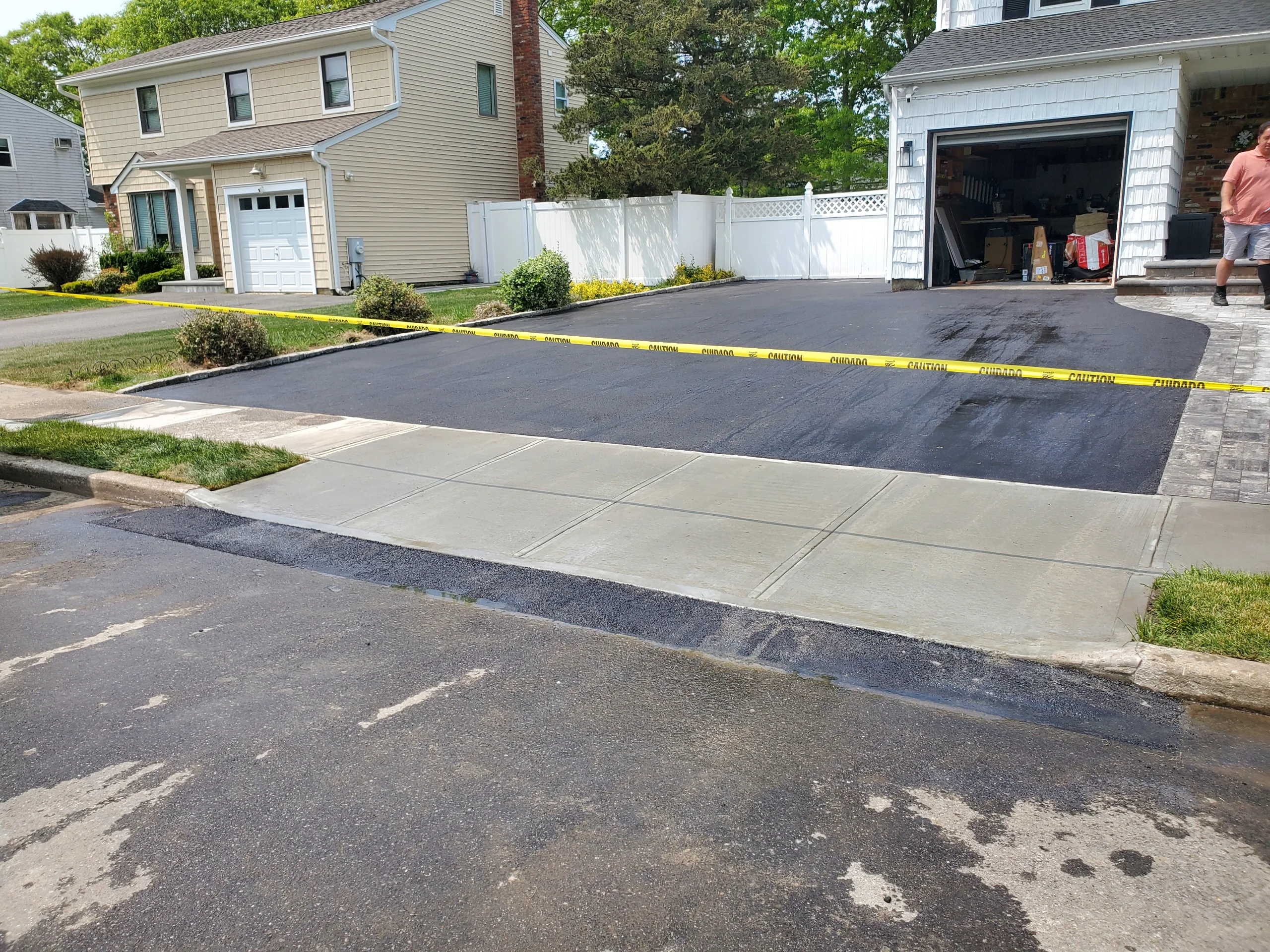
Driveway paving remains the most common residential concrete project. Whether you’re choosing asphalt driveway installation or concrete, the decision affects your property for decades. Asphalt costs less initially but requires regular sealcoating and has a shorter lifespan than concrete. Concrete driveway installation costs more upfront but lasts 25-30 years with proper installation and maintenance. For Suffolk County’s climate, properly installed concrete often proves more cost-effective long-term.
Driveway contractors concrete specialists understand that your driveway isn’t just functional—it’s the first thing visitors see. Curb appeal matters. Concrete layers create smooth, even surfaces that enhance property appearance while providing durable, long-lasting performance. Stamped or stained concrete adds visual interest without sacrificing durability. These options cost more than plain concrete but deliver significantly better aesthetics.
Concrete staining companies and concrete staining contractors offer color options that transform standard gray concrete into surfaces matching your home’s exterior or landscape design. Stains penetrate concrete rather than sitting on the surface, so they don’t chip or peel like paint. Properly applied stains last for years and can be refreshed without complete resurfacing. This makes stained concrete an attractive option for patios, walkways, and driveways where appearance matters.
Concrete restoration contractors bring old, damaged concrete back to usable condition. This includes concrete crack repair, surface grinding to remove damaged layers, resealing, and applying protective coatings. Restoration often costs 30-50% less than complete replacement while extending concrete life by 10-15 years. For homeowners on budgets, restoration through qualified concrete restoration companies provides a middle ground between living with damaged concrete and paying for full replacement.
Long Island’s coastal climate destroys concrete not specifically designed for these conditions. Freeze-thaw cycles, salt air exposure, and temperature swings create stress that standard concrete installations can’t handle. Within a few seasons, you’ll see cracking, spalling, and deterioration turning significant investments into expensive repair projects.
Freeze-thaw damage occurs when water penetrates concrete, freezes, and expands. That expansion creates internal pressure cracking concrete from the inside out. Long Island temperatures hover between 20° and 40° during winter, creating constant freezing and thawing. Each cycle causes more damage. Unsealed or improperly mixed concrete fails fast under these conditions, which is why choosing concrete pourers and concrete pouring companies experienced with Long Island installations matters so much.
Salt air accelerates everything. Properties within five miles of Long Island Sound or the Atlantic Ocean face salt-laden air that settles on concrete surfaces and attracts moisture. That combination speeds deterioration, weakens protective coatings, and makes freeze-thaw damage worse. Coastal properties need specialized sealers and materials designed to resist salt exposure. Standard concrete products don’t provide adequate protection.
Article details:
Share:
Continue learning: