
Hear from Our Customers

You’re looking at concrete that handles what West Islip throws at it. Salt air from the Great South Bay. Freeze-thaw cycles that crack poorly installed work within two winters. Sandy soil that shifts if the base isn’t compacted right.
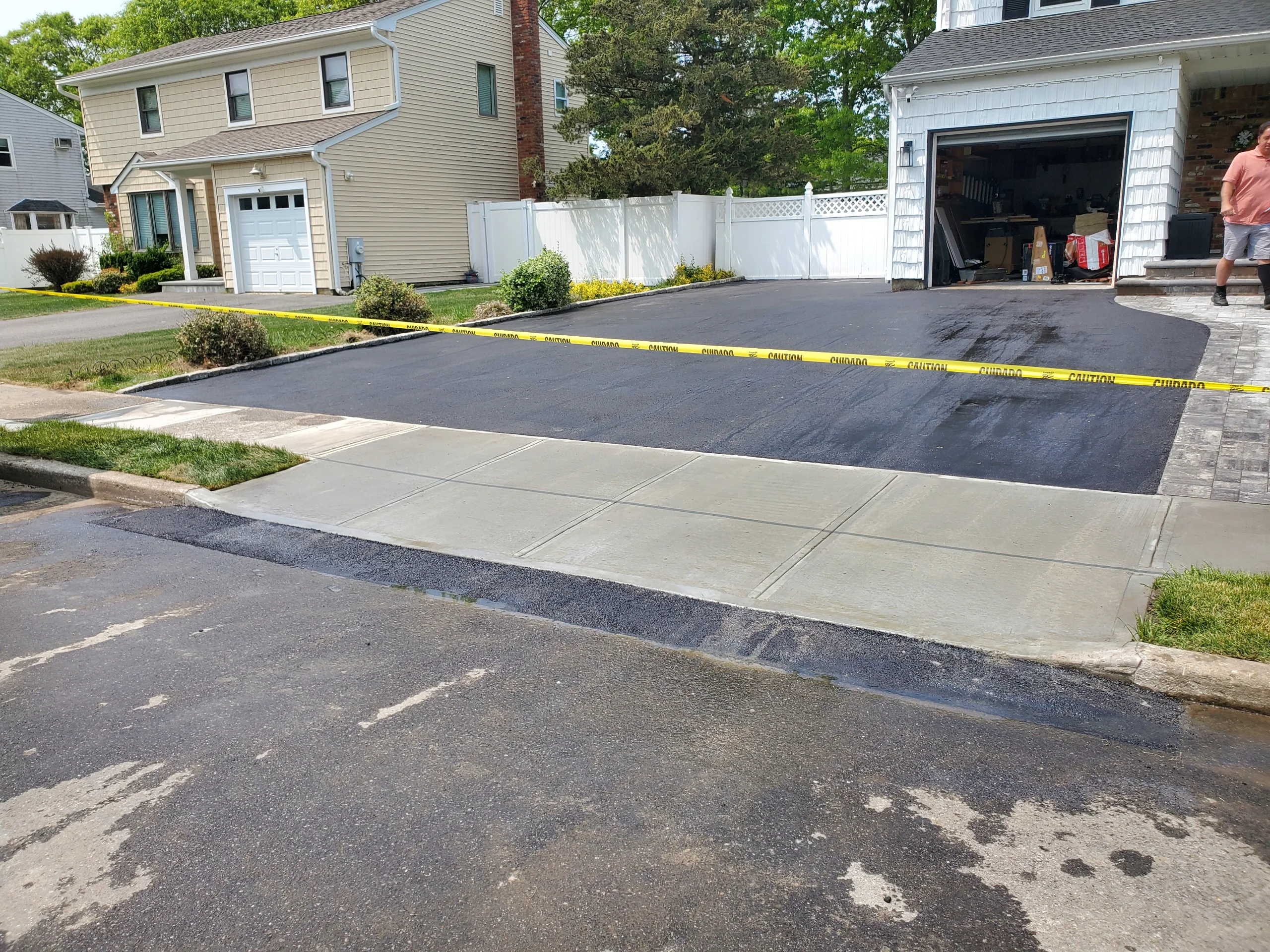
When we grade your property, we’re solving for drainage first. That means your driveway slopes away from your foundation at the right grade. Your walkways don’t become ice rinks. Your Belgian block apron connects to the street without that awkward lip that scrapes your car.
The difference shows up five years later when your neighbor’s concrete is settling and yours looks like it was poured yesterday. That’s what happens when we use GPS-guided graders instead of eyeballing it. When we compact the base in lifts instead of dumping and hoping.
We work exclusively in Suffolk County because Long Island concrete is different. The soil composition near Udall Road isn’t the same as properties closer to Montauk Highway. The water table near West Islip Beach sits higher than most homeowners realize.
We’re not the crew that shows up, pours, and disappears. We’re licensed and insured, and we use the same heavy machinery commercial contractors use—because your driveway deserves the same precision as a parking lot that handles 18-wheelers.
You’ll see our equipment doing the work most concrete guys skip. Excavators for proper depth. Compactors that actually stabilize your base. Motor graders that create the exact slope your property needs so water goes where it should.

First, we look at your property’s drainage. Where does water go when it rains? Where’s it supposed to go? If your yard slopes toward your foundation or your driveway creates a dam, we’re fixing that before we pour anything.
Then we excavate to proper depth. Not the two inches some contractors get away with. We’re talking about removing enough material to install a real base—usually 4 to 6 inches of compacted aggregate, depending on your soil and what the concrete will support.
We bring in the graders to set precise slopes. Your driveway needs to pitch away from your garage. Your walkways need to drain toward the street or your yard, not toward your house. We use GPS guidance on larger jobs because a quarter-inch error becomes a puddle problem.
Base preparation is where cheap jobs fail. We compact in layers, not all at once. Each lift gets tamped until it won’t compress anymore. That’s what keeps your concrete from settling unevenly when that sandy West Islip soil shifts underneath.
Finally, we pour and finish. If you’re getting a Belgian block apron, we set those granite blocks to create a clean transition from your driveway to the street. If it’s a sidewalk repair, we match the existing elevation and tie into your current concrete properly.

Ready to get started?
Sidewalk repair in West Islip means dealing with settling that happened because the original contractor didn’t account for sandy substrate. We don’t just patch the surface. We address why it settled, regrade if needed, and make sure the repair lasts longer than the original installation.
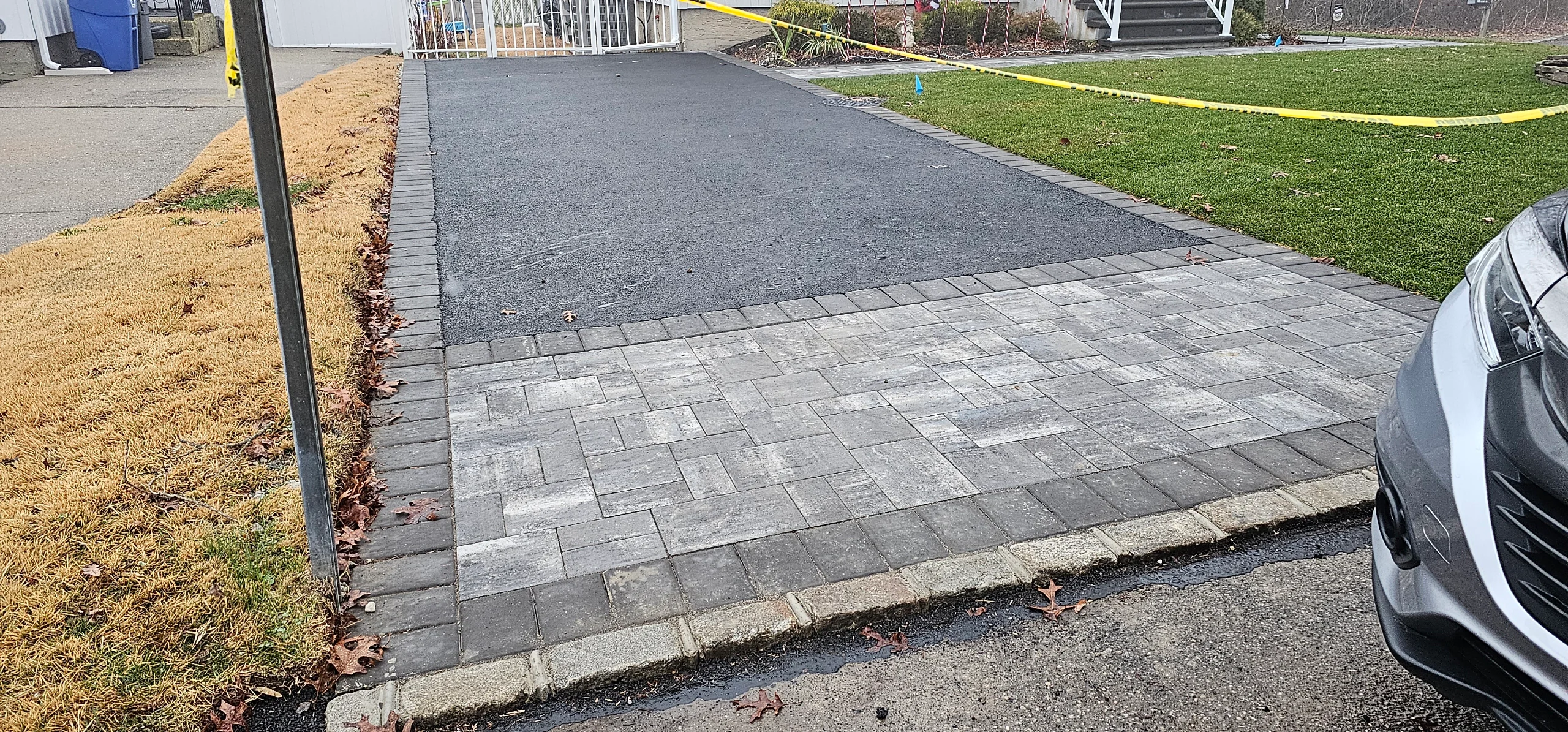
Belgian block driveway aprons are one of the best upgrades for curb appeal in neighborhoods near Higbie Lane and the bay-front properties. Granite blocks frame your driveway, handle the transition to the street, and look sharp for decades. We set them level, ensure proper drainage through the joints, and make sure they comply with Town of Islip requirements for apron width.
Concrete curb installation creates clean edges for your driveway or defines your landscaping beds. More importantly, it directs water where you want it. A properly installed curb keeps runoff from eroding your lawn and guides it toward the street or a drainage solution.
Our masonry flatwork covers patios, walkways, and any concrete surface that needs to be level and functional. West Islip’s coastal humidity and salt air mean we seal surfaces that need protection and use mix designs that handle freeze-thaw cycles without spalling.
You’re looking at $8 to $12 per square foot for the base preparation alone, and that’s the part that determines whether your driveway lasts five years or fifty. Total cost depends on your property’s current grading, how much excavation we need to do, and what drainage issues we’re solving.
A standard two-car driveway in West Islip runs between $6,000 and $12,000 for complete installation with proper base prep. If you’re adding a Belgian block apron, add another $2,000 to $4,000 depending on the width and how much grading the street transition requires.
Properties near the bay or with high water tables cost more because we’re solving drainage problems that don’t exist on every lot. If your current driveway pools water or you’ve got settlement issues, we’re excavating deeper and installing better drainage solutions before we pour anything. That costs more upfront. It also means you’re not repaving in three years.
West Islip sits on sandy soil that shifts when it’s not properly compacted. Your walkway is cracking because whoever installed it didn’t prepare the base correctly. They either skipped compaction entirely, didn’t excavate deep enough, or poured over soil that was never stabilized.
Freeze-thaw cycles make it worse. Water seeps into small cracks, freezes, expands, and turns hairline cracks into trip hazards. Long Island goes through dozens of freeze-thaw cycles every winter. Concrete that’s installed without proper base preparation fails fast here.
The other common issue is drainage. If water pools on or under your walkway, it’s undermining the base. Clay soil near the surface holds water instead of letting it drain. That creates voids under your concrete. Then the slab settles into those voids unevenly. Fixing it means addressing the drainage problem, not just replacing the concrete.
Town of Islip requires permits for most concrete work, especially if you’re installing a new driveway apron that connects to the street. Aprons have specific requirements—minimum 15 feet wide, maximum 21 feet, and they need to meet town standards for grade and drainage.
Sidewalk replacement usually needs a permit if it’s in the public right-of-way. Even if it’s on your property, larger concrete projects that involve significant grading or drainage changes often require permits to make sure you’re not creating runoff problems for neighboring properties.
We handle permit consultation as part of our service. We’ll tell you what requires a permit for your specific project, help with the paperwork, and make sure the work meets code. The last thing you want is to pour a driveway and then find out you need to rip it out because it doesn’t meet town requirements.
Belgian block aprons are cut from granite, which means they’re not cracking or spalling like concrete does in coastal conditions. Salt air from the Great South Bay accelerates concrete deterioration. Granite doesn’t care. It looks the same in twenty years as it does the day we install it.
The other advantage is curb appeal. A well-installed Belgian block apron makes even a basic asphalt driveway look high-end. In West Islip neighborhoods with waterfront properties and well-maintained homes, that apron is the first thing people notice. It frames your driveway and signals that you maintain your property correctly.
Installation matters more with Belgian block than with poured concrete. Each block needs to be set level, with proper spacing for drainage, and the transition from your driveway to the street has to be smooth enough that you’re not scraping your front bumper. We set them on a compacted base with the right bedding material so they don’t shift or settle over time.
Concrete that’s installed correctly—proper base prep, correct mix design, adequate drainage—lasts fifty-plus years in Suffolk County. You’ll see driveways from the 1960s that are still solid because the contractor did the work right. You’ll also see driveways from five years ago that are already failing because someone cut corners.
Long Island’s freeze-thaw cycles are the real test. Concrete needs to be poured at the right thickness, with the right mix, and it needs room to expand and contract. Control joints aren’t optional. They’re what keep your driveway from cracking randomly. We cut them at the right spacing so when concrete does crack, it cracks where we want it to.
The base is everything. Concrete poured over poorly compacted fill will settle. Concrete poured without addressing drainage will undermine itself. Concrete installed without considering West Islip’s sandy soil and coastal moisture will fail faster than the same installation would in a different climate. Local experience isn’t just helpful—it’s the difference between concrete that lasts and concrete that becomes your problem.
If the cracks are hairline and the slab hasn’t settled, repair makes sense. We can seal cracks, resurface if needed, and extend the life of your driveway by another ten years. But if you’ve got settlement, multiple cracks, or sections that have sunk more than an inch, you’re better off replacing it.
Here’s why: settlement means the base failed. Patching the surface doesn’t fix the problem underneath. You’ll spend money on repairs, and in two years you’re back to the same issue because the base is still compromised. Replacement lets us fix the drainage, regrade properly, and install a base that won’t fail.
The other consideration is how old your driveway is. If it’s original to a home built in the 1970s or 1980s, it’s lived a full life. Pouring new concrete over a properly prepared base will outlast repairs on a fifty-year-old driveway that’s already showing its age. We’ll look at your specific situation and tell you honestly whether repair or replacement makes more sense for your property and budget.
Other Services we provide in West Islip