
Hear from Our Customers

You stop worrying about cracked sidewalks creating liability issues. No more uneven surfaces collecting water after every storm. No more embarrassment when guests navigate a crumbling front walkway.
Professional concrete work fixes the drainage problems that caused the damage in the first place. We use grading lasers and excavators to ensure water flows away from your foundation, not toward it. That’s how concrete lasts decades instead of years.
Your property value goes up immediately. In Port Jefferson’s competitive real estate market where homes regularly sell for $700,000+, professional flatwork isn’t cosmetic—it’s strategic. Buyers notice driveways, walkways, and curbs before they notice anything else. A well-executed Belgian block apron or stamped concrete patio signals that the entire property has been maintained at a higher standard.
The work holds up through Long Island winters. Freeze-thaw cycles destroy amateur concrete jobs within five years. Proper site prep, correct grading, and professional finishing techniques mean your investment doesn’t crack, sink, or require replacement when other driveways on your street start failing.
We’re based in Smithtown and work throughout Suffolk County. We know how Port Jefferson soil behaves, how drainage patterns work in your neighborhoods, and what the Village requires for permits and sidewalk construction.
We’re not a concrete-only company. We handle excavation, grading, tree removal, and landscaping. That matters because most concrete projects require site prep that other contractors subcontract out. We control the entire process—from removing that old oak tree root that’s lifting your driveway to final finishing touches on your new walkway.
You get transparent pricing, licensed and insured work, and a team that shows up when scheduled. We’ve built our reputation on doing what we say we’ll do, which shouldn’t be remarkable but apparently is in this industry.

We start with a site visit to assess drainage, measure the space, and identify any underlying issues causing current damage. Most concrete problems aren’t concrete problems—they’re drainage or soil problems. We fix those first.
Next comes excavation and grading. We remove old concrete, dig down to stable soil, and use laser grading equipment to establish proper slope. For driveways, that means water runs toward the street. For patios, it means water runs away from your foundation. This step determines whether your concrete lasts 5 years or 30.
Then we handle base preparation. Compacted gravel provides a stable foundation that won’t shift or settle. We’re particular about compaction because settling causes cracks. Forms go up next to contain the pour and create clean edges.
The concrete pour happens on schedule. We use commercial-grade ready mix appropriate for Long Island’s climate. Finishing work includes proper troweling, control joints to manage cracking, and surface treatments if you’ve chosen stamped or decorative options.
Curing takes about a week. You’ll need to stay off the concrete during this period. We’ll give you specific timelines based on weather conditions. Once cured, your new concrete is ready for decades of use.

Ready to get started?
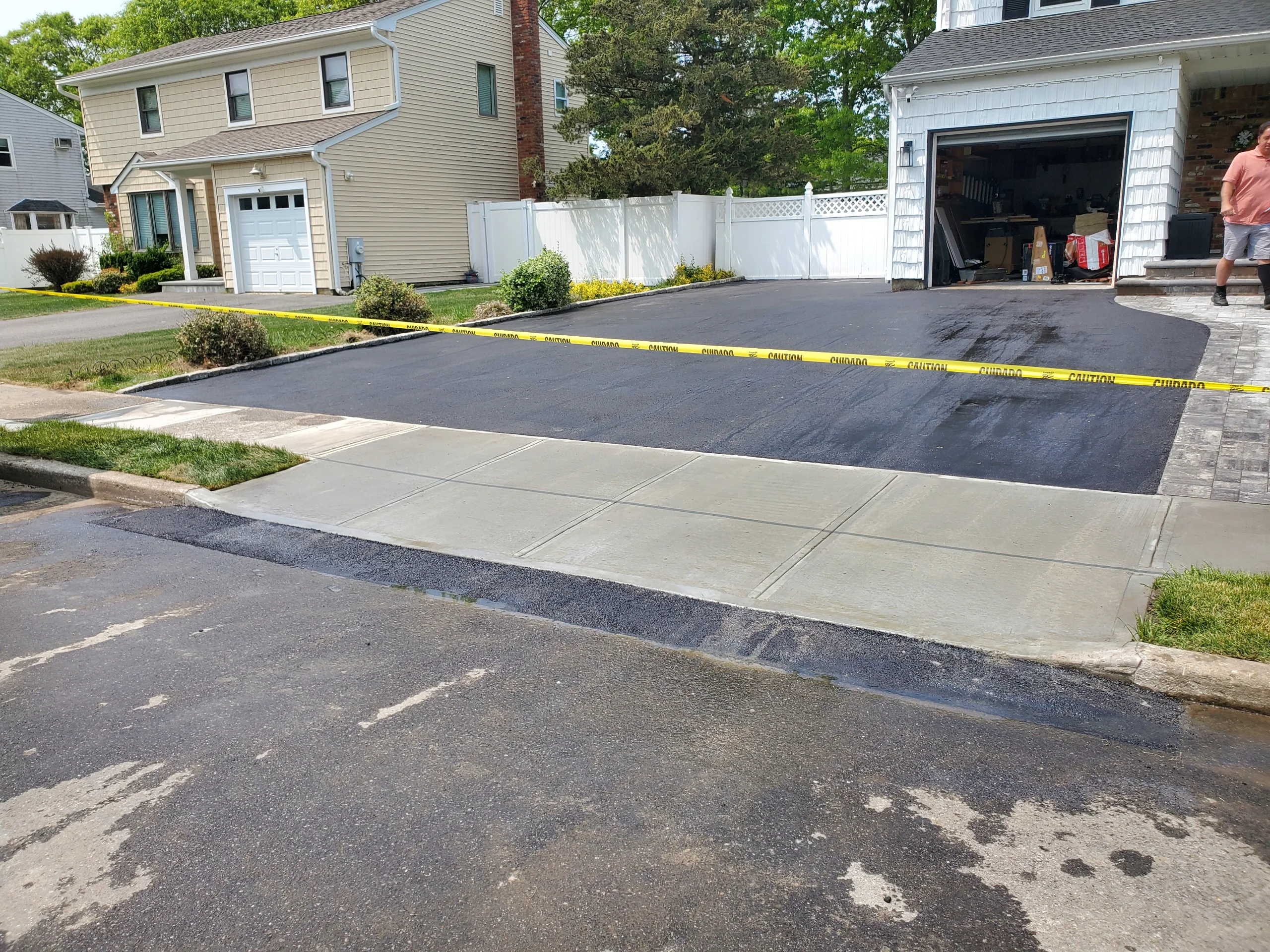
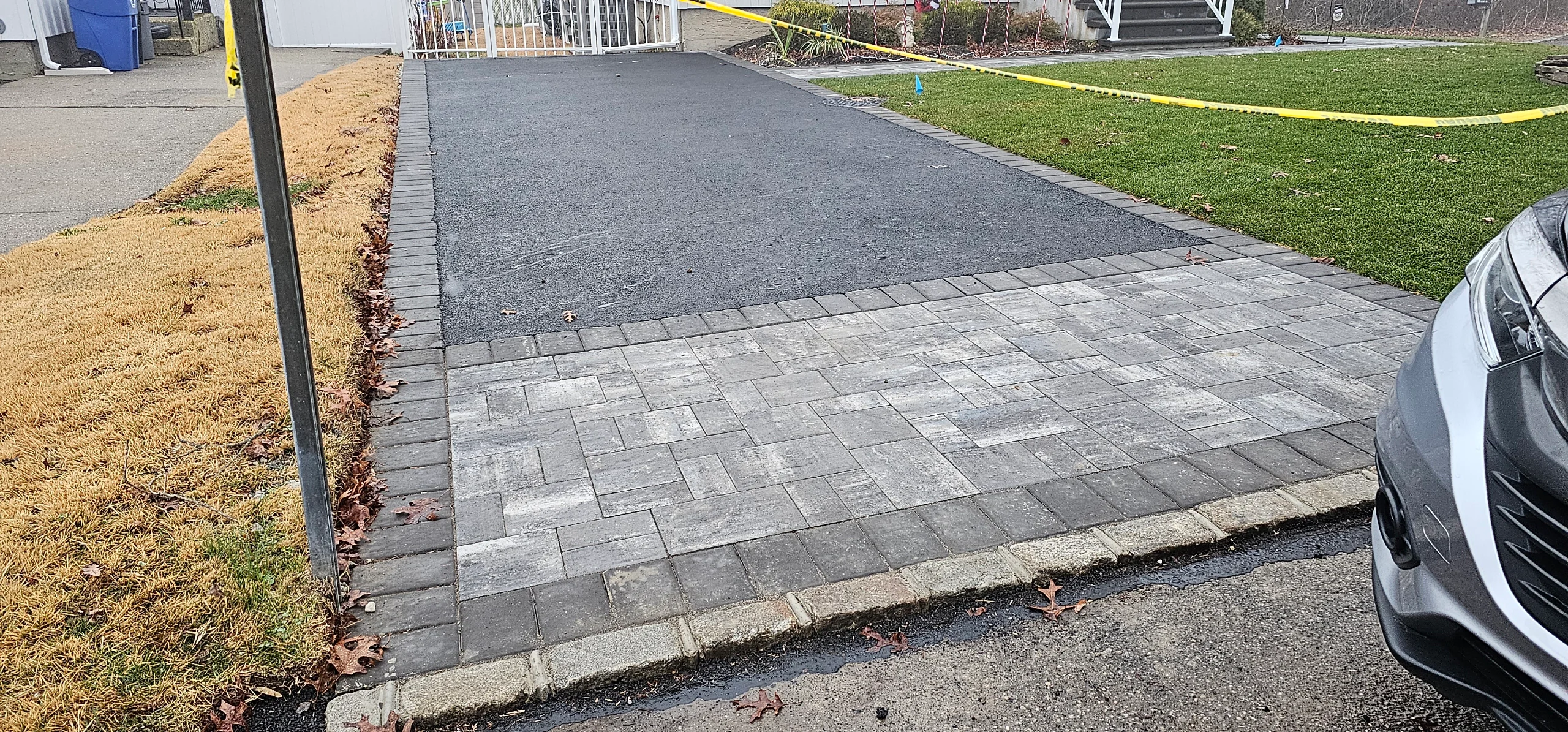
Driveway installation and replacement, including Belgian block aprons at the street transition. Belgian block is granite, which means it outlasts everything else and adds significant curb appeal in Port Jefferson’s higher-end neighborhoods. It’s a premium detail that buyers notice.
Sidewalk repair and replacement to eliminate trip hazards and code violations. The Village of Port Jefferson takes sidewalk maintenance seriously. We handle permits, ensure ADA compliance where required, and build walkways that pass inspection the first time.
Concrete curb installation to define property edges and manage water runoff. Proper curbing keeps mulch in beds, grass out of driveways, and water flowing where it should. It’s functional and visual.
Patio installation using poured concrete, stamped concrete, or paver systems. We’ll walk you through options based on your budget and how you use outdoor space. Stamped concrete offers the look of stone at a lower cost. Pavers allow for easier repairs if you ever need to access utilities underneath.
Steps, walkways, and retaining walls using concrete or masonry block. Port Jefferson properties often have elevation changes that require thoughtful grading and structural solutions. We integrate these elements so they look intentional, not like afterthoughts.
Professionally installed concrete flatwork lasts 25 to 30 years in Port Jefferson’s climate when properly maintained. That’s significantly longer than wood, brick pavers, or asphalt alternatives.
The key factors are proper site preparation and drainage. Most concrete fails early because water collects underneath, freezes, expands, and cracks the slab from below. We use grading lasers to ensure water flows away from concrete surfaces, which prevents the freeze-thaw damage that destroys amateur installations within five to ten years.
Maintenance is minimal. Seal your concrete every few years to protect against salt and moisture penetration. Avoid using metal shovels or harsh deicing chemicals in winter. That’s it. Concrete doesn’t require the ongoing attention that other materials demand, which is why it offers better long-term value despite higher upfront costs.
Poor drainage is the primary culprit. Water collects under the concrete, saturates the soil, and creates voids when it freezes and expands. The concrete slab loses support and cracks under the weight of vehicles or normal use.
Tree roots cause significant damage in Port Jefferson’s established neighborhoods. Roots grow under concrete, lift sections, and create uneven surfaces that crack under stress. We remove problematic roots during excavation and install root barriers when necessary to prevent future issues.
Inadequate base preparation also leads to early failure. If the gravel base isn’t properly compacted or if the excavation doesn’t reach stable soil, the concrete will settle unevenly and crack. This is why we’re particular about site prep—it’s the difference between concrete that lasts five years and concrete that lasts thirty.
Control joints manage cracking by creating intentional weak points where concrete can crack in straight lines rather than random patterns. Properly placed control joints make cracks less visible and easier to repair if they do occur.
Yes, most concrete work in Port Jefferson requires permits, especially if you’re replacing sidewalks adjacent to public streets or making changes to drainage patterns. The Village of Port Jefferson enforces these requirements to ensure work meets safety and accessibility standards.
We handle permit applications as part of our service. This includes submitting site plans, ensuring ADA compliance where required, and scheduling inspections. You don’t need to visit Village Hall or navigate the bureaucracy—we’ve done this enough times to know exactly what the Village expects.
Permit requirements protect you as the property owner. Unpermitted work can create issues when you sell your home, as title companies and buyers’ attorneys often request proof that major improvements were properly permitted. It’s not worth the risk of doing it under the table to save a permit fee.
The permit process typically adds one to two weeks to project timelines. We factor this into our scheduling so you know exactly when work will start and finish. Most permits are straightforward for standard concrete work—complications only arise if you’re doing something unusual or if your property has unique drainage considerations.
Stamped concrete uses patterns and coloring to mimic stone, brick, or tile at roughly half the cost of actual pavers. It’s poured like regular concrete but textured and colored before it fully cures. You get the durability of concrete with a more decorative appearance.
The main advantage is cost and installation speed. Stamped concrete goes in faster than individual pavers and doesn’t have the joint lines where weeds grow. It’s a single monolithic surface, which means fewer maintenance headaches long-term.
The downside is repair difficulty. If stamped concrete cracks, the repair is visible because matching the color and pattern perfectly is nearly impossible. With pavers, you can replace individual stones without anyone noticing. For Port Jefferson properties where aesthetics matter, this is worth considering.
Durability is comparable if both are installed correctly. Stamped concrete needs resealing every two to three years to maintain color and protect against moisture. Pavers need occasional releveling if the base settles, but they handle freeze-thaw cycles slightly better because individual stones can move independently without cracking.
We’ll recommend one over the other based on your budget, how you use the space, and your tolerance for maintenance. There’s no universally correct answer—it depends on your specific situation.
Belgian block aprons in Port Jefferson typically run $40 to $60 per square foot installed, depending on the pattern, site conditions, and how much excavation is required. It’s a premium material, but it lasts indefinitely and significantly boosts curb appeal.
Belgian block is granite, which means it won’t crack, fade, or deteriorate like concrete or asphalt. It’s the same material used in historic streets throughout the Northeast—some installations are over 100 years old and still functional. You’re making a one-time investment rather than planning for replacement in 15 to 20 years.
The installation is labor-intensive. Each block is individually set on a compacted base, leveled, and locked into place. This takes more time than pouring concrete, which is why costs are higher. But the result is a driveway entrance that looks substantially more expensive than it actually is.
Most Port Jefferson homeowners install Belgian block at the apron only—the transition between the street and the main driveway. This gives you the visual impact and durability where it matters most without the cost of doing the entire driveway in block. We can show you examples in your neighborhood so you can see how it looks in context.
It depends on the extent and cause of damage. Surface cracks, minor spalling, and small sections of broken concrete can often be repaired. Widespread cracking, significant settling, or damage caused by ongoing drainage issues usually requires replacement.
Repairs make sense when the underlying base is still solid and the damage is cosmetic or limited to one area. We can patch cracks, resurface worn sections, or replace individual concrete panels if they’re separated by control joints. These repairs cost 30% to 50% of full replacement and can extend the life of your concrete by several years.
Replacement is necessary when the base has failed, when more than 30% of the surface is damaged, or when drainage issues will continue causing problems. Repairing concrete that’s sitting on a failed base is throwing money away—the repairs will fail just as quickly as the original installation.
We’ll give you an honest assessment during the site visit. If repairs will buy you five to seven years before replacement becomes necessary, we’ll tell you that. If the concrete is beyond saving and repairs would be a waste of money, we’ll tell you that too. The goal is helping you make the decision that makes sense for your property and budget, not selling you the most expensive option.
Other Services we provide in Port Jefferson