
Hear from Our Customers

A cracked driveway apron or sinking sidewalk doesn’t just look bad. It tells buyers your property hasn’t been maintained. It creates trip hazards. It lets water pool near your foundation.
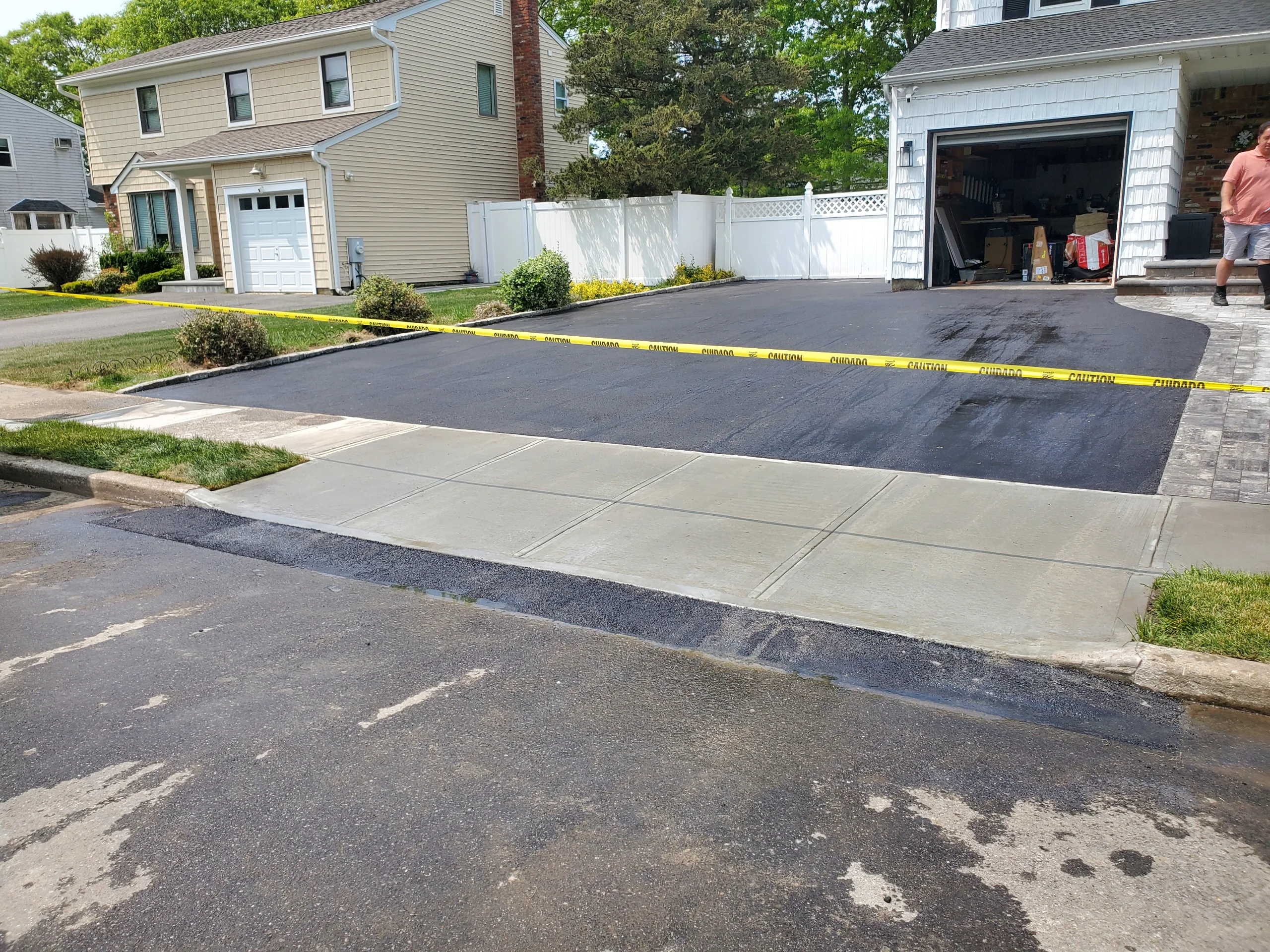
Belgian block driveway aprons and concrete curb installation fix that permanently. These aren’t cosmetic upgrades—they’re structural improvements that protect your pavement edges, control drainage, and add real value to homes in Northport’s competitive real estate market.
When concrete work is engineered for Suffolk County’s soil conditions and climate, it doesn’t need constant repairs. The base stays stable. The grading directs water away from your home. The materials hold up through winter after winter. You’re looking at 25 to 30 years of performance, not 5 years before the next repair bill.
We’re based in Smithtown and work throughout Suffolk County. We’ve been handling concrete and masonry projects for Northport homeowners long enough to know what fails and why.
Long Island’s clay soil, high water tables, and freeze-thaw cycles destroy concrete work that wasn’t installed correctly. We use laser-guided grading equipment and proper base preparation because that’s what actually matters. The difference between a driveway apron that lasts three years and one that lasts thirty comes down to the work you don’t see.
We’re fully licensed and insured. Every project gets a satisfaction guarantee. You’ll get a clear quote upfront, and we’ll work around your schedule to minimize disruption.

First, we assess your property’s drainage and grading. Most concrete problems in Northport start with water that isn’t being directed away from the house. We identify where water pools, where the grade is wrong, and what needs to be fixed at the base level.
Next comes excavation and base prep. This is where most contractors cut corners, and it’s why their work fails. We excavate to the right depth, install compacted gravel layers, and use laser-guided equipment to set the proper pitch. On Long Island’s flat terrain, every fraction of an inch matters for drainage.
Then we install your concrete work or Belgian block. For driveway aprons, we make sure the transition from asphalt to concrete is smooth and properly reinforced. For sidewalk repair, we address the root cause—usually settling or tree roots—so the problem doesn’t come back. Belgian blocks get set in concrete with mortared joints because that’s the only way they stay put.
Finally, we handle cleanup and a walkthrough. You’ll see exactly what was done and why. We’ll explain how to maintain it and what to expect long-term.

Ready to get started?
Concrete grading and prep isn’t optional in Northport. Your property needs to slope at least 5% away from your foundation—that’s six inches of drop for every ten feet. Without that grade, water sits against your house and finds its way into your basement.
We handle sidewalk repair, driveway aprons, concrete patios, Belgian block curbing, and masonry flatwork. Each project starts with proper excavation and base preparation. That costs more upfront, but it’s the difference between work that lasts and work that fails.
For Belgian block installations, we don’t treat them like pavers. They need a solid concrete base and mortared joints, or they’ll shift and rut within a season. Most failures happen because someone tried to save money on the base.
Northport’s postwar housing stock means many properties are dealing with 50-year-old concrete that’s reached the end of its life. Cracks don’t get better. Settling doesn’t fix itself. Drainage problems get worse every year. Addressing these issues now protects your home’s structure and prevents much more expensive foundation repairs down the road.
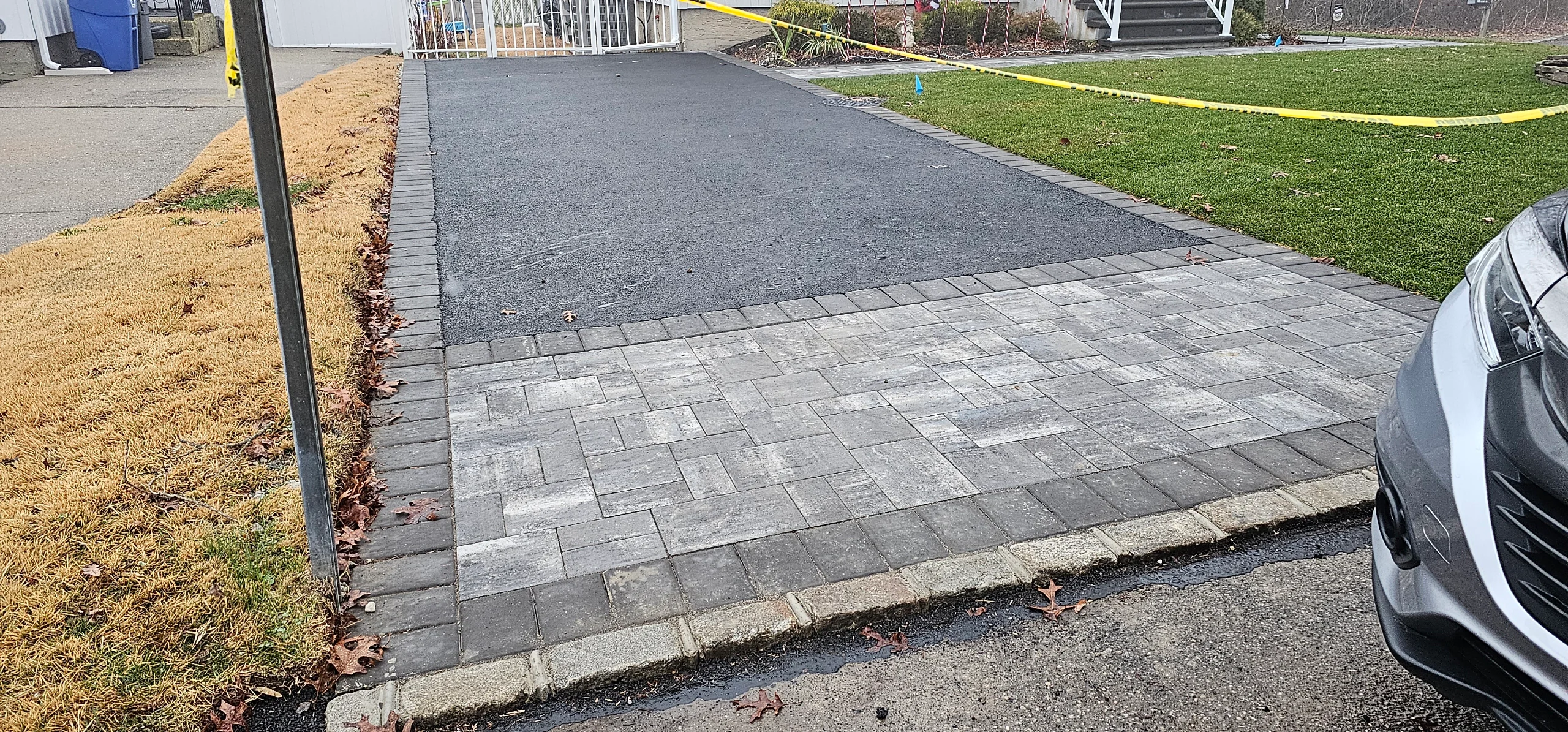
A properly installed Belgian block apron lasts 25 to 30 years or longer with minimal maintenance. The key is installation method—not the blocks themselves.
Belgian blocks need to be set in a concrete base with mortared joints. If they’re laid on gravel and sand like regular pavers, they’ll shift and settle within a few years. The blocks don’t interlock, so they need a solid foundation to stay in place.
Long Island’s freeze-thaw cycles are hard on any outdoor surface. Water gets into cracks, freezes, expands, and pushes materials apart. Belgian blocks set in concrete with proper joints don’t have gaps for water to infiltrate, so they hold up through winter after winter. You’re looking at decades of performance if the base work is done right.
Poor base preparation, inadequate drainage, and tree roots cause most sidewalk problems in Suffolk County. The soil under your sidewalk needs to be stable and properly compacted, or the concrete will settle unevenly.
Northport’s clay soil holds water instead of draining it away. When water saturates the soil under your sidewalk, it weakens the base. Add freeze-thaw cycles, and you get cracking and sinking. Tree roots make it worse by pushing concrete slabs up or creating voids underneath where soil washes away.
Fixing a sinking sidewalk means addressing what’s happening below the surface. We excavate, remove or cut back roots, install proper base materials, and set the grade so water drains away from the walk. Patching the surface without fixing the base just delays the problem for a year or two. You need to fix why it’s sinking, not just what’s visible.
Concrete curb installation in Northport typically runs between $15 and $30 per linear foot, depending on the complexity of your property’s grading and drainage needs. That includes excavation, base prep, forming, pouring, and finishing.
The wide range comes down to site conditions. If your property has good drainage and stable soil, installation is straightforward. If we’re dealing with poor grading, clay soil, or drainage issues that need to be corrected, the project takes more time and materials.
Base preparation is where the cost—and the value—really sits. Proper excavation and grading costs more upfront but determines whether your curbing lasts five years or thirty. Contractors who quote unusually low prices are cutting corners on base work, and you’ll pay for it later in repairs. Get a detailed quote that breaks down what’s included so you know exactly what you’re getting.
Yes, and we should. Most concrete projects in Northport require drainage corrections because the existing grading is wrong. Water that pools near your foundation will eventually cause basement seepage, foundation damage, and mold problems.
We use laser-guided grading equipment to set the proper pitch. Your property needs to slope away from your house at a minimum 5% grade. On Long Island’s flat terrain, that means precision work—every fraction of an inch affects where water goes.
Sometimes fixing drainage means installing catch basins, French drains, or regrading larger areas around your driveway or patio. We assess your property’s water flow during the initial consultation and include drainage solutions in the project plan. Concrete work that doesn’t address drainage is concrete work that will fail. Water always wins if you don’t direct it away from your home.
Belgian blocks are solid granite stones, typically 4×8 inches or larger, that were originally used as street pavers. Concrete pavers are manufactured units that interlock. They’re installed completely differently and serve different purposes.
Concrete pavers work well for patios and walkways where you want design flexibility. They interlock, so they can be laid on a compacted gravel and sand base. They’re easier to replace individually if one gets damaged.
Belgian blocks are better for driveway aprons, curbing, and edging where you need serious durability. They’re much heavier and don’t interlock, so they require a concrete base and mortared joints. When installed correctly, they’re nearly indestructible. They handle vehicle weight, snow plows, and Long Island winters without cracking or shifting. The installation cost is higher, but you’re looking at a permanent solution that adds real curb appeal and property value to homes in Northport’s market.
Ask what’s included in their base preparation and how deep they’re excavating. Proper base work for concrete flatwork in Suffolk County means excavating 8 to 12 inches deep, installing compacted gravel layers, and setting the grade with precision equipment.
A detailed quote should break down excavation depth, base materials, and grading methods. If a contractor can’t explain their base prep process or quotes a price significantly lower than others, they’re probably skipping steps that matter.
You should see multiple layers of compacted gravel going in before any concrete gets poured. The base should be laser-graded to ensure proper drainage pitch. For Belgian block installations, you should see a concrete base being poured—not just gravel and sand. These steps take time and cost money, but they’re the difference between concrete work that lasts three years and work that lasts thirty. Ask questions upfront, and make sure you’re comparing the same scope of work when you’re looking at quotes.
Other Services we provide in Northport