
Hear from Our Customers

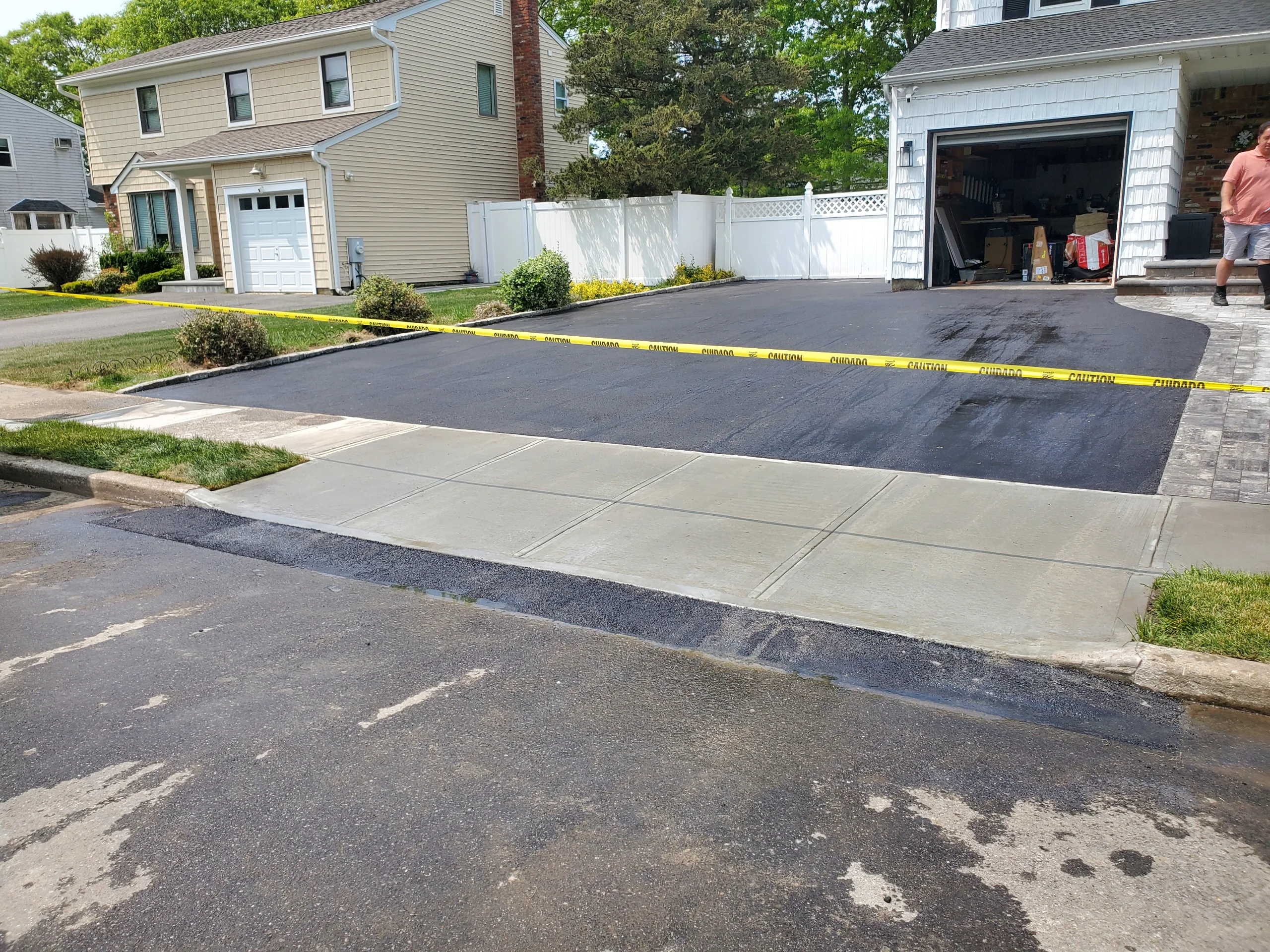
Your driveway apron stops being something you avoid looking at every morning. The transition from street to driveway becomes smooth, clean, and structurally sound—no more scraping low-clearance vehicles or watching water pool after every storm.
Property value increases immediately. A well-installed Belgian block apron with proper concrete backing signals quality to every person who drives past your home. In Jamesport’s real estate market, that visual impact translates directly to resale value.
Water goes where it’s supposed to go. With professional grading designed specifically for Long Island’s clay-heavy soil, you stop dealing with standing water, spongy spots near your foundation, and ice patches that linger for days. The drainage works because the base preparation was done right the first time.
You’re not calling someone back in two years to patch cracks or reset pavers. Commercial-grade materials combined with heavy machinery for proper compaction mean your concrete work holds up against nor’easters, freeze-thaw cycles, and everything else Jamesport weather throws at it.
We’ve spent nearly two decades learning how Long Island’s clay soil behaves—and more importantly, how to work with it instead of against it. We’re based in Smithtown and serve property owners throughout Suffolk County who need concrete and masonry work that actually lasts.
We’re fully licensed and insured, which matters more than it sounds. When you’re dealing with curb cuts, municipal codes, and structural work that affects drainage around your foundation, you want someone who knows the regulations and has the coverage to back up their work.
Our equipment makes the difference. Proper base preparation for Jamesport’s soil conditions requires heavy machinery that can compact layers correctly and grade for drainage. We own that equipment and know how to use it—because we’ve seen what happens when concrete gets poured over inadequately prepared bases.

We start by assessing your property’s specific drainage situation. Jamesport sits close enough to Long Island Sound that moisture levels and freeze-thaw cycles create unique challenges. We look at how water currently moves across your property, where clay soil is causing problems, and what grade changes are needed.
Base preparation comes next, and this is where most concrete work either succeeds or fails. We use heavy machinery to excavate to proper depth, then build up layers of base material with correct compaction at each stage. For clay soil, this process can’t be rushed—each layer needs to be compacted correctly or you’ll have settling issues within a year.
If you’re getting a Belgian block apron, we install the granite borders with concrete backing before pouring the main surface. This provides structural support that prevents edge erosion and keeps pavers from shifting over time. The blocks aren’t just decorative—they’re engineered into the system.
The concrete pour itself follows local code requirements for thickness and reinforcement. We grade the surface to direct water away from your home and toward appropriate drainage points. For curb installations, we ensure the slope is gradual enough to protect vehicle undercarriages while meeting municipal specifications.
Curing takes time, but it’s not complicated. We’ll tell you exactly when you can drive on the new surface and what to expect during the first few weeks. Most installations are ready for normal use within a week, depending on weather conditions.

Ready to get started?
Concrete curb installation meets all local permit requirements. In Jamesport, residential curb cuts need permits—$55 for single-car width up to 10 feet, or $75 for double-car width up to 18 feet. We handle the paperwork and ensure the installation meets municipal specifications for grade, width, and drainage.
Belgian block driveway aprons provide both function and appearance. The granite borders create clean transitions from street to driveway while providing structural support that prevents edge failure. We set them in concrete backing, not just sand, so they stay in place through Long Island winters.
Sidewalk repair addresses both surface damage and underlying causes. If your sidewalk is cracking or settling, it’s usually because of clay soil movement or inadequate base preparation. We fix the foundation issue, not just the visible problem, so you’re not dealing with the same cracks again in two years.
Masonry flatwork covers patios, walkways, and other horizontal concrete surfaces where drainage and durability matter. For Jamesport properties, this means accounting for clay soil expansion, designing proper water runoff, and using materials that hold up to coastal moisture levels and temperature swings.
Local concrete grading and prep makes everything else possible. Suffolk County’s clay soil acts like a barrier to water movement, especially after construction equipment compacts it further. We grade with precision, using professional equipment to create drainage patterns that work with your property’s natural topography and soil conditions.
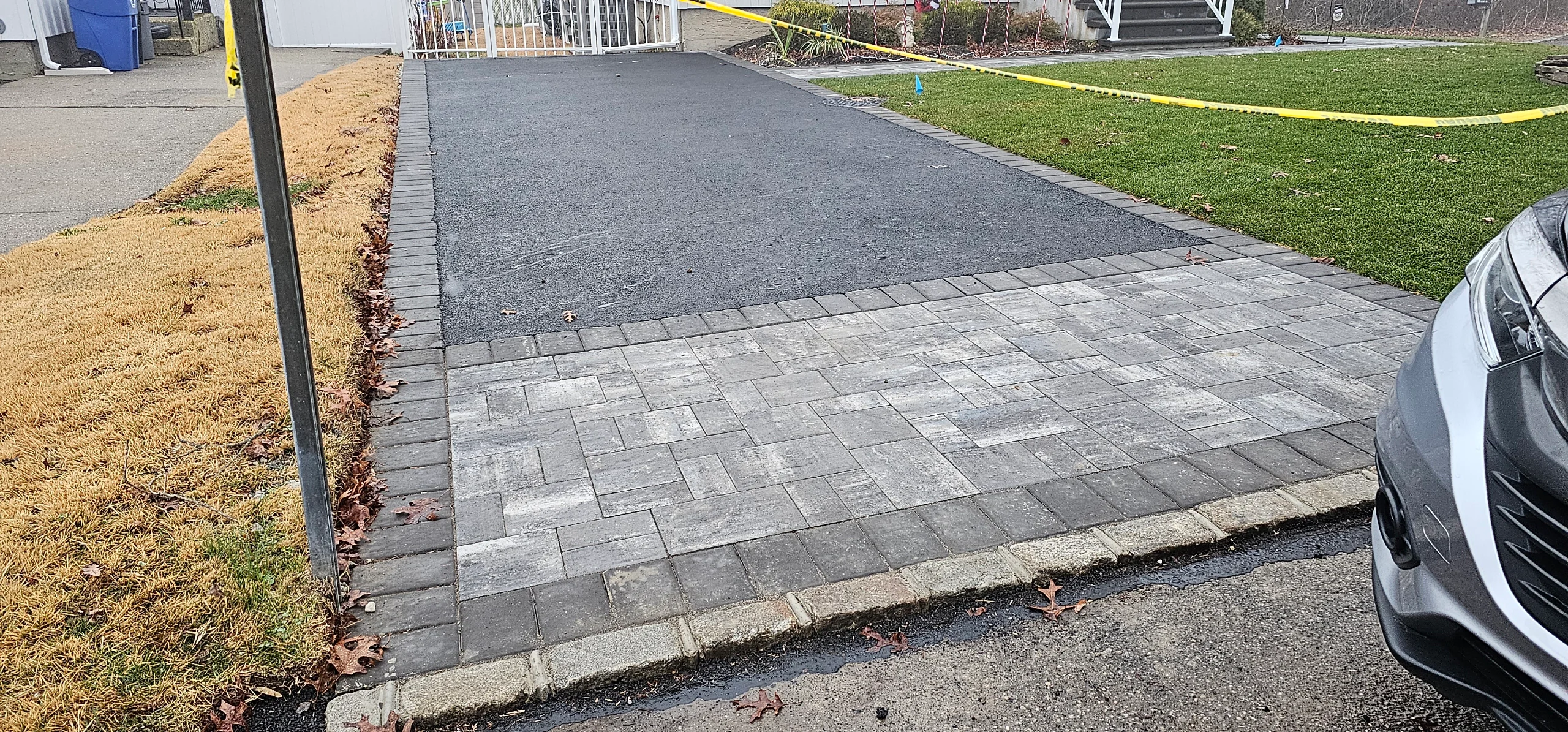
Most Jamesport homeowners invest between $15 and $25 per square foot for complete concrete apron installation, including proper base preparation and Belgian block borders. A standard single-car apron typically runs 10 feet wide by 15-20 feet long, putting total costs in the $2,250 to $5,000 range depending on site conditions and materials.
That price reflects the reality of working with Long Island’s clay soil. Proper base preparation requires excavation, multiple layers of compacted base material, and grading that accounts for drainage challenges specific to Suffolk County properties. Cutting corners on base prep might save money initially, but you’ll pay for it in repairs within a few years.
The investment typically recovers its full value at resale. A well-installed apron with Belgian block borders significantly increases curb appeal and signals quality to potential buyers. In Jamesport’s real estate market, that visible upgrade often returns 100% of the installation cost when you sell.
Standing water usually means the concrete wasn’t graded correctly during installation, or the base has settled unevenly due to clay soil movement underneath. Long Island’s clay-heavy soil expands when wet and contracts when dry, creating an unstable foundation if the base wasn’t properly prepared.
Sometimes the problem is that water has nowhere to go. Clay soil acts like a natural barrier, preventing water from percolating down into the ground. If your concrete surface doesn’t have adequate slope to direct water away from the area, it just sits there—sometimes for days after a storm.
The fix requires addressing the underlying drainage issue, not just the surface. That might mean regrading the concrete, installing proper drainage systems like French drains, or in some cases, removing and reinstalling sections with correct base preparation. A professional assessment can determine whether you need surface corrections or more extensive work to solve the problem permanently.
Belgian block borders aren’t required, but they solve two important problems. First, they provide structural support that prevents edge erosion and keeps your driveway materials from shifting over time. When installed correctly with concrete backing, they create a permanent edge that holds up to vehicle traffic and weather.
Second, they dramatically improve appearance. A clean granite border creates a defined transition from street to driveway that looks intentional and well-maintained. In Jamesport neighborhoods where curb appeal directly affects property values, that visual impact matters.
The alternative is a concrete edge, which works structurally but doesn’t have the same visual presence. Some homeowners choose standard concrete edges to reduce costs, then wish they’d invested in Belgian block when they see the finished result. The borders typically add $12-18 per linear foot to your project, but they’re one of those upgrades that you notice every single time you pull into your driveway.
A standard driveway apron or sidewalk installation typically takes three to five days from excavation to final cure, assuming normal weather conditions. Day one involves excavation and base preparation. Days two and three cover additional base layers, compaction, and forming. The concrete pour usually happens on day four, with initial curing taking 24-48 hours before you can walk on it.
You’ll need to wait about seven days before driving on new concrete, though this varies based on temperature and humidity. Long Island’s coastal climate can extend curing times during humid summer months or shorten them during dry periods. We’ll give you specific guidance based on actual weather conditions during your installation.
Larger projects like full driveway replacement or extensive masonry flatwork take longer—typically one to two weeks depending on size and complexity. Permit processing for curb cuts adds a few days to the timeline, but we handle that coordination so you’re not waiting around for paperwork.
Clay soil expands when it absorbs water and contracts when it dries out, creating an unstable foundation that shifts beneath concrete surfaces. Suffolk County’s clay-heavy soil is particularly dense, acting like a barrier that prevents water from draining naturally into the ground. When you combine that with Long Island’s weather patterns—heavy storms followed by dry periods—you get constant expansion and contraction cycles that stress concrete installations.
Construction equipment makes the problem worse. When heavy machinery compacts clay soil during excavation or grading, it creates an even more impermeable layer that water can’t penetrate. This is why proper base preparation is so critical—you need to remove problematic clay, replace it with appropriate base materials, and compact everything in layers to create a stable foundation.
The proximity to Long Island Sound adds another factor. Jamesport properties deal with higher moisture levels and more severe freeze-thaw cycles than inland areas. Water that gets trapped in clay soil expands when it freezes, creating heaving forces that crack concrete and shift pavers. We account for these conditions by using deeper base preparations and designing drainage systems that move water away before it becomes a problem.
The equipment requirements alone make DIY concrete aprons impractical for most homeowners. Proper excavation requires a mini excavator or skid steer. Base compaction needs a plate compactor heavy enough to actually compress clay soil—not the small vibrating plate you can rent at a hardware store. Concrete finishing requires specific tools and experience to create proper grades and smooth surfaces.
Local codes add another complication. Jamesport requires permits for curb cuts, and the installation must meet specific standards for width, grade, and drainage. If the work doesn’t pass inspection, you’ll need to tear it out and start over—which costs more than hiring us in the first place.
The bigger issue is base preparation. Getting the grading right for Long Island’s clay soil requires understanding how water moves across your specific property and what drainage solutions will actually work long-term. Most DIY installations fail within a few years because the base wasn’t prepared correctly, the grade doesn’t direct water appropriately, or the concrete wasn’t poured to adequate thickness. Professional installation costs more upfront but eliminates the cycle of repairs and replacements that come with inadequate work.
Other Services we provide in Jamesport