
Hear from Our Customers

Your driveway apron takes a beating every winter. Snowplows scrape it. SUVs twist against it. Water pools where it shouldn’t. Eventually, the asphalt crumbles, the curb sinks, and you’re looking at a repair bill that could’ve been avoided.
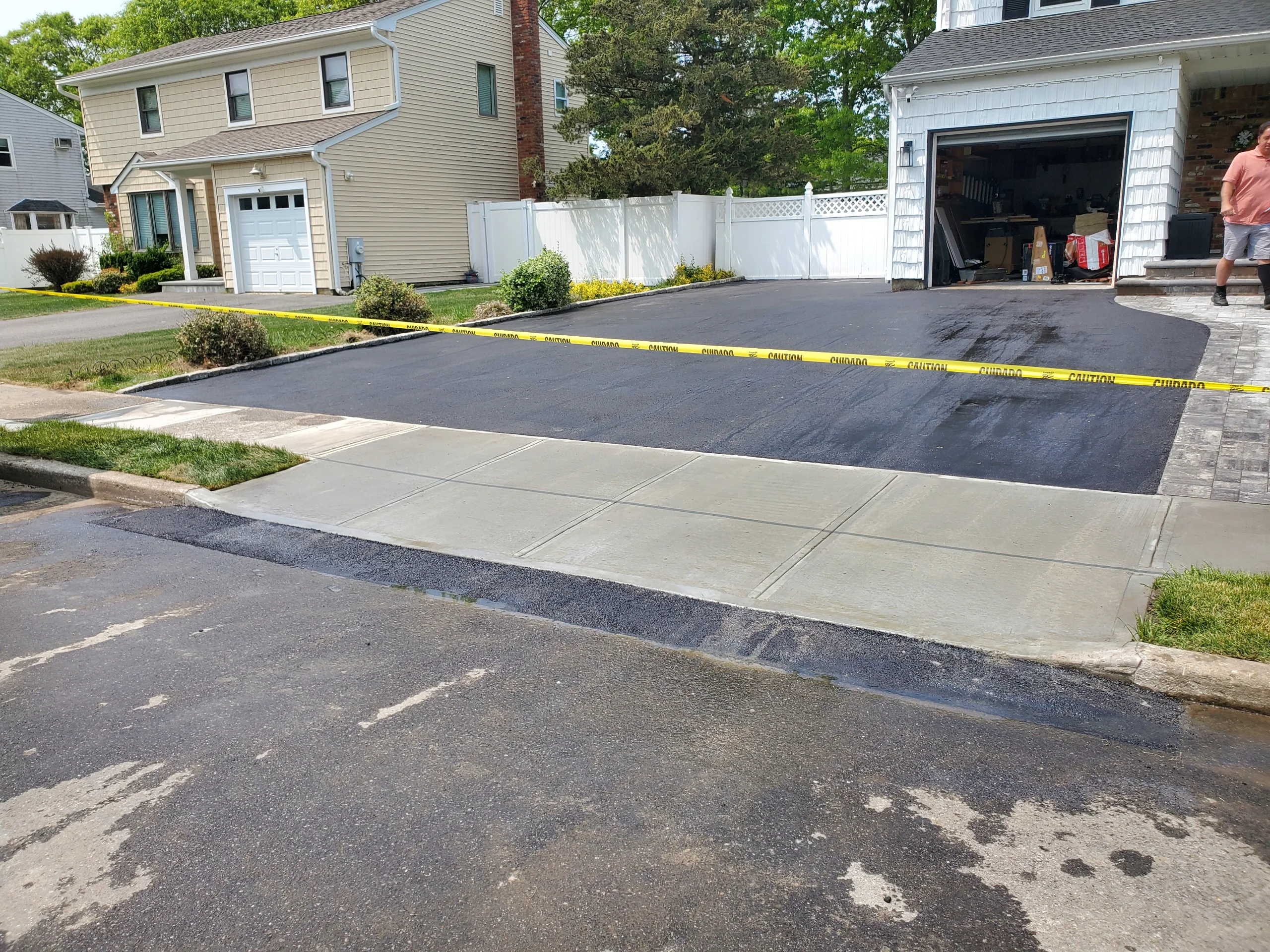
A properly installed concrete apron or Belgian block border doesn’t just look cleaner. It protects the edges of your driveway from the kind of damage that starts small and gets expensive fast. It channels water away from your foundation. It meets Town of Islip requirements without you having to think twice.
In neighborhoods where first impressions matter, it’s also one of the few upgrades that pays for itself in curb appeal. Appraisers notice. Buyers notice. You’ll notice every time you pull in.
We’ve been handling concrete and masonry work across Suffolk County since day one. We’re based in Smithtown, fully licensed and insured, and we know exactly how Long Island soil behaves when it rains, freezes, and thaws.
Most concrete problems in Islip come down to drainage. The ground shifts. Water finds the weak spots. If the grading wasn’t done right the first time, you’ll see it within a year or two. We use heavy equipment—excavators, graders, compactors—to make sure the base is solid and the slope is correct before any concrete gets poured.
You’re not hiring a crew that’s learning on your driveway. You’re hiring people who’ve done this hundreds of times and understand what actually holds up in this climate.

First, we assess the site. That means checking the existing grade, looking at how water currently drains, and identifying any soft spots or voids under the surface. If there’s old concrete or asphalt that needs to come out, we remove it and haul it off.
Next comes the grading. We use motor graders and excavators to reshape the ground so water flows away from your foundation and toward the street. This isn’t eyeballing it—we’re setting the slope to meet Islip’s drainage standards and making sure the base is compacted properly. Loose soil leads to sinking concrete. We don’t skip that step.
Once the base is prepped, we pour the concrete or set the Belgian block. For aprons, we follow Town of Islip specs: 15 to 21 feet wide, depending on your driveway. For Belgian block, we set the stones in a wet concrete footing with mortared joints so they don’t shift under weight. Then we let it cure, clean up the site, and walk you through what to expect as it settles.

Ready to get started?
Concrete curb installation and driveway aprons are the most common requests we get in Islip, but we also handle sidewalk repair, masonry flatwork, and full property grading. If you’ve got a section of sidewalk that’s sunk or cracked, you’re legally responsible for fixing it before someone trips and you’re dealing with a lawsuit. We’ll remove the damaged section, regrade the base, and pour new concrete that’s level and code-compliant.
Belgian block driveway aprons are popular in higher-end Islip neighborhoods because they hold up better than asphalt edging and they look sharp. The stones are set in concrete and mortared tight, so they don’t move when plows come through or when tires turn hard against them. They also add traction and a clean visual line that makes your property look more finished.
For grading work, we focus on reshaping the ground to prevent water from pooling near your foundation or driveway. Long Island gets heavy rain and freeze-thaw cycles that can crack poorly graded concrete within a season. We make sure the slope is right before anything gets poured, so you’re not dealing with standing water or erosion a year from now.
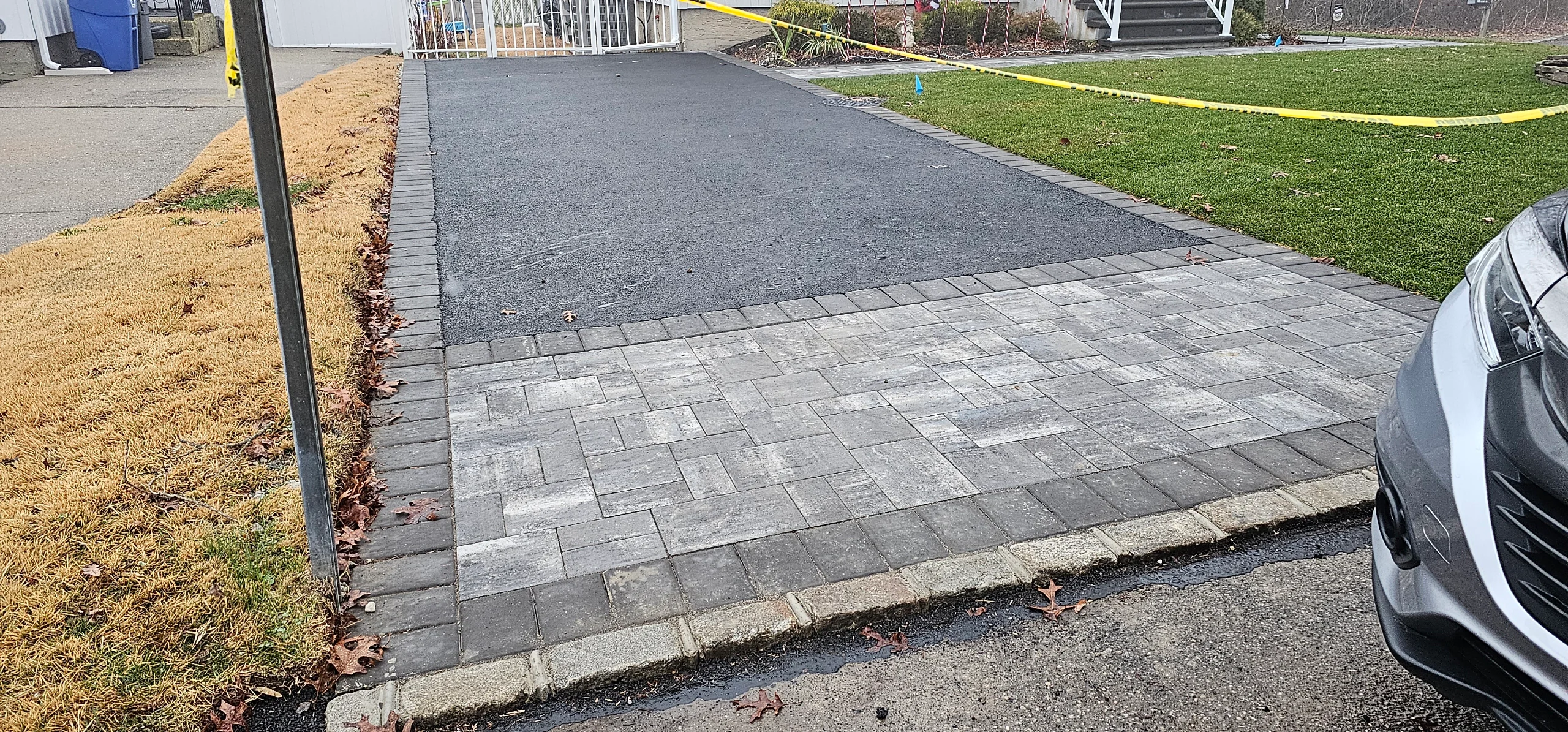
Cost depends on the width of your driveway, the condition of the existing base, and whether you’re going with standard concrete or Belgian block. Town of Islip requires aprons to be between 15 and 21 feet wide, so that sets the baseline for material and labor.
Standard concrete aprons typically run less than Belgian block installations because there’s less material cost and less labor involved in setting individual stones. Belgian block costs more upfront, but it lasts longer and handles winter plowing better than asphalt edging.
If the base needs significant grading or if we’re removing old concrete, that adds to the price. We’ll give you a clear estimate after we see the site and understand what prep work is required. No surprises, no upselling—just what the job actually needs.
It depends on the scope of the work. Driveway aprons and curb installations usually require a permit from the Town of Islip, especially if you’re altering the grade or connecting to the street. Sidewalk repairs on your property might not need one, but if the sidewalk is adjacent to public right-of-way, you’ll likely need approval.
We can help clarify what’s required for your specific project. Suffolk County permit requirements can be confusing, and the last thing you want is to start work and get hit with a stop-work order because the paperwork wasn’t filed.
If a permit is needed, we’ll walk you through the process or handle it directly. We’ve done this enough times to know what the town is looking for, and we make sure the work meets code so inspections go smoothly.
Most Belgian block apron installations take one to three days, depending on the size of the area and the condition of the base. If we’re starting from scratch and need to excavate, grade, and compact the base, that’s the bulk of the time. Setting the stones and mortaring the joints happens relatively quickly once the foundation is solid.
The concrete footing needs time to cure before the stones are fully locked in, so we’ll let you know when it’s safe to drive on. Rushing it means the stones can shift, and that defeats the purpose of doing it right.
Weather can delay things—we’re not pouring concrete in freezing temps or heavy rain. But once we start, we stay on schedule and keep you updated if anything changes.
Concrete sinks when the soil underneath it erodes or compresses. That happens from water runoff, tree roots, or just poorly compacted fill when the sidewalk was originally installed. Once the support is gone, the slab has nowhere to go but down.
Cracks usually come from freeze-thaw cycles or from the concrete being poured too thin without proper reinforcement. Water gets into small cracks, freezes, expands, and makes the crack worse. Over time, you end up with sections that are uneven or broken.
In Islip, you’re legally responsible for maintaining the sidewalk in front of your property. If there’s a vertical difference of half an inch or more between sections, that’s a trip hazard and a code violation. We remove the damaged section, fix the base so it won’t sink again, and pour new concrete that’s level and up to code.
Stamped concrete is poured concrete that’s textured and colored to look like stone, brick, or pavers. It’s less expensive than Belgian block and faster to install, but it’s still concrete—it can crack, stain, and fade over time, especially with freeze-thaw cycles and snowplow abuse.
Belgian block is actual granite stone set individually in a concrete footing with mortared joints. It’s more labor-intensive and costs more upfront, but it’s significantly more durable. The stones don’t crack like concrete does, and they hold up better against the kind of punishment Long Island winters dish out.
If you’re looking for something decorative that’s budget-friendly, stamped concrete works. If you want something that’s going to last decades and handle heavy use without looking worn down, Belgian block is the better investment. We install both, so it comes down to what matters more to you—upfront cost or long-term durability.
Look for standing water after it rains. If you’ve got puddles that stick around for hours or days near your foundation, driveway, or sidewalk, your grading isn’t right. Water should flow away from structures and toward the street or a drainage system.
Other signs include cracks in your foundation, water stains in your basement, or sections of concrete that have sunk or tilted. Erosion around the edges of your driveway or walkway is another red flag—that means water is washing away the soil that’s supposed to be supporting the concrete.
We assess drainage as part of every concrete job because fixing it after the fact is expensive and disruptive. If the grade isn’t correct before we pour, you’ll have problems within a year. We use grading equipment to set the slope properly so water moves where it’s supposed to and your concrete stays level.