
Hear from Our Customers

Your driveway edges crumble because they were never properly supported. Water pools near your foundation because the grade slopes the wrong direction. Your sidewalk cracks because the base wasn’t prepared for Long Island’s freeze-thaw cycles.
These aren’t cosmetic problems. They’re structural ones that cost you thousands when they fail.
Concrete work done right creates defined edges that hold pavement in place, surfaces that shed water away from your home, and walkways that stay level for decades. It’s about engineering first, aesthetics second. When both are handled correctly, you get curb appeal that actually lasts.
In Huntington, where sandy soil and coastal moisture destroy poorly installed work within a few seasons, the difference between concrete that lasts 25 years and concrete that fails in 10 comes down to understanding what this environment does to outdoor structures. Proper base preparation, correct drainage integration, and materials rated for freeze-thaw resistance aren’t optional upgrades. They’re the baseline for work that won’t embarrass you or drain your wallet five years from now.
We’ve spent nearly two decades working in Huntington’s soil, dealing with its drainage patterns, and understanding which materials survive here and which don’t. We’re not a franchise following a manual written for different climates. We’re local contractors who’ve seen what Long Island weather does to concrete work over time.
That experience matters when you’re investing in permanent improvements. We know the proper excavation depth for your soil type, the right base materials for coastal conditions, and how to grade surfaces so water moves away from structures instead of toward them.
You’ll work with licensed and insured professionals who use modern equipment including excavators and grading lasers to ensure precision. We’re based in Smithtown, we serve Suffolk County property owners exclusively, and we’ve built our reputation on work that holds up year after year in this specific environment.

First, we assess your property’s specific conditions: existing water flow patterns, soil composition, and grade requirements. This isn’t a quick visual estimate. We’re looking at how water currently moves across your property and where it needs to go instead.
Next comes excavation and base preparation. For concrete curb installation or Belgian block driveway aprons, we excavate to the proper depth, install the correct base materials, and compact everything to prevent settling. For sidewalk repair, we address why the original work failed before we pour new concrete.
Grading happens with laser precision. Every surface needs to slope in the right direction at the right rate to shed water efficiently. The International Residential Code recommends a minimum slope of six inches over the first ten feet away from a foundation, but your property might need adjustments based on existing drainage patterns.
Then we install the concrete or masonry work itself, integrating drainage solutions during construction rather than trying to retrofit them later. Proper backfill materials, weep holes where needed, and surfaces that direct water away from structures all get built in from the start.
You’ll see the difference immediately in how water moves across your property after the first rain. The long-term difference shows up in what doesn’t happen: no pooling water, no foundation leaks, no crumbling edges that need repair every few years.

Ready to get started?
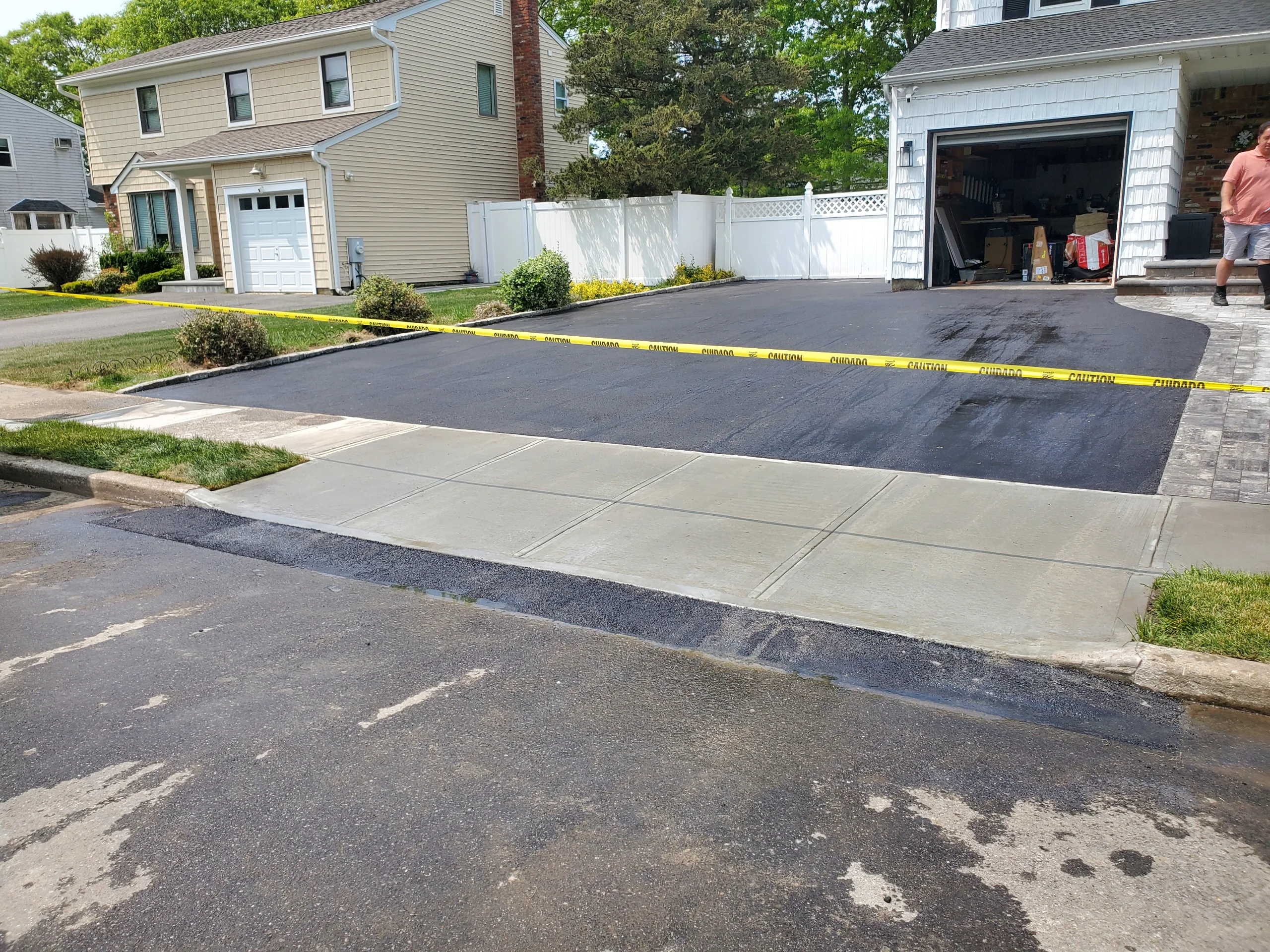
Concrete curbs and Belgian block aprons create defined edges that protect your driveway pavement while adding structure to your property’s appearance. These aren’t decorative additions. They’re functional installations that prevent asphalt from spreading, keep gravel contained, and create clean transitions between surfaces.
Sidewalk work includes full base preparation, proper drainage integration, and concrete mixed for Long Island’s climate. You’re not getting a thin overlay that cracks the first winter. You’re getting properly excavated, properly based walkways built to last 25-30 years with basic maintenance.
Masonry flatwork covers patios, walkways, and other horizontal surfaces where durability and drainage matter as much as appearance. In Huntington’s high-end neighborhoods, this work directly impacts property value. Professionally installed surfaces enhance your home’s market appeal for decades, while DIY or budget installations become liabilities that buyers notice immediately.
Every project includes proper grading to direct water away from structures, commercial-grade materials rated for coastal conditions, and installation techniques specific to Suffolk County’s soil and moisture challenges. We’re not following generic procedures. We’re applying methods proven to work in this specific environment.
The equipment matters too. Heavy machinery including excavators allows us to handle proper excavation depths and base preparation that hand tools can’t match. Grading lasers ensure surfaces slope correctly to shed water. These aren’t luxuries. They’re requirements for work that performs as intended.
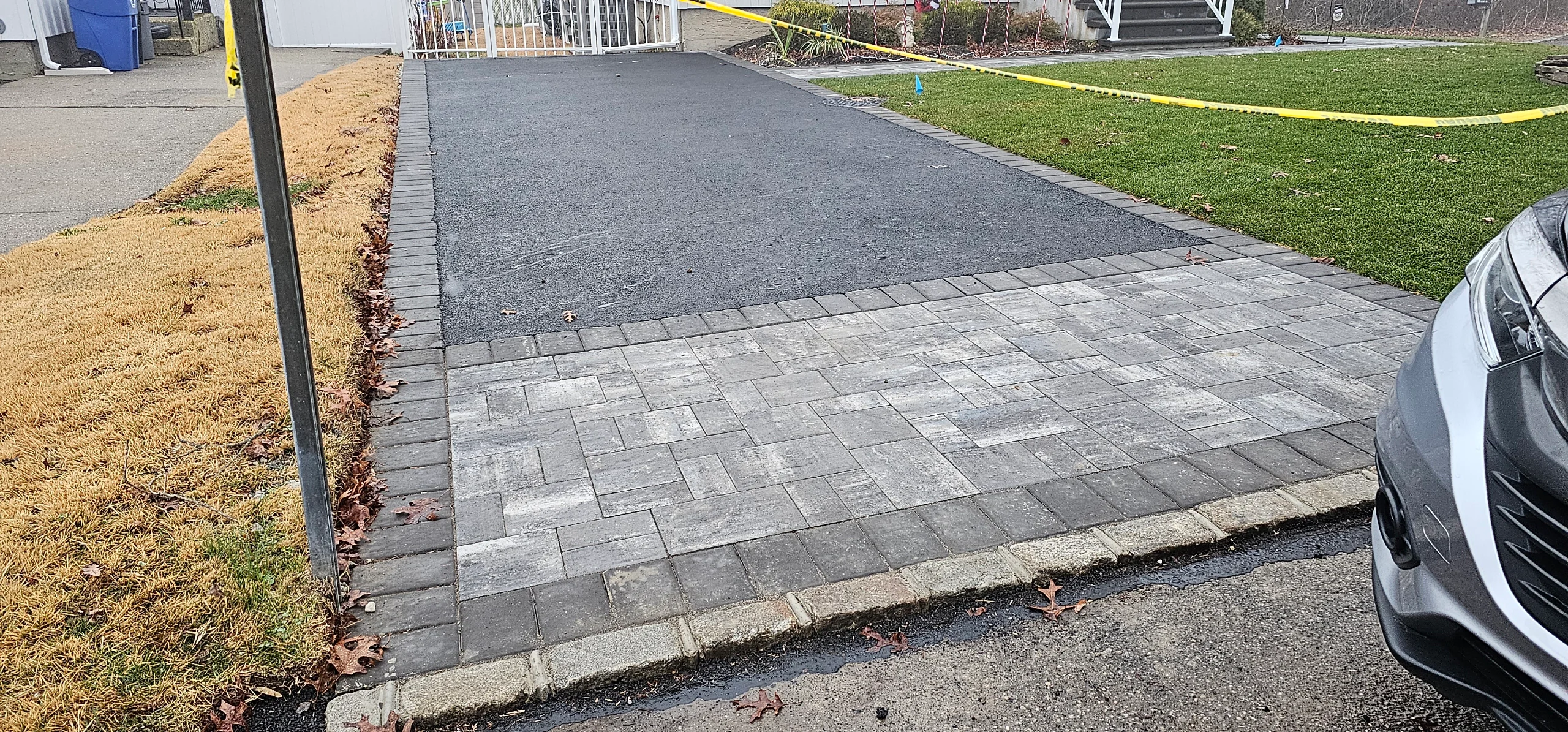
Properly installed concrete driveways and sidewalks last 25-30 years in Huntington with basic maintenance. Belgian block installations can last even longer because the individual blocks handle freeze-thaw cycles better than monolithic concrete slabs.
The key phrase is “properly installed.” Concrete poured over inadequate base preparation, without proper drainage, or using materials not rated for freeze-thaw resistance fails much faster. You’ll see cracking, settling, and water damage within 10-15 years instead of 25-30.
Long Island’s environment is particularly hard on concrete. Sandy soil doesn’t provide stable support without proper compaction. Coastal moisture accelerates deterioration. Freeze-thaw cycles destroy concrete that has any water infiltration. Work that might last 30 years in a drier, more stable climate fails faster here if it’s not engineered for these specific conditions.
That’s why the installation process matters as much as the materials. Proper excavation depth, correct base materials, adequate compaction, and integrated drainage aren’t optional steps you can skip to save money. They’re the difference between concrete that lasts decades and concrete that becomes a problem you’re dealing with again in 10 years.
Concrete curbs are poured in place to create continuous edges along driveways or property lines. Belgian block aprons use individual granite blocks set in a pattern, typically at driveway entrances where they meet the street.
Both serve similar functions: they protect pavement edges, create defined transitions between surfaces, and add structure to your property’s appearance. The choice usually comes down to aesthetics and budget. Belgian block offers a more traditional, upscale look that’s popular in Huntington’s established neighborhoods. Concrete curbs provide a clean, modern appearance at a lower cost.
From a durability standpoint, Belgian block handles freeze-thaw cycles slightly better because individual blocks can move independently without cracking. Concrete curbs are more vulnerable to cracking if water infiltrates and freezes, but proper installation with adequate drainage prevents this issue.
For driveway aprons specifically, where your driveway meets the street, Belgian block is often preferred because it creates an attractive entrance that significantly boosts curb appeal. These installations also handle the transition between your driveway grade and street grade more gracefully than concrete, especially on properties with drainage challenges.
Drainage gets addressed during construction, not after problems develop. We start by assessing how water currently moves across your property and where it needs to go instead.
Every concrete surface we install slopes at the correct rate to shed water efficiently. For surfaces near foundations, that means a minimum slope of six inches over the first ten feet away from the structure. For driveways and walkways, we calculate the slope based on the surface length and surrounding grade.
Base preparation includes drainage considerations. We use gravel bases that allow water to percolate through rather than pool underneath concrete. For areas with significant drainage challenges, we integrate drainage pipes, channel drains, or catch basins during construction.
The grading work happens with laser precision using modern equipment. This isn’t eyeballing it and hoping water flows the right direction. We’re engineering surfaces to direct water exactly where it needs to go, whether that’s toward the street, into drainage systems, or away from structures.
In Huntington, where properties deal with sandy soil and varying elevations, drainage integration during concrete work often solves problems that homeowners have struggled with for years. Once the grade is correct and surfaces slope properly, water stops pooling near foundations, walkways stop staying wet for days after rain, and you stop dealing with ice patches every winter.
Professional concrete work costs more upfront because it includes engineering, proper materials, and installation techniques that ensure the work lasts 25-30 years instead of failing in 10.
You’re paying for excavation to the correct depth, not just enough to make it look right. You’re getting properly compacted base materials rated for your soil conditions, not whatever gravel was cheapest. You’re getting concrete mixed for Long Island’s freeze-thaw cycles, not generic mix that cracks the first winter.
The equipment matters too. Excavators allow proper depth and base preparation. Grading lasers ensure surfaces slope correctly for drainage. These tools cost money to own and operate, but they’re necessary for precision work that performs as intended.
You’re also paying for knowledge that only comes from experience in this specific environment. We know which materials work in Suffolk County’s sandy soil and coastal moisture. We understand proper drainage integration for Huntington’s typical lot configurations. We’ve seen what fails and why, so we don’t repeat those mistakes on your property.
The real question isn’t why professional work costs more upfront. It’s whether you want to pay once for work that lasts decades, or pay less now and then pay again in 10 years when you’re dealing with cracked, settled, or poorly draining concrete that needs replacement. Most Huntington homeowners who’ve gone the budget route once don’t make that mistake twice.
Late spring through early fall offers the most reliable conditions for concrete work in New York. You need consistent temperatures above 50°F during curing, minimal precipitation, and enough time for proper curing before winter freeze-thaw cycles begin.
Concrete needs about 28 days to reach full strength, but the critical period is the first 7 days when it’s most vulnerable to temperature fluctuations and moisture issues. Pouring concrete in late fall means it might not fully cure before winter, leaving it vulnerable to freeze-thaw damage. Pouring in early spring risks cold snaps that interfere with proper curing.
Summer work is possible but requires extra attention to prevent concrete from curing too quickly in hot weather. Rapid curing can lead to surface cracking and reduced long-term durability. We adjust mix designs and curing procedures for summer installations to ensure proper results.
The scheduling reality in Huntington means booking several weeks in advance during peak season. Concrete contractors who do quality work stay busy from May through October. If you’re planning concrete curb installation, sidewalk repair, or Belgian block aprons, contacting us in early spring for late spring or summer installation gives you the best selection of dates.
Weather delays happen regardless of planning. A concrete pour scheduled for Tuesday might get pushed to Thursday because of rain in the forecast. We won’t pour concrete when conditions aren’t right, even if it means schedule adjustments, because improper curing conditions compromise the entire installation.
Professional concrete and masonry work increases property value in Huntington by enhancing curb appeal and demonstrating proper maintenance. Buyers in Suffolk County’s competitive real estate market notice quality exterior work immediately.
Belgian block driveway aprons, well-maintained sidewalks, and properly installed concrete curbs signal that a property has been cared for. They’re visible improvements that create positive first impressions. In Huntington’s established neighborhoods where homes compete for buyers, these details influence offers.
The impact goes beyond aesthetics. Properly graded concrete work that handles drainage correctly protects foundations and prevents water damage. Buyers and home inspectors both look for drainage issues. Properties with visible drainage solutions and well-maintained concrete surfaces raise fewer concerns during inspections.
Cracked sidewalks, crumbling curbs, and poorly draining surfaces have the opposite effect. They signal deferred maintenance and potential problems. Buyers either walk away or reduce offers to account for repairs they’ll need to handle immediately.
The return on investment for concrete work in Huntington typically ranges from 50-75% of the installation cost when you sell. That might not sound impressive compared to kitchen remodels, but concrete work is often necessary maintenance rather than optional upgrade. You’re protecting your property value by preventing deterioration, and you’re enhancing appeal by creating clean, well-defined outdoor spaces that Long Island buyers expect in this price range.
Other Services we provide in Huntington