
Hear from Our Customers

You’ve probably patched your driveway more times than you can count. The cracks keep coming back because the problem isn’t the surface—it’s what’s underneath.
Deer Park sits on sandy-to-loamy soil that shifts when it’s not properly compacted. Add in Long Island’s freeze-thaw cycles—sometimes multiple swings above and below freezing in the same week—and you’ve got the perfect recipe for driveway failure. The asphalt cracks, water seeps in, freezes, expands, and makes everything worse.
A properly installed driveway starts 8 to 10 inches below the surface. That means removing unstable soil, laying a compacted gravel base in layers, and installing edge restraints so nothing shifts over time. When the base is right, the asphalt can handle the temperature swings without cracking or sinking.
You’re not looking for the cheapest option. You’re looking for one that lasts, so you’re not back out here in five years doing this again.
We’re based in Smithtown and work throughout Suffolk County. We’re a locally owned property maintenance company that handles everything from lawn care to excavation—including new driveway construction and residential driveway replacement.
What sets us apart is that we do the site prep ourselves. That means we pull the permits for Deer Park, handle the excavation with our own equipment, and install the driveway without handing pieces of the job off to subcontractors. You get one point of contact, clear communication, and a crew that shows up when we say we will.
We’ve been working in this area long enough to know what fails and why. Deer Park’s flat terrain and sandy soil require a different approach than other parts of Long Island, and we build for that from the start.

You call us, and we schedule a time to come out and look at your property. We measure the area, check the drainage, and talk through what you’re dealing with—whether it’s an old driveway that’s beyond repair or a new install from scratch.
From there, we give you a detailed quote that breaks down the excavation, base prep, materials, and labor. No surprises. If the job requires a permit in Deer Park, we handle that filing for you.
Once you’re ready to move forward, we start with excavation. We dig down 8 to 10 inches, remove any unstable soil, and haul it off-site. Then we bring in gravel and compact it in layers using a plate compactor or roller. This creates a stable foundation that won’t shift under the weight of your vehicles or during freeze-thaw cycles.
After the base is set and graded for proper drainage, we install the asphalt in layers and compact it while it’s still hot. The edges get sealed, and we clean up the site before we leave. The whole process typically takes a few days depending on size, and we keep you updated the entire time.

Ready to get started?
Every driveway we install in Deer Park starts with complete site preparation. That includes permit filing, excavation to the proper depth, and grading to ensure water drains away from your home and doesn’t pool on the surface.
We use a compacted gravel base—usually 6 to 8 inches depending on soil conditions—and install it in layers. Each layer gets compacted separately to eliminate voids and prevent settling. This is especially important in Deer Park, where sandy soil can wash out or shift if it’s not properly stabilized.
The asphalt itself is installed at a thickness of 2 to 3 inches for residential driveways, which is the standard for handling daily vehicle traffic. We compact it while it’s hot to lock everything in place, and we install edge restraints along the sides to keep the driveway from spreading over time.
The best time to install a new driveway on Long Island is between May and September. The warmer temperatures allow the asphalt to cure properly and bond with the base. Installing outside this window increases the risk of premature cracking, especially during freeze-thaw cycles.

With proper installation and regular maintenance, an asphalt driveway in Deer Park should last 20 to 30 years. The key word there is “proper installation.”
Most driveways fail early because the base wasn’t deep enough, the soil wasn’t compacted, or drainage wasn’t addressed. Deer Park’s sandy soil and freeze-thaw cycles put extra stress on driveways, so cutting corners during installation will cost you later. If the base shifts or water gets underneath the asphalt, you’ll see cracks and potholes within a few years.
Maintenance helps extend the life of your driveway. That means sealcoating every 3 to 5 years to protect the surface from UV rays and water penetration, and filling any small cracks before they turn into bigger problems. But even with the best maintenance, a poorly installed driveway won’t last.
Yes, most driveway projects in Deer Park require a permit, especially if you’re changing the size, location, or grading of the driveway. Every municipality on Long Island has different requirements, and Deer Park is no exception.
The permit process typically involves submitting a site plan that shows the driveway location, dimensions, and drainage details. The town reviews it to make sure the project meets local codes and doesn’t create drainage issues for neighboring properties. This process can take a few weeks, so it’s something we factor into the timeline.
We handle the permit filing for you. That means you don’t have to figure out what forms to fill out, where to submit them, or how to follow up. We take care of it as part of the job, so you’re not stuck navigating town hall on your own.
If more than 50% of your driveway has been patched or repaired, replacement is usually the smarter move. At that point, you’re not fixing the driveway—you’re just delaying the inevitable.
Patching works for small, isolated cracks or potholes. But if your driveway is over 20 years old and you’re seeing widespread cracking, settling, or drainage issues, those are signs that the base has failed. No amount of patching will fix a bad foundation.
Replacement gives you a fresh start with a properly compacted base, correct grading, and a smooth surface that will last another 20 to 30 years. It costs more upfront, but it’s cheaper than patching the same driveway every year and still ending up with a surface that looks rough and performs poorly. If you’re not sure which option makes sense for your situation, we can walk the driveway with you and give you an honest assessment.
Long Island’s freeze-thaw cycles are brutal on asphalt. When temperatures swing above and below freezing—sometimes multiple times in a single week—water that’s seeped into small cracks expands when it freezes. That expansion puts pressure on the asphalt and makes the cracks bigger.
Deer Park’s sandy soil makes the problem worse. If the base wasn’t installed deep enough or compacted properly, the soil underneath can shift or wash out. That creates voids under the asphalt, which leads to cracking and sinking.
The solution is a deep, stable base. We excavate 8 to 10 inches, remove the sandy or unstable soil, and replace it with compacted gravel in layers. This creates a foundation that won’t shift, even during freeze-thaw cycles. We also grade the driveway so water drains away from the surface instead of pooling or seeping underneath. When the base is right, the asphalt can handle the temperature swings without falling apart.
Asphalt driveways typically run $5 to $8 per square foot for a standard residential installation. That includes excavation, base prep, asphalt installation, and cleanup. A typical two-car driveway is around 600 square feet, so you’re looking at $3,000 to $5,000 depending on site conditions.
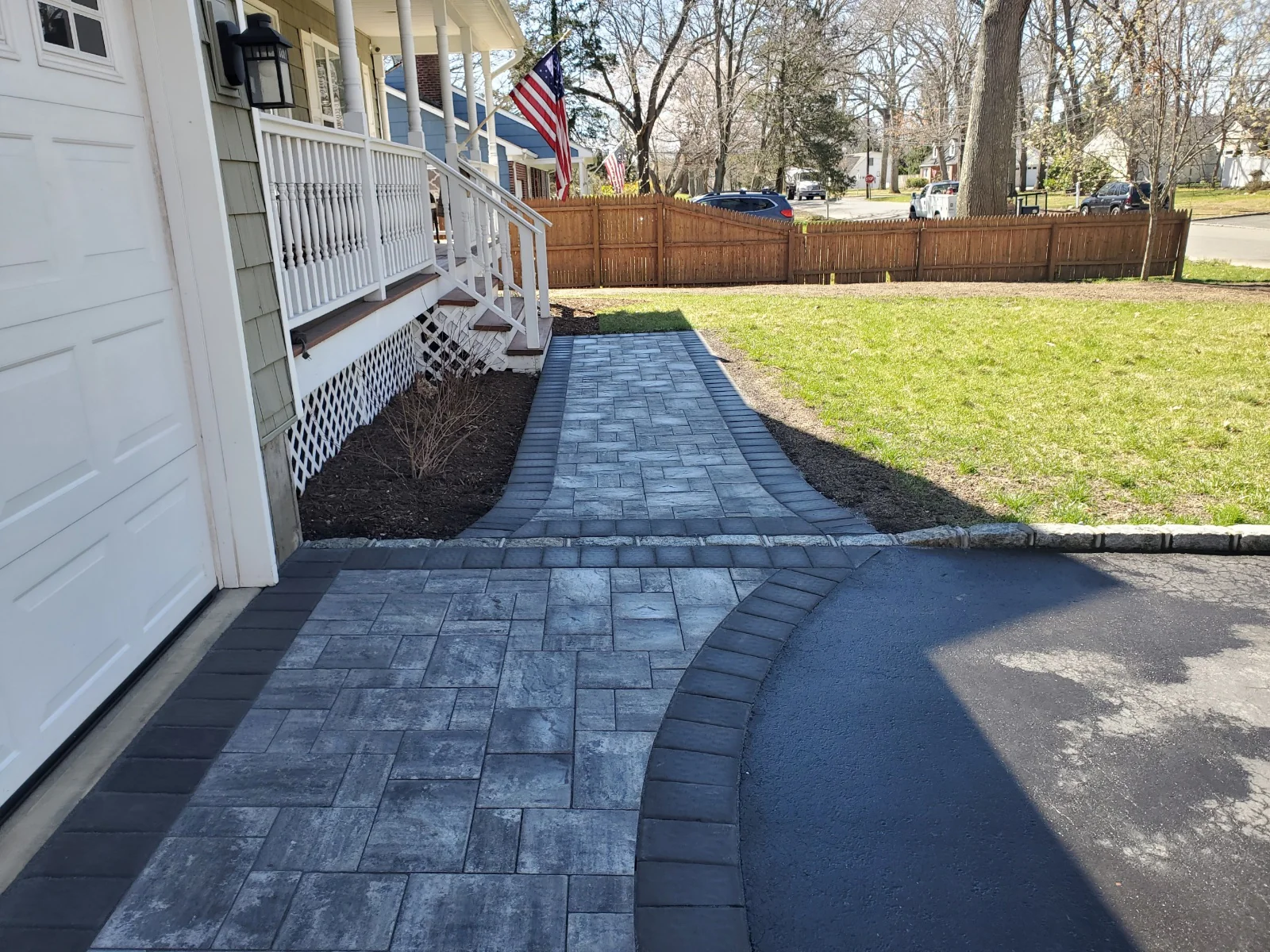
If your property has drainage issues, poor soil, or requires extra grading work, that can increase the cost. Same goes for larger driveways or jobs that require significant excavation. Pavers are another option—they run $17 to $20 per square foot and can last 50+ years with minimal maintenance—but they’re a bigger upfront investment.
We give you a detailed quote before any work starts, so you know exactly what you’re paying for. That includes the excavation depth, base materials, asphalt thickness, and any drainage work that’s needed. No hidden fees or surprise charges after the job is done.
A standard install might only excavate 4 to 6 inches and use a thinner base layer. That works in some areas, but it’s not enough for Deer Park’s soil and climate. A heavy-duty install goes deeper—8 to 10 inches—and uses a thicker, properly compacted gravel base.
The extra depth matters because it gets below the unstable sandy soil and creates a foundation that won’t shift. The gravel is installed in layers, and each layer is compacted separately to eliminate air pockets and voids. This prevents settling and keeps the driveway level over time.
We also pay closer attention to drainage and edge restraint. Water is the number one enemy of asphalt, so we grade the driveway to direct water away from the surface and away from your foundation. Edge restraints keep the asphalt from spreading at the sides, which is a common problem when driveways are installed without them. A heavy-duty install costs a bit more upfront, but it’s the difference between a driveway that lasts 10 years and one that lasts 30.
Other Services we provide in Deer Park