
Hear from Our Customers

You’re not dealing with cracks that reappear every spring. You’re not watching your driveway sink in spots because someone skipped the base work. And you’re definitely not stuck calling around for permits while your contractor waits.
When your driveway is installed correctly for Brookhaven’s conditions, it handles the freeze-thaw cycles without falling apart. Water drains where it should. The surface stays level because the base was built for Suffolk County’s sandy soil, not some generic approach that works everywhere except here.
That means fewer repair calls. No embarrassing potholes when neighbors drive by. No water pooling near your foundation. Just a driveway that does its job for 15-20 years without constant babysitting.
We’ve spent over 35 years working in Suffolk County. That’s not a selling point—it’s context. We know what happens when you don’t account for the frost line here. We’ve seen what coastal humidity does to improperly sealed surfaces.
We’re based in Smithtown, fully licensed and insured, and the owner shows up to every job. Not because we don’t trust our crew, but because details matter when you’re working with Brookhaven’s soil conditions and local building codes.
We handle lawn care, tree services, and excavation too, which means we’re not just paving contractors who disappear after the asphalt cools. We’re the people you call when your property needs work, and we stick around.

First, we handle the Brookhaven permits. You don’t chase paperwork or wait on approvals—we do that. Then comes excavation. For Long Island, that’s 8-10 inches minimum because the frost line sits around 20 inches and the ground moves. Skipping depth here is how driveways fail in year three.
Next is the base layer. We’re talking drainage stone that lets water percolate through instead of sitting under your driveway, waiting to freeze and crack everything above it. This step matters more in Suffolk County than almost anywhere else because of how much rain and coastal moisture we get.
After the base is compacted and graded properly, we install your surface—asphalt, concrete, or pavers, depending on what makes sense for your situation and budget. We’re not pushing one material because it’s easier for us. We’re recommending what works for your property.
The whole process takes a few days to a week, depending on size and weather. You’ll know the timeline upfront, and we’ll keep you updated if anything changes.

Ready to get started?
You get complete site preparation. That means permits pulled and approved through Brookhaven’s system, which has specific rules about driveway width and front yard coverage. In residential districts here, your driveway can’t exceed 35% of your front yard area or 24 feet in width, whichever gives you more space.
Excavation and grading come next. We’re removing old material, digging to proper depth, and grading for drainage so water moves away from your foundation. This isn’t optional in Suffolk County—it’s how you avoid settling and structural problems.
Then there’s the base installation with drainage stone, surface material of your choice, and final grading. We also handle cleanup, so you’re not left with piles of old asphalt or dirt in your yard.
And because we do excavation work regularly across Long Island, we understand how Brookhaven’s sandy soil behaves differently than clay-heavy soil. That changes how we compact the base and what materials we use to prevent shifting over time.

If it’s installed correctly, you’re looking at 15-20 years before you need to replace it. That assumes you reseal every 2-3 years, which costs around $300-600 per application and prevents water from seeping into small cracks.
The bigger factor is installation quality. If the base isn’t deep enough or the drainage isn’t handled right, you’ll see problems in 3-5 years instead of 15. Brookhaven’s freeze-thaw cycles are harsh—water gets into cracks, freezes overnight, expands, and widens those cracks. By spring, you’ve got damage that looks like it appeared out of nowhere.
Proper depth, proper drainage, proper compaction. That’s what gets you to 20 years instead of needing repairs every few seasons.
Yes, if you’re doing any grading or excavation work. Brookhaven typically requires permits for land grading, especially when you’re disturbing a significant amount of soil. The exact requirements depend on your zoning and how much work you’re doing.
There are also rules about driveway size. In residential areas, you can’t have more than 35% of your front yard covered in asphalt, gravel, stone, or dirt, and your driveway can’t be wider than 24 feet unless the 35% rule gives you more room.
We handle the permit process for you. You don’t need to figure out which forms to file or who to call at the town office. We pull the permits, get the approvals, and make sure everything is up to code before we start digging.
Asphalt is the most common choice here because it handles freeze-thaw cycles better than concrete and costs less upfront. It needs resealing every few years, but it’s flexible enough to handle ground movement without cracking as easily. Expect to pay less initially, but factor in maintenance costs over time.
Concrete lasts longer—30+ years if installed right—but it’s more expensive upfront and can crack if the ground shifts or water gets underneath. It doesn’t need sealing as often, but when it does crack, repairs are more visible and harder to blend in.
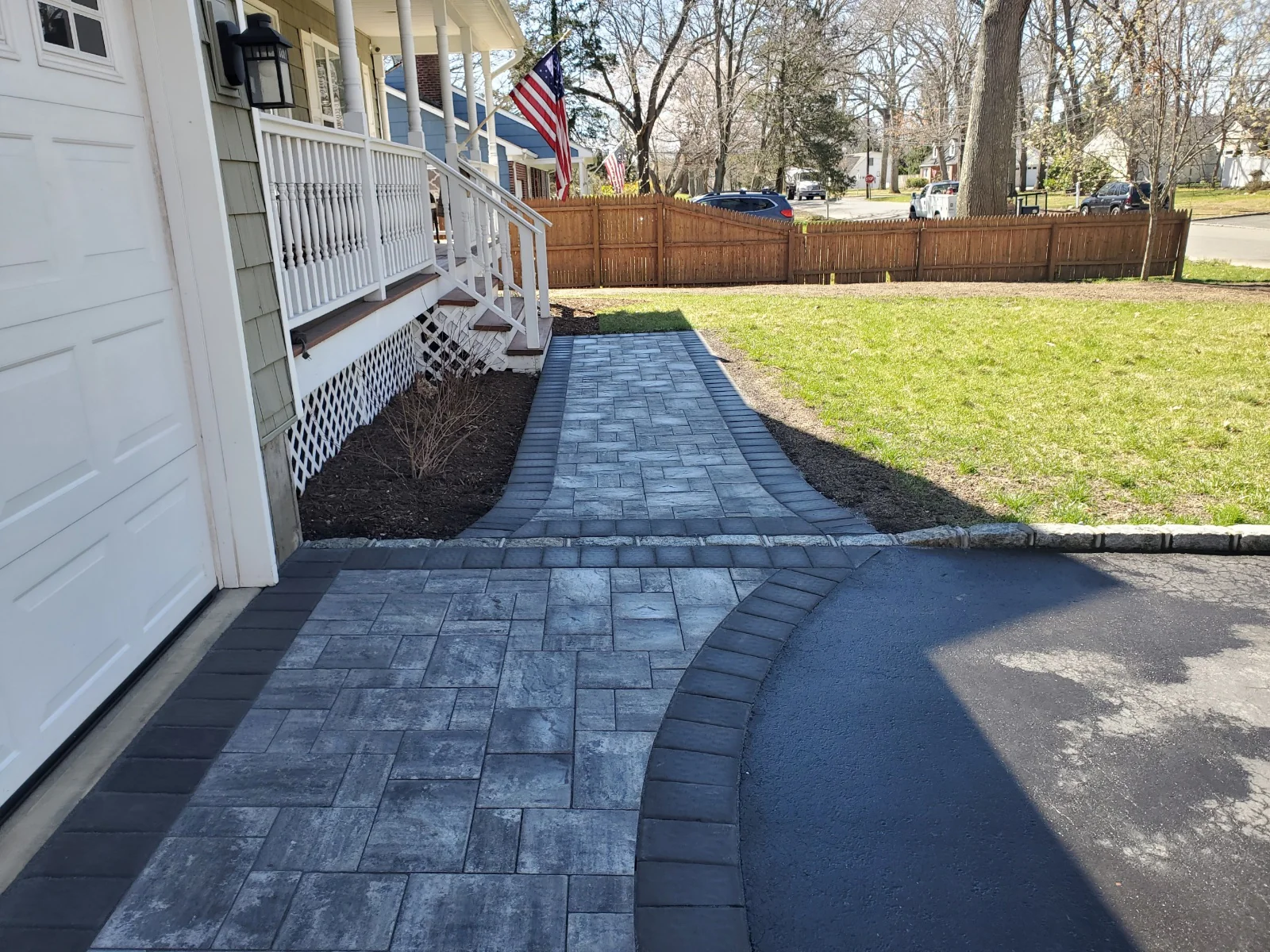
Pavers are the premium option. They look great, they’re easy to repair (you just replace individual pavers), and they handle movement well. But they cost significantly more and require proper edge restraints and base prep, or they’ll shift and settle unevenly. We’ll walk you through what makes sense for your budget and how you use your driveway.
Usually it’s a base problem or a drainage problem. If water sits under your driveway, it will cause settling, which leads to cracking or sinking. You’ll notice dips in the surface or areas where the pavement has dropped below the surrounding level.
The other common issue is insufficient excavation depth. If the contractor only dug down 4-5 inches, that’s not enough for Long Island’s frost line. When the ground freezes and thaws, it moves, and a shallow base can’t handle that movement. You end up with cracks that get worse every winter.
Sometimes it’s also poor compaction. If the base material wasn’t compacted properly before the asphalt went down, it will settle over time. That creates low spots, and low spots collect water, and water causes more cracking. It’s a cycle that starts with shortcuts during installation.
It depends on the size of your driveway, how much material we’re removing, and what kind of grading work is needed. For a standard two-car driveway, excavation and base prep usually runs a few thousand dollars as part of the total project cost.
If your property has drainage issues or the ground slopes toward your house, that adds complexity and cost because we need to regrade to move water away from your foundation. Same thing if we’re removing a lot of old concrete or asphalt—disposal costs add up.
We give you a free estimate that breaks down exactly what you’re paying for. No surprises, no vague line items. You’ll know what the excavation costs, what the base material costs, and what the surface installation costs before we start.
Late spring through early fall, when temperatures consistently stay between 65-75°F. Asphalt needs warm weather to cure properly. If it’s too cold, it won’t compact right, and you’ll end up with a surface that deteriorates faster.
Concrete is a little more forgiving with temperature, but you still want to avoid freezing conditions during the curing process. Pavers are the most flexible—they can be installed in cooler weather as long as the ground isn’t frozen.
We also avoid working during heavy rain or when the ground is saturated because that affects compaction and grading. If your project is scheduled and the weather doesn’t cooperate, we’ll let you know and reschedule rather than rush through it in bad conditions.
Other Services we provide in Brookhaven