
Hear from Our Customers

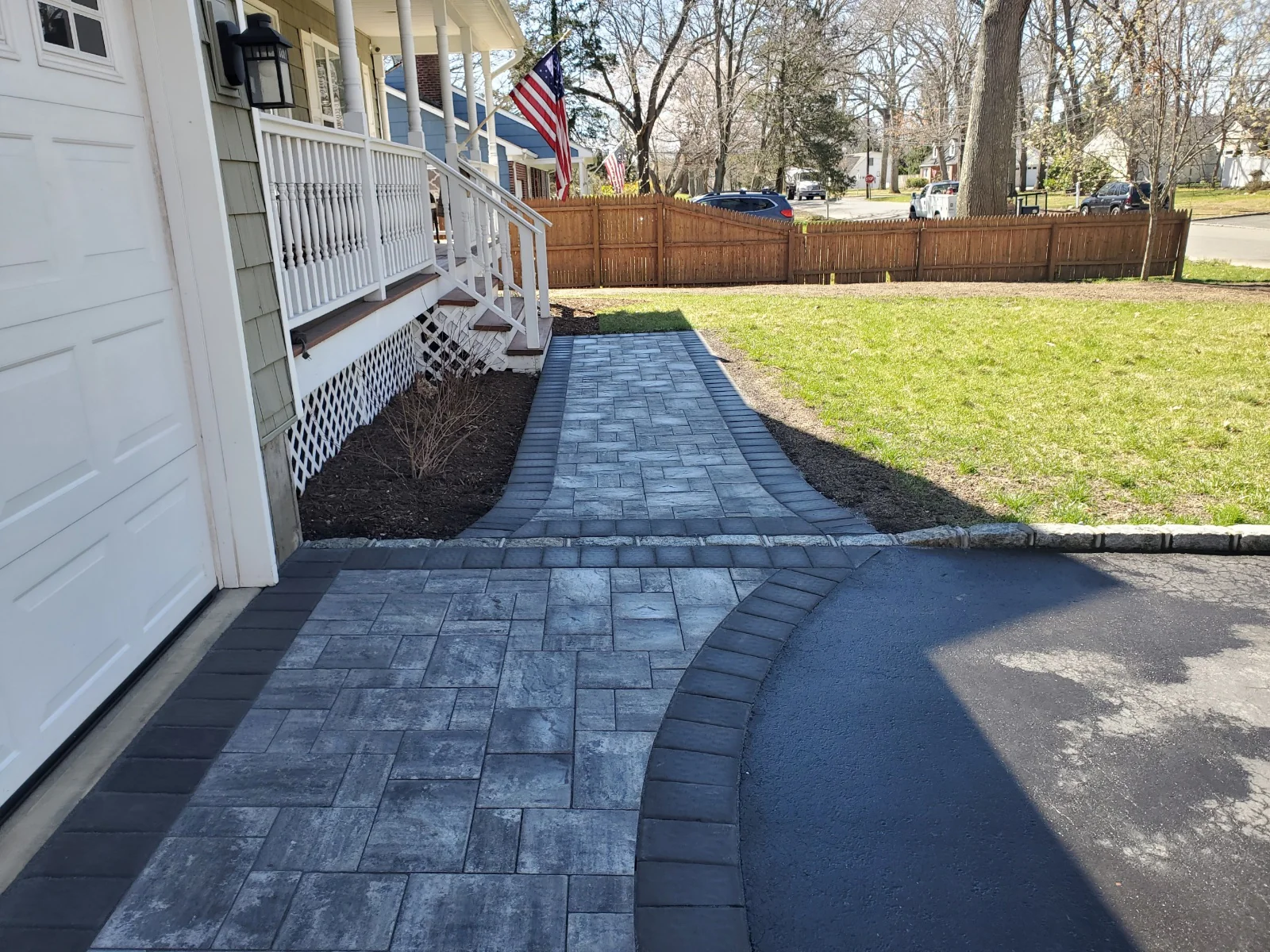
You’re looking at a driveway that doesn’t sink after the first winter or crack by year three. That’s what happens when the excavation goes deep enough and the base gets compacted right.
Blue Point sits on sandy soil that shifts. Add in freeze-thaw cycles from October through March, and you’ve got ground that moves more than most contractors account for. If the base isn’t stable, the surface won’t be either.
We excavate a minimum of eight to ten inches, sometimes more depending on your property’s drainage. Then we grade for water flow, compact in layers, and make sure nothing settles unevenly. The asphalt goes down last, and by that point, the hard work’s already done.
You’re not just getting a smooth surface. You’re getting a driveway that stays level, drains properly, and doesn’t need replacement in a few years because someone skipped the prep work.
Rolling Hills Property Services is based in Smithtown and works throughout Suffolk County. We’re not a franchise or a crew that shows up from out of state. We know the soil here, the weather patterns, and what actually lasts.
Blue Point homeowners deal with specific challenges—coastal moisture, sandy base layers, property values that demand quality work. We’ve handled enough driveways in this area to know what goes wrong when shortcuts get taken, and we don’t work that way.
We’re licensed, insured, and we handle the permits in-house. You’re not coordinating between three different companies or wondering if the excavation crew knows what the paving crew needs. It’s all us, start to finish.

First, we assess your property. That means looking at drainage, checking the existing base if there is one, and figuring out how deep we need to go based on your soil conditions. Blue Point’s sandy soil requires more attention than clay or hardpan, so this step matters.
Next comes excavation and grading. We dig down eight to ten inches minimum, sometimes deeper if drainage is an issue. We slope everything away from your foundation and make sure water has somewhere to go. Then we bring in gravel base material, spread it in layers, and compact each one. This is where most contractors cut corners. We don’t.
Once the base is solid and graded correctly, we handle the asphalt installation. The surface goes down smooth, gets compacted, and cures properly. We also coordinate any permits you need with Suffolk County, so you’re not dealing with that process on your own.
You’ll know what’s happening at each stage. No surprises, no delays unless weather forces them, and no wondering if the job’s being done right.

Ready to get started?
You’re getting full-service work. That means site evaluation, excavation, grading, base preparation, compaction, asphalt installation, and cleanup. We also handle permit consultation for Suffolk County so you’re not navigating that alone.
The excavation depth depends on your property, but we’re going deep enough to hit stable ground. Blue Point’s sandy soil doesn’t hold like denser soil types, so we account for that. Grading ensures water moves away from your house and doesn’t pool on the driveway surface.
Base material gets layered and compacted with professional equipment—GPS-guided graders and heavy-duty compactors that most residential contractors don’t use. This is what prevents sinking and cracking down the road.
Blue Point homes have a median value over $600,000. Your driveway is part of that investment, and it should be treated that way. We’re not laying asphalt over dirt and calling it done. You’re getting a driveway built to handle Long Island winters, coastal moisture, and daily use without falling apart.

Asphalt driveway installation typically runs between $7 and $15 per square foot, depending on the size of your driveway, the condition of the existing base, and how much excavation is needed. A standard two-car driveway in Blue Point usually falls between $5,000 and $12,000.
The price depends on what’s required to prep your property. If the current driveway is sinking or cracked, we may need to excavate deeper or bring in more base material. Blue Point’s sandy soil sometimes requires additional grading work to ensure proper drainage, especially if your property slopes toward the house.
We provide clear, itemized quotes so you know exactly what you’re paying for. No surprises, no upselling once the job starts. You’ll see the breakdown for excavation, materials, labor, and any permit fees before we begin.
Most residential driveway projects in Blue Point require a permit through Suffolk County, especially if you’re expanding the driveway footprint or changing drainage patterns. The permit process ensures the work meets local codes for stormwater management and property setbacks.
We handle the permit consultation as part of our service. That means we’ll walk you through what’s required, help with the application if needed, and make sure the installation meets county standards. You’re not left figuring out which forms to file or whether your project qualifies.
Permit requirements vary depending on the scope of work. A simple repaving job usually has fewer requirements than a full tearout and expansion. We’ve done enough driveways in Suffolk County to know what triggers additional review and how to avoid delays.
A properly installed asphalt driveway in Blue Point should last 20 to 30 years with regular maintenance. That includes sealcoating every two to three years and addressing small cracks before they spread. The key is in the base preparation—if that’s done right, the surface holds up.
Blue Point’s freeze-thaw cycles are tough on driveways. Water seeps into small cracks, freezes, expands, and makes those cracks bigger. Coastal moisture accelerates this process. If the base wasn’t compacted properly or the excavation wasn’t deep enough, you’ll see problems within five years.
We build for longevity. That means going deeper than the minimum, using quality base materials, and compacting in layers so nothing shifts. You’re not replacing this driveway in a decade because someone rushed the prep work.
When excavation and paving are handled by the same company, there’s no gap in communication or accountability. We control the entire process, so if something needs adjustment during the base prep, we handle it immediately without waiting on another crew.
Contractors who subcontract excavation often don’t have the equipment or expertise to evaluate soil conditions themselves. That means they’re relying on someone else’s assessment, and if that’s wrong, the driveway suffers. You also end up coordinating between multiple companies, which adds delays and confusion.
We own our excavation equipment and employ the crew that operates it. If the base needs to be deeper in one area or the grading needs tweaking for drainage, we make that call on-site. You’re working with one company from start to finish, and that makes a difference in how the job turns out.
Most driveway failures come down to poor base preparation. If the excavation wasn’t deep enough, the base material wasn’t compacted properly, or the grading doesn’t account for drainage, the driveway will fail no matter how good the asphalt looks on day one.
Blue Point’s sandy soil is particularly unforgiving. It shifts and settles more than denser soil types, so the base needs to be thicker and compacted in layers. If a contractor only digs down four or five inches and skips proper compaction, you’ll see sinking and cracking within a few winters.
Water is the other major factor. If the driveway doesn’t slope away from your house or there’s no plan for where water goes, it pools, seeps into the base, and weakens the structure. Freeze-thaw cycles turn that into cracks. We grade for drainage and make sure water moves off your property, not into your foundation.
Most residential driveway installations take three to five days, depending on the size and scope of the project. That includes excavation, base prep, compaction, and asphalt installation. Weather can extend the timeline, but we’ll keep you updated if that happens.
We schedule around your availability as much as possible. If you need us to avoid certain days or work during specific hours, we’ll coordinate that upfront. You’re not dealing with a crew that shows up unannounced or disappears for days at a time.
The asphalt needs time to cure before you can drive on it—usually 24 to 48 hours depending on temperature and humidity. We’ll let you know exactly when it’s safe to use. Until then, we’ll make sure the work area is clean and your property is accessible.
Other Services we provide in Blue Point