
Hear from Our Customers

You know the cycle. Spring arrives, your garden beds look promising for about three weeks, then the weeds take over. By July, you’re either spending every Saturday on your knees or pretending not to notice when neighbors walk by.
Here’s what changes with professional weeding services: your perennials actually thrive because they’re not competing for nutrients. Your mulch stays visible instead of disappearing under a carpet of crabgrass and spurge. Your property looks intentional, not neglected.
The real benefit isn’t just appearance. It’s getting your weekends back. It’s not waking up Sunday morning already dreading the physical toll of pulling weeds for four hours. It’s knowing that someone who understands Blue Point’s coastal challenges—salt damage, sandy soil, those invasive species that spread from property to property—is handling it with the right timing and technique.
We’re based in Smithtown and work throughout Suffolk County, including Blue Point’s coastal neighborhoods. We’re licensed, insured, and we actually live here—which means we understand what salt air does to your plantings and why timing matters when dealing with weeds that thrive in Long Island’s specific climate.
We’re not a national franchise following a generic script. We know Blue Point’s landscape aesthetic leans toward coastal, salt-tolerant gardens that need careful attention. Our crews hand-pull weeds to protect your established perennials, and we time our seasonal weeding and mulching services around Suffolk County’s weather patterns, not some corporate calendar.
You’ll work with people who show up on time, communicate clearly about what needs to happen, and don’t leave until the job meets our standard. That’s not marketing talk—it’s how we’ve built our reputation in this area.

First, we assess your garden beds to identify what’s actually a weed and what’s a perennial you want to keep. This matters more than you’d think—plenty of services just rip everything out indiscriminately. We’re looking at root systems, growth patterns, and what’s invasive versus what belongs.
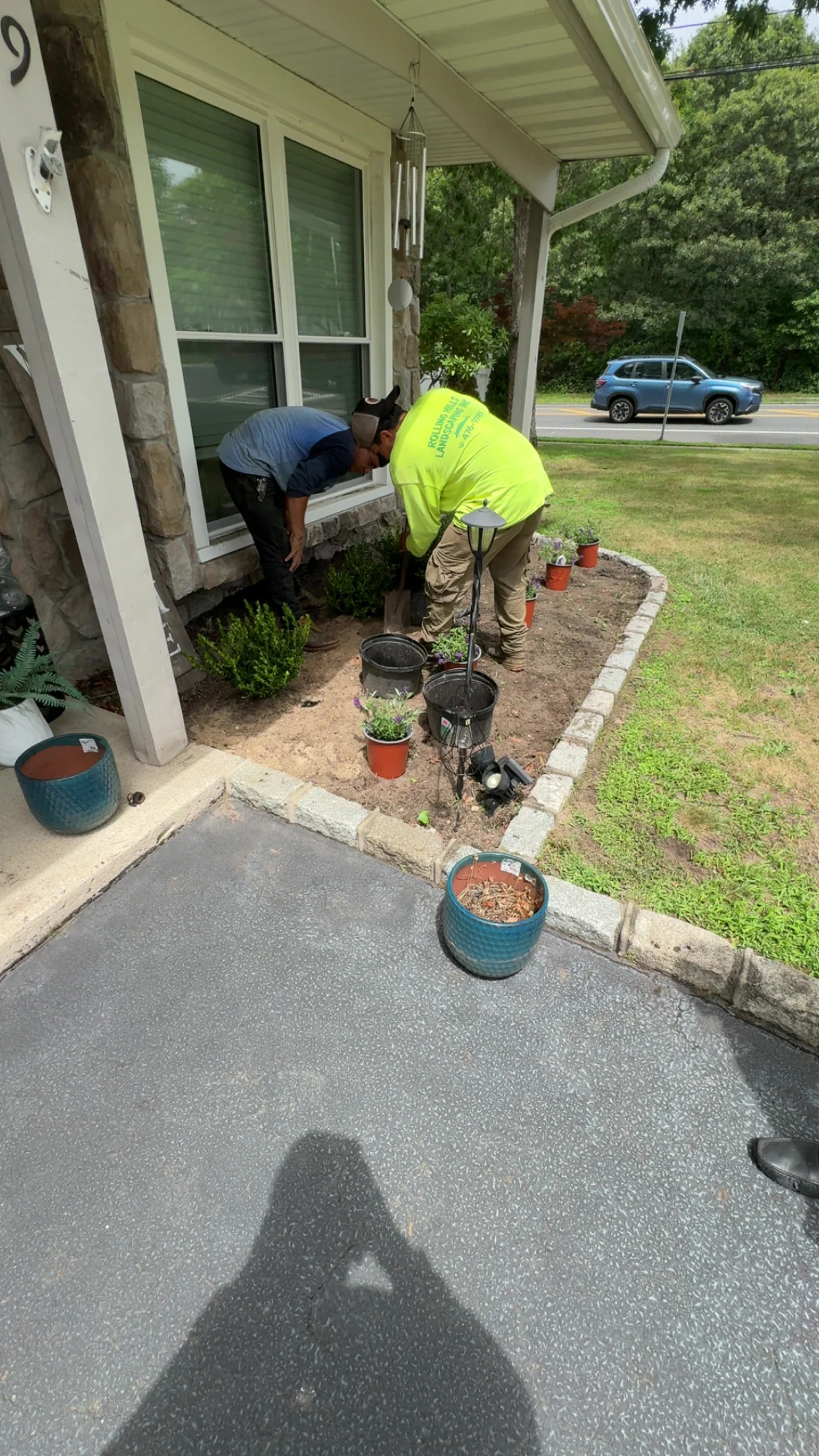
Then comes the hand-pulling. We use shallow-root techniques that remove the weed without disturbing your established plantings. For deeper-rooted invasives like poison ivy or spotted spurge, we extract the entire root system so it doesn’t just grow back in two weeks. This takes longer than using a hoe or spraying chemicals, but it’s the only method that actually protects your perennials.
After removal, we haul away the debris—we’re not leaving piles of weeds on your property to reseed. If you’re also getting mulch service, we apply it after weeding to suppress future germination. We time this based on soil temperature and seasonal cycles, not just whenever it’s convenient.
You get a property that looks maintained, garden beds where your actual plants can thrive, and a clear schedule for ongoing maintenance if you want it. No surprises, no damage to your landscape investments.

Ready to get started?
You’re getting comprehensive garden bed maintenance, not just a quick surface pass. That means hand-pulling of all visible weeds, root extraction for invasive species, and removal of all debris from your property. We’re also dead-heading spent blooms while we work, which encourages healthier growth in your perennials.
For Blue Point properties specifically, we pay attention to coastal challenges. Salt-tolerant plantings still need protection from aggressive weeds, and your sandy soil means weeds establish faster than they would inland. We adjust our approach based on your property’s proximity to the water and what we’re seeing in your specific beds.
Seasonal weeding and mulching services are timed around Suffolk County’s climate. Crabgrass starts its assault when temperatures hit 65-70 degrees consistently—that’s our window for pre-emergent control. Ragweed and spurge peak in summer. Broadleaf weeds make their move in early fall. We’re tracking these cycles so you don’t have to.
If you’re managing multiple properties or just want your home to stand out in the neighborhood, this level of attention makes the difference between “someone mows the lawn” and “that property always looks sharp.”

Most Blue Point properties need weeding every two to three weeks during the growing season, which runs roughly April through October here. That frequency keeps weeds from establishing deep root systems and prevents them from going to seed.
If your property is near the coast, you might need more frequent service early in the season. Salt air and sandy soil create conditions where certain weeds—especially spurge and crabgrass—establish faster. Properties further inland with denser soil can sometimes stretch to three weeks between services.
The honest answer is that it depends on your garden beds’ current condition and what you’re trying to maintain. If weeds have taken over, you’ll need more frequent initial visits to get ahead of the problem. Once your beds are under control, you can often reduce frequency. We’ll tell you what we’re seeing and adjust the schedule based on actual conditions, not just a preset package.
For established garden beds with perennials you want to protect, yes. Hand-pulling removes the entire weed without damaging surrounding plants or leaving chemical residue in your soil.
Herbicides don’t discriminate well. Even “selective” weed killers can stress your perennials, especially in Blue Point’s sandy soil where chemicals leach quickly and unpredictably. You also can’t use most herbicides near desirable plants without risking drift or root uptake. That means you’d still need to hand-pull around your plantings anyway.
The other issue is that many Long Island weeds have developed resistance to common herbicides from overuse. Crabgrass and spurge, two of the most aggressive species here, often require multiple chemical applications—and they still come back. Hand-pulling with proper root extraction actually solves the problem. It’s more labor-intensive, which is why it costs more than spraying, but it’s the only method that protects your landscape investments while actually eliminating the weeds.
Crabgrass is the big one. It thrives in Blue Point’s sandy soil and starts germinating when soil temperatures hit 55 degrees consistently. By mid-summer, it’s everywhere if you haven’t controlled it early.
Spotted spurge is another major problem, especially in coastal areas. It spreads fast, tolerates salt exposure, and produces thousands of seeds per plant. You’ll also see plenty of dandelions, broadleaf plantain, and ragweed throughout the growing season. Poison ivy shows up in more established properties, particularly along fence lines and property edges.
The challenge with Long Island weeds is that they’re adapted to our specific conditions. They handle salt exposure, sandy soil, and summer heat better than many desirable plants. That’s why timing and technique matter—you need to remove them before they establish deep root systems and go to seed. Once they’ve spread, you’re fighting a much harder battle. Most properties we service have a mix of five to eight different weed species competing with their plantings at any given time.
Not if it’s done correctly. That’s the entire point of hand-pulling with shallow-root techniques—we’re removing weeds without disturbing the root systems of your established plantings.
The damage happens when someone uses a hoe aggressively, pulls weeds without checking what’s underneath, or applies herbicides near desirable plants. We’ve seen plenty of properties where a well-intentioned crew ripped out expensive perennials along with the weeds, or where chemical applications burned ornamental grasses and stressed shrubs.
Our approach is to identify what’s staying and what’s going before we start pulling. We’re looking at root depth, checking for perennials that might be dormant or just emerging, and using techniques that extract the weed without creating a crater in your garden bed. For weeds growing directly against your plants, we’re even more careful—sometimes that means leaving a small portion of root rather than risking damage to your perennial. You might need a follow-up pull on that specific weed, but your $50 hosta is still intact.
Most residential properties in Blue Point run between $150 and $400 per visit, depending on the size of your garden beds, current weed density, and how accessible everything is. A quarter-acre property with moderate garden beds typically falls in the $200-250 range for a thorough weeding.
If your beds haven’t been maintained in a while, expect the first visit to cost more. We’re dealing with established weeds, deeper root systems, and more time-intensive extraction. Once we get your property under control, maintenance visits are faster and less expensive.
The math that matters: you’re either spending 4-6 hours every weekend doing this yourself, or you’re paying professionals who have the experience to do it right. Most of our clients calculate what their weekend time is worth and realize that professional weeding services actually save them money when you factor in the physical toll and the time they get back. We’re not the cheapest option—you can always find someone cheaper. But you’re paying for people who won’t damage your perennials, who understand Blue Point’s specific weed challenges, and who show up when they say they will.
Early April, before soil temperatures consistently hit 60 degrees. That’s when you can still get ahead of crabgrass germination and stop early-season weeds before they establish.
Most people wait until their garden beds already look bad—usually late May or June—and then call for help. By that point, weeds have deep root systems and many have already gone to seed. You’re not preventing the problem anymore, you’re in damage control mode. It takes more visits and more intensive work to recover from that situation.
The ideal schedule is an early spring cleanup and weeding in April, then regular maintenance every two to three weeks through October. This keeps weeds from ever establishing, protects your perennials during their peak growing season, and means your property looks maintained instead of neglected. If you’re reading this in summer and your beds are already overgrown, we can still help—it just takes more aggressive initial work to get things back under control. The second-best time to start is right now, before things get worse.
Other Services we provide in Blue Point