Your Suffolk County lawn needs more than mowing to thrive through all four seasons. Discover which seasonal services protect your investment year-round.
Share:
Summary:
Spring is when your lawn wakes up after months of dormancy. But it’s not ready for business as usual.
Think about what just happened. Your grass spent months under snow, ice, and freezing temperatures. Leaves and debris piled up. The ground compacted. And now you’re expecting it to just bounce back and look perfect?
That’s where professional spring cleanup services come in. This isn’t just raking a few leaves. It’s removing everything that accumulated over winter—fallen branches, matted leaves, dead grass—all the stuff that smothers new growth and invites mold. Your lawn can’t breathe with all that sitting on top of it.
Once the debris is gone, your grass needs fuel. Early spring fertilization gives your lawn the nutrients it lost during winter, helping it green up faster and grow stronger before summer heat arrives. But timing matters here—apply too early and you’re feeding weeds instead of grass.
You can’t just pick a date on the calendar and call it fertilizer day. Your lawn doesn’t care that it’s April 1st if the soil is still cold.
Grass needs warm soil to actually use fertilizer. In Suffolk County, soil temperatures typically hit 55°F around mid-April, which is when your grass starts actively growing again. Apply fertilizer before that and it just sits there—or worse, washes away into groundwater.
Here’s what you should be watching for: soil temperature, not air temperature. You can grab an inexpensive soil thermometer and check it yourself, or you can work with us—we already know the timing for Long Island.
The other thing people miss? One spring application isn’t enough for year-round lawn care. Your lawn benefits from 4-6 fertilizer applications throughout the year, each one timed to support different growth stages. Spring fertilization focuses on promoting top growth and recovery after winter. Late spring and summer applications maintain color and vigor using slow-release formulas. Then fall fertilization—arguably the most important one—helps your grass store energy in its roots for winter dormancy and quicker green-up next spring.
Suffolk County actually prohibits lawn fertilizer applications between November 1 and April 1, with $1,000 fines for violations. So you’re not just following best practices here—you’re also staying compliant with local regulations designed to protect water quality.
We track soil temperatures and know exactly when to start. We’re not guessing based on the weather forecast. We’re applying fertilizer when your grass can actually absorb it, which means you’re not wasting money on products that don’t work.
Spring cleanup sounds simple until you realize how much actually needs to happen for your lawn to start the season healthy.
First, you’re removing all the debris that built up over winter. Leaves, sticks, dead grass, whatever blew into your yard during those months when you weren’t paying attention. This stuff doesn’t just look bad—it blocks sunlight and traps moisture against your grass, creating perfect conditions for mold and fungal diseases.
Then there’s the first mow of the season, which is different from your regular summer mowing. You want to cut at a slightly higher setting to encourage strong root development. Cutting too short this early stresses grass that’s still recovering from winter.
Edging comes next. Clean edges along walkways, driveways, and beds make everything look intentional instead of overgrown. It’s one of those details that separates a maintained lawn from one that’s just been mowed.
Some lawns also benefit from dethatching in spring—removing that layer of dead grass and organic matter that builds up between your live grass and the soil. Too much thatch prevents water, air, and nutrients from reaching the roots. If your lawn feels spongy when you walk on it, thatch is probably the problem.
And if you have bare spots or thin areas from winter damage, spring is when you want to address those with overseeding or even lawn sod installation for larger problem areas. Waiting until summer means fighting weeds and heat stress. Spring gives new grass time to establish before the real challenges hit.
For Suffolk County homeowners, spring cleanup also means dealing with salt damage near driveways and walkways. Road salt and ice melt can seriously harm grass. A good spring cleanup identifies these areas and addresses them before they become bigger problems.
Want live answers?
Connect with a Rolling Hills Property Services Inc expert for fast, friendly support.
Your soil gets compacted. It just does. Foot traffic, mowing, weather—all of it presses the soil particles together until there’s barely any room for air, water, or nutrients to reach the roots.
That’s where core aeration comes in. This process pulls small plugs of soil out of your lawn, creating channels that let oxygen, water, and fertilizer actually reach the root zone. It’s not glamorous, but it’s one of the most effective seasonal lawn services you can invest in for long-term health.
Aeration also helps break down thatch, improves drainage in areas that tend to puddle, and gives grassroots room to grow deeper and stronger. Deeper roots mean your lawn handles drought better and bounces back faster from stress—critical for Suffolk County’s humid summers and occasional dry spells.
Fall is typically the best time for lawn aeration in Suffolk County, when soil is still warm but grass is actively growing. Spring aeration works too, especially if your lawn is seriously compacted. You really can’t aerate too much if you’re doing it properly.
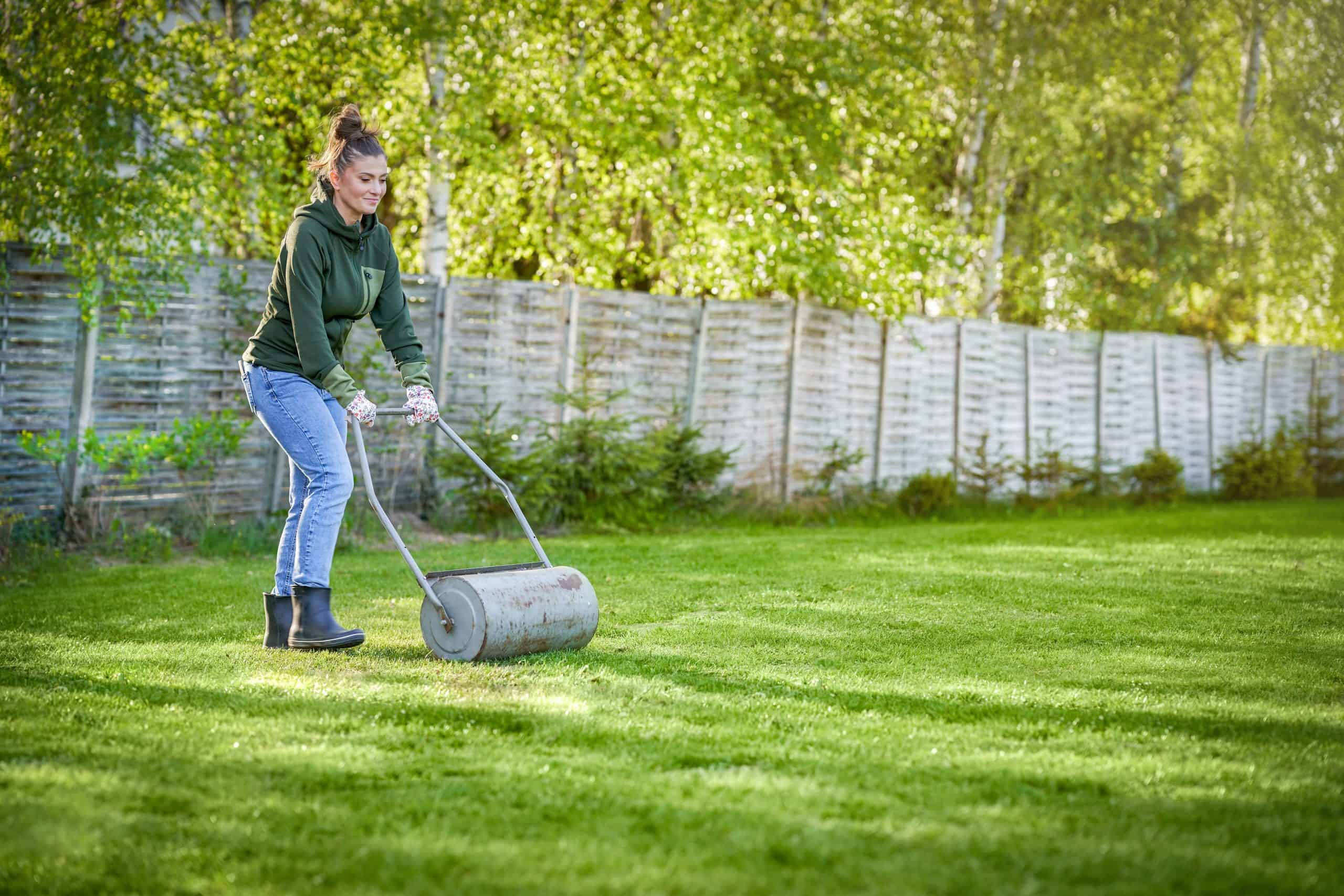
Aeration creates the perfect opportunity for overseeding—spreading grass seed over your existing lawn to fill in thin areas and increase density.
Here’s why the timing matters: those holes from aeration give seeds direct contact with soil, which dramatically improves germination rates. Seeds that just sit on top of compacted ground often don’t germinate at all. But seeds that fall into aeration holes? They’re already where they need to be.
Overseeding also helps you introduce newer grass varieties that are more disease-resistant, drought-tolerant, or shade-adapted than whatever you currently have. Lawns don’t stay the same forever. Older grass varieties struggle with pests and diseases that newer varieties handle easily.
For Suffolk County lawns, cool-season grasses like tall fescue, Kentucky bluegrass, and perennial ryegrass work best. These varieties thrive in our climate and handle the temperature swings from hot summers to cold winters. Tall fescue is particularly popular because it’s drought-resistant and adapts well to varying soil conditions—important when you’re dealing with Long Island’s sandy, fast-draining soil.
The key to successful overseeding is keeping the soil consistently moist for the first few weeks. Seeds need moisture to germinate, but they don’t need to be drowned. Light, frequent watering works better than heavy, infrequent soaking during this period.
You’ll also want to avoid heavy foot traffic on newly seeded areas. Those seedlings are fragile. Give them time to establish before letting kids, pets, or lawn equipment back on those spots.
We often combine aeration and overseeding into one service because it’s more efficient and gets better results. We’re using commercial-grade equipment that penetrates deeper than rental aerators, and we’re applying seed at the right rate for your specific grass type and soil conditions.
Not every lawn needs aeration every year, but most Suffolk County lawns benefit from it at least every 2-3 years. Some need it annually.
Clay soils compact more easily than sandy soils, so if you have areas with heavy clay content, annual aeration makes sense. High-traffic areas—think the path from your driveway to your front door, or where kids play in the backyard—also compact faster and benefit from more frequent aeration.
You’ll know your lawn needs aeration if water tends to puddle instead of soaking in, if the soil feels hard when you try to push a screwdriver into it, or if your grass just looks thin and weak despite regular fertilization and watering. Compacted soil literally suffocates grassroots.
Timing matters here too. For cool-season grasses like the ones common in Suffolk County, early fall is ideal—typically September. Soil temperatures are still warm enough to encourage root growth, but you’re past the heat stress of summer. Spring aeration works too, especially for lawns with serious compaction issues, but fall gives you better results because you’re not competing with summer heat and drought stress.
The actual aeration process pulls plugs of soil about 2-3 inches deep and 2-4 inches apart. Those plugs can stay on the lawn—they’ll break down naturally and return nutrients to the soil. Some people prefer to rake them up or run them over with a mower to speed up the breakdown process.
After aeration, your lawn might look a little rough for a week or two. That’s normal. Those holes will fill in as grass grows, and you’ll start seeing the benefits within a few weeks—better water absorption, healthier color, thicker growth.
Professional aeration equipment covers large areas efficiently and penetrates deeper than the aerator shoes or manual tools you might try yourself. It’s one of those seasonal services where the professional results are noticeably better than DIY, especially on larger properties.
Your lawn doesn’t need every service every year, but it does need the right services at the right times. That’s what separates lawns that look good occasionally from lawns that stay healthy year-round.
Spring cleanup and fertilization set the foundation. Aeration and overseeding build density and strength. Fall fertilization prepares your grass for winter and next spring’s green-up. And when you need it, professional lawn sod installation can transform problem areas that seeding just can’t fix.
The difference between doing this yourself and working with professionals often comes down to timing and local knowledge. Suffolk County’s sandy soil, salt air, temperature swings, and humidity create specific challenges that generic lawn care advice doesn’t address. We understand these challenges because we’re based right here in Smithtown, serving neighbors throughout Suffolk County with comprehensive seasonal lawn services that actually work.
Article details:
Share:
Continue learning: