
Most Suffolk County homeowners don't realize their concrete driveway needs permits until code enforcement shows up. Here's what you need to know before you pour.
Share:
Summary:
You’re ready to replace that cracked driveway. You’ve got quotes, picked your contractor, and cleared your schedule. But there’s one thing most Suffolk County homeowners forget until it’s too late: permits.
The Suffolk County Department of Public Works has specific requirements for concrete driveways that touch county right-of-way. Miss one, and you’re looking at stop-work orders, fines, or ripping out fresh concrete to start over. Worse? Your neighbor files a complaint because your new driveway sends water flooding into their yard.
Here’s what you actually need to know about concrete driveway permits in Suffolk County—and the three mistakes that cost homeowners thousands.
Not every concrete driveway needs a permit in Suffolk County, but most do. If your driveway connects to a county road or requires work within the county right-of-way, you need a Highway Work Permit before anyone pours concrete.
The county follows NYSDOT specifications, which means your driveway apron needs 6 inches of Class D concrete reinforced with wire mesh. Your contractor needs to submit stamped plans showing drainage, property lines, existing utilities, and how water will move across the surface. These aren’t suggestions. They’re requirements that get checked during inspection.
Here’s what trips people up: Suffolk County requires proof of liability insurance, sometimes up to $2 million for commercial work or $1 million for residential projects. Your contractor should handle this, but if they don’t, you’re responsible. The permit application needs to go in at least 14 business days before work starts, and the county charges fees based on project scope.

Some homeowners figure they’ll skip the permit and hope nobody notices. That works until it doesn’t.
Suffolk County code enforcement doesn’t mess around. If they catch unpermitted work, they issue a stop-work order. Your contractor walks off the job. The concrete you just paid for? It might need to come out if it doesn’t meet code. You’re looking at demolition costs, disposal fees, and starting over—this time with permits.
But the real problem isn’t the county. It’s your neighbors.
When your driveway sends stormwater onto their property because nobody planned proper drainage, they call the town. Now you’re dealing with violations, potential lawsuits, and the cost of fixing drainage you should have addressed during installation. Long Island gets serious rain. Our coastal storms dump inches in hours. If your driveway doesn’t have proper grading and drainage channels, that water goes somewhere—usually your neighbor’s foundation or basement.
The permit process forces you to plan for this. The county reviews your drainage design. They make sure water flows toward the street or approved drainage systems, not onto adjacent properties. Skip the permit, and you skip this protection. You might save a few hundred dollars upfront, but you risk thousands in corrections later.
And here’s something most people don’t know: unpermitted work can affect your home sale. Title companies and buyers’ attorneys ask about permits during closing. If your driveway work wasn’t permitted, you might need to retroactively permit it, prove it meets code, or offer credits to the buyer. Some deals fall apart over this exact issue.
Getting a Highway Work Permit isn’t complicated if you know what the county wants. Start by contacting the Suffolk County Department of Public Works Permit Section at least three weeks before you want to pour concrete. You’ll need stamped construction plans from a licensed professional showing your driveway layout, drainage design, and how it connects to the county road.
Your plans need to include property lines, existing utilities, edge of pavement measurements, and proposed grading. The county wants to see where water goes. They need to know you’re not creating drainage problems for neighbors or county infrastructure. If you’re replacing an existing driveway, your plans should show what’s being removed and how the new installation differs.
Insurance documentation goes with your application. Your contractor should carry commercial general liability coverage with Suffolk County listed as additional insured. For residential driveways, the county often accepts $1 million in coverage. Commercial projects need $2 million. Your contractor handles this, but verify they actually have it before work starts.
The permit fee varies based on project scope. Budget for it upfront. Some contractors include permit costs in their quotes. Others charge separately. Ask before you sign anything.
Once submitted, the county reviews your application. They check for code compliance, drainage adequacy, and whether your design meets NYSDOT specifications. If something’s wrong, they’ll tell you what needs fixing. Make the changes, resubmit, and wait for approval. Don’t start work until you have the actual permit in hand.
During construction, the county may inspect. They verify the concrete mix, check reinforcement placement, and confirm drainage installation matches approved plans. If you’re working with a reputable contractor who knows Suffolk County requirements, inspections go smoothly. If your contractor cuts corners, inspections catch it—and you pay to fix it.
Want live answers?
Connect with a Rolling Hills Property Services Inc expert for fast, friendly support.
Some homeowners consider DIY concrete driveway installation to save money. For Suffolk County properties, that’s usually a mistake.
Concrete work requires specific knowledge of local soil conditions, drainage requirements, and building codes. Long Island’s sandy soil and high water table create challenges that don’t exist in other regions. Pour concrete without understanding how groundwater behaves here, and you’ll deal with settling, cracking, or drainage failures within a few years.
Professional concrete driveway contractors in Suffolk County know NYSDOT specifications, permit requirements, and how to design drainage that works with our coastal climate. We understand that our freeze-thaw cycles demand proper expansion joints, that salt air requires specific concrete mixes, and that our soil needs deeper excavation and better base preparation than inland areas.
Suffolk County sits on sandy, porous soil that drains quickly under normal conditions. Sounds good until you realize what that means for concrete driveways.
Sandy soil doesn’t provide the same stable support as clay. It shifts. It settles. It moves with groundwater fluctuations and heavy rain. Professional contractors compensate by excavating deeper, using specific aggregate gradations that lock together under compaction, and creating a base that won’t shift over time.
The high water table makes this worse. In many Suffolk County neighborhoods, groundwater sits just a few feet below the surface. After storms or snowmelt, it rises and pushes against your driveway from below. Without proper drainage design, that pressure causes heaving, cracking, or complete failure of the concrete slab.
Long Island’s coastal location adds another layer of complexity. We get salt air exposure that accelerates concrete weathering. We face storm surges that temporarily elevate groundwater levels. We deal with freeze-thaw cycles that crack concrete if expansion joints aren’t properly placed. These conditions demand professional installation that accounts for environmental factors DIY guides don’t mention.
Contractors familiar with Suffolk County know how to handle these challenges. We use concrete mixes designed for coastal exposure. We install drainage systems that manage high water tables. We create expansion joints that let concrete move with temperature changes without cracking. We understand that what works in other parts of the country fails here within a few years.
Professional concrete driveway installation in Suffolk County starts long before anyone pours concrete. We evaluate your property’s soil conditions, drainage patterns, and grade requirements. We design solutions specific to Long Island’s environmental challenges.
Site preparation includes excavation to proper depth, removal of unstable soil, and installation of a compacted aggregate base. For Suffolk County’s sandy soil, this usually means going deeper than standard specifications and using materials that create stable support even when groundwater rises. The base gets compacted in layers, not all at once, to ensure density that prevents future settling.
Drainage design happens during this phase. We grade the site to direct water away from your foundation and neighboring properties. We install edge drains when needed, create proper slope for surface runoff, and ensure water has somewhere to go during heavy storms. This prevents the drainage disputes that plague homeowners who skip professional installation.
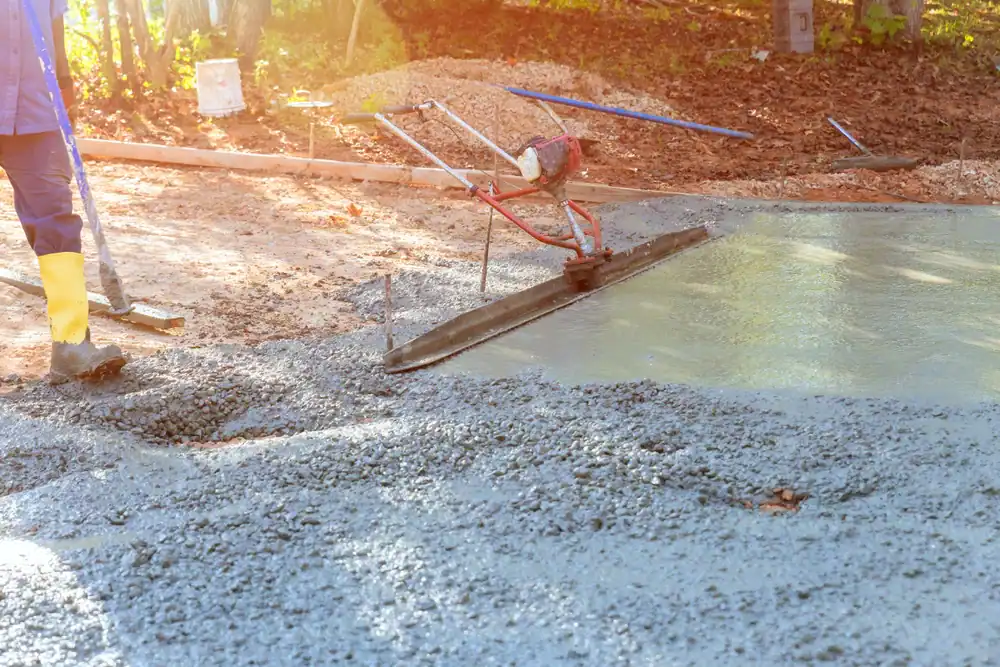
Concrete placement follows NYSDOT specifications required by Suffolk County. That means 6-inch Class D concrete for driveway aprons, wire mesh reinforcement, and proper curing procedures. We know the concrete needs minimum 28-day compressive strength of 3000 PSI. We understand that pouring during extreme temperatures compromises strength and leads to premature failure.
Expansion joints get placed strategically to prevent cracking. In Suffolk County’s climate, these joints aren’t optional. Temperature swings from below freezing to 80 degrees create expansion and contraction that cracks concrete without joints to absorb movement. Professional contractors know where joints go and how to install them so they work.
Finishing includes proper surface texture for traction, appropriate curing time before use, and cleanup that leaves your property in better condition than when work started. We also handle permit closeout, final inspections, and documentation you might need for future home sales.
Concrete driveway installation in Suffolk County isn’t just about pouring concrete. It’s about navigating permits, designing drainage that prevents neighbor disputes, and understanding local soil conditions that make or break your investment.
The three biggest mistakes—skipping permits, ignoring drainage requirements, and attempting DIY installation without local expertise—cost homeowners thousands in corrections, violations, and premature failure. Professional contractors who know Suffolk County requirements help you avoid these problems before they start.
Your driveway should last 30 to 40 years with proper installation. That only happens when permits are pulled correctly, drainage is designed for Long Island’s high water table and coastal storms, and installation follows NYSDOT specifications the county actually enforces. We bring local Suffolk County expertise to every concrete project, handling permits, drainage design, and professional installation that protects your investment for decades.
Article details:
Share:
Continue learning: