Concrete polishing technology is evolving fast in 2026, with eco-friendly solutions and innovative driveway materials transforming how Long Island homeowners approach property upgrades.
Share:
Summary:
Your driveway takes more abuse than almost any surface on your property. Between Long Island’s freeze-thaw cycles, coastal humidity, and the weight of vehicles day after day, what you choose now determines whether you’re looking at decades of reliable service or constant repairs.
The concrete and driveway industry is shifting in 2026. New polishing technologies, eco-friendly materials, and climate-specific solutions are giving Suffolk County homeowners better options than the standard “asphalt or concrete” decision. Some of these trends genuinely improve performance in our climate. Others are designed for conditions we don’t have here.
This breakdown covers what’s actually relevant for Long Island properties, what the real costs look like, and which trends are worth your attention versus which ones you can skip.
The concrete polishing market grew from $3.30 billion in 2025 to $3.60 billion in 2026, and that growth reflects real changes in how the material gets processed and applied. New densifiers and sealers are improving how polished concrete handles moisture. Mechanized equipment is making the process more consistent. Digital visualization tools let you see what the finished surface will look like before work starts.
For driveways specifically, the shift is toward materials that balance durability with lower environmental impact. Suffolk County’s environmental regulations are getting stricter, and homeowners are asking more questions about sustainability. That’s pushing the industry toward solutions that work with local climate instead of fighting it.
The other big change is how people think about upfront cost versus total cost of ownership. A cheaper installation that fails in five years costs more than a premium installation that lasts 30. More property owners are running those numbers before they commit.
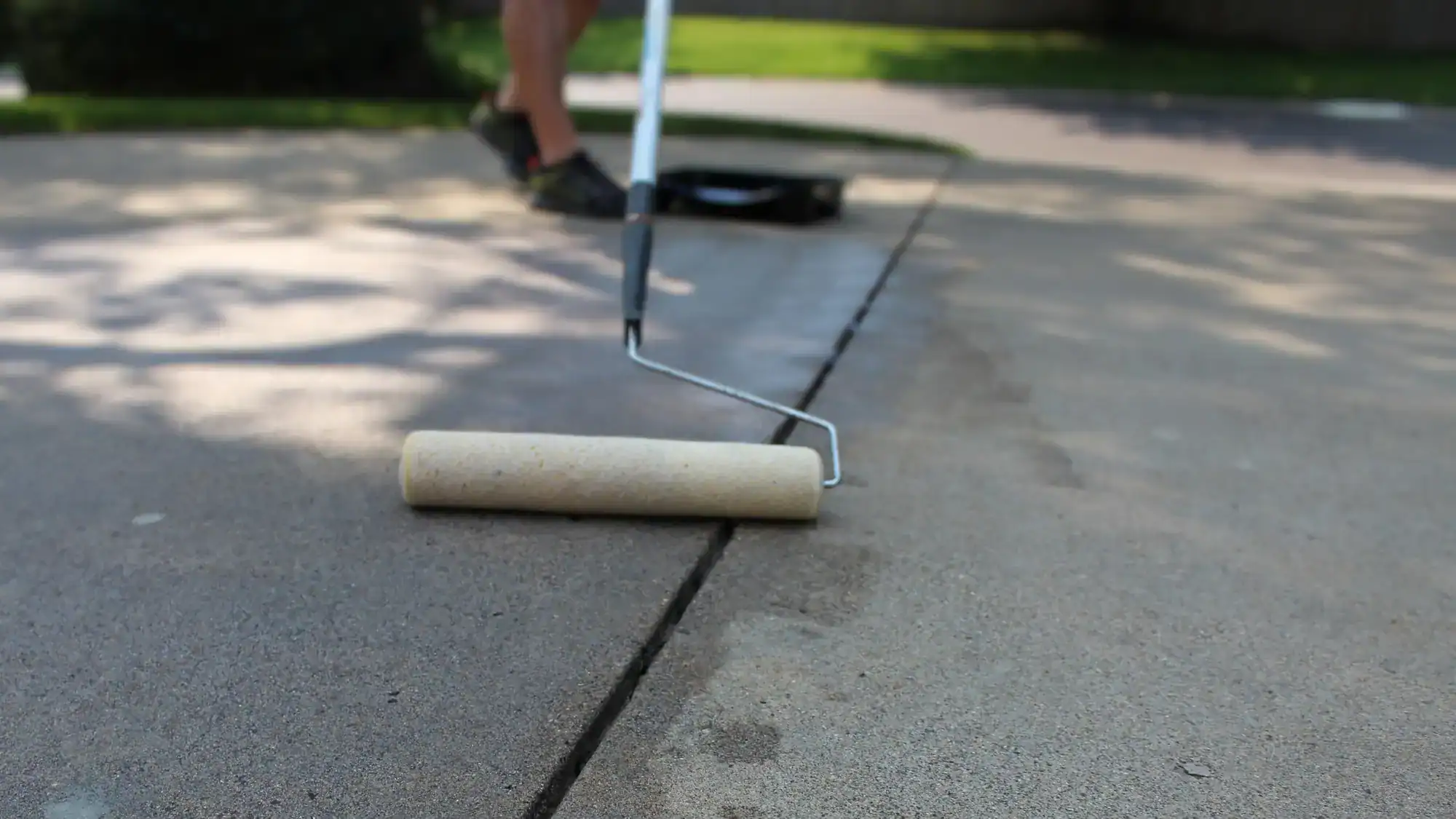
Polished concrete isn’t new, but the technology behind it keeps improving. The 2026 versions use lithium or sodium silicate densifiers that penetrate deeper into the slab, creating a harder, more water-resistant surface. These chemical treatments actually change the concrete’s structure at a molecular level, tightening it enough to keep water, oil, and other contaminants from soaking in.
The grinding process itself has gotten more precise. Modern diamond polishing pads come in progressively finer grits, and the equipment can now measure surface hardness in real time. That means contractors can adjust their approach based on your specific slab instead of following a one-size-fits-all process.
Dustless systems with HEPA filtration are becoming standard rather than optional. This matters for indoor applications, but it also reflects the industry’s focus on operator safety and environmental responsibility. The equipment costs more upfront, but it produces cleaner results and complies with tightening regulations around silica dust exposure.
For Long Island properties, these advances translate to surfaces that handle freeze-thaw cycles better. A properly densified and polished concrete floor or driveway has fewer pores for water to penetrate. When water can’t get in, it can’t freeze and expand. That’s the difference between a surface that cracks after one winter and one that lasts decades.
The finish levels matter too. Concrete polished to 800 grit looks good. Polished to 1500 or 3000 grit, it takes on a high-gloss appearance that reflects light and makes spaces feel larger. For driveways, that reflectivity means snow and ice melt faster in winter. For indoor floors, it can reduce lighting costs by up to 30 percent.
Color options have expanded beyond gray. Dyes designed specifically for polished concrete let you match the surface to your home’s exterior or create contrast with landscaping. These aren’t surface treatments that wear off. The color penetrates into the concrete, so it lasts as long as the slab itself.
The environmental conversation around driveways has shifted from “is this recyclable” to “what’s the total lifecycle impact.” Concrete production has a significant carbon footprint because of the cement manufacturing process, but the material lasts 30 to 50 years. Asphalt is petroleum-based, which raises concerns during production, but it’s one of the most recycled materials in America.
For Suffolk County specifically, the question becomes which material handles our climate with the least environmental cost over its full lifespan. Asphalt needs resealing every two to three years to prevent water penetration and oxidation. Each resealing application uses chemical sealers that eventually wash into storm drains. Over a 30-year period, that’s 10 to 15 separate applications.
Concrete driveways, when properly installed, need sealing far less frequently. Some high-quality installations go years without any treatment beyond occasional cleaning. That reduced maintenance means fewer chemicals introduced into the environment and less frequent contractor visits burning fuel to get to your property.
Permeable pavers and eco-friendly concrete mixes are gaining traction as middle-ground solutions. Permeable systems allow water to drain through the surface into the ground below, reducing runoff and helping recharge groundwater. Suffolk County’s regulations around stormwater management make these options increasingly attractive, especially for larger properties or areas near wetlands.
Recycled concrete aggregate is another trend worth watching. Crushed concrete from demolished structures gets reused as base material or mixed into new concrete. This reduces demand for virgin materials and keeps demolition waste out of landfills. Long Island suppliers are starting to offer these recycled options, though availability varies.
The cost difference between eco-friendly and traditional options is narrowing. Permeable pavers used to cost significantly more than standard concrete, but as demand increases and installation methods improve, the gap is closing. For some applications, the long-term savings from reduced stormwater fees or improved drainage actually make the eco-friendly option cheaper over time.
One thing to watch: not all “eco-friendly” materials perform equally in freeze-thaw climates. Some permeable systems that work beautifully in warmer regions struggle when water freezes in the voids. If you’re considering sustainable options for a Suffolk County property, make sure your contractor has experience with how those materials perform through Long Island winters.
Want live answers?
Connect with a Rolling Hills Property Services Inc expert for fast, friendly support.
Long Island’s climate creates specific challenges that most national driveway trends don’t account for. Temperatures hover around freezing for extended periods during winter, creating more freeze-thaw cycles than regions with sustained cold. Coastal humidity keeps moisture levels high. Sandy soil shifts more than clay-heavy soils in other parts of the country.
These conditions mean that material choice matters more here than in many other markets. A driveway solution that works perfectly in Arizona or even upstate New York might fail within years on Long Island. The trends worth paying attention to in 2026 are the ones that specifically address our climate challenges.
Concrete is gaining ground over asphalt for Long Island driveways, but not for the reasons most homeowners expect. The appeal isn’t just aesthetics or longevity. It’s that properly installed concrete with adequate base preparation and control joints manages freeze-thaw stress better than flexible materials in our specific temperature patterns.

The cost conversation around driveways usually starts and ends with installation price per square foot. Asphalt runs $5 to $8 per square foot in Suffolk County. Concrete costs $8 to $12. Polished concrete for driveways can range from $4 to $24 per square foot depending on the finish level and existing slab condition.
Those numbers tell an incomplete story. Asphalt needs resealing every two to three years at $300 to $600 per application for an average driveway. Over 20 years, that’s $2,000 to $6,000 in maintenance costs. Most asphalt driveways also need at least one major repair or overlay during that timeframe, adding another $2,000 to $5,000.
Concrete’s maintenance costs run lower in terms of frequency. You should seal concrete every two to three years, similar to asphalt, but when repairs are needed, they cost more per square foot. The difference is that properly installed concrete needs repairs far less often. A well-maintained concrete driveway can go 30 to 50 years before replacement becomes necessary.
Polished concrete sits in an interesting middle ground. If you’re starting with an existing concrete slab in decent condition, polishing it costs less than replacement with any material. The process involves grinding down the surface, applying densifiers, and polishing to the desired finish level. For a driveway that’s structurally sound but looks dated or stained, this can be the most cost-effective option.
The return on investment matters too. Industry data suggests concrete driveways can increase property value by 5 to 10 percent. For a $400,000 home, that’s $20,000 to $40,000 in added value. Homes with quality driveways also sell 7 to 10 days faster than comparable properties with deteriorating surfaces. That faster sale timeline can save thousands in carrying costs if you’re trying to move.
For Suffolk County specifically, factor in the climate impact on costs. An asphalt driveway that lasts 20 years in a mild climate might only last 15 here because of our freeze-thaw cycles. Concrete that’s improperly installed will crack within a few winters. The cheapest option becomes expensive fast if it fails prematurely.
Asphalt remains popular in Suffolk County for legitimate reasons. It flexes with temperature changes instead of cracking like rigid materials. That flexibility matters when temperatures swing from below freezing to above 50 degrees in a single day during spring and fall. The material can expand and contract without catastrophic failure, especially when it’s properly sealed.
The dark color offers a practical advantage in winter. Asphalt absorbs solar heat, which helps snow and ice melt faster than on lighter-colored surfaces. For homeowners who want to minimize shoveling and salt use, that’s a real benefit. The smooth surface also makes snow removal easier when you do need to clear it.
But asphalt has vulnerabilities in our climate. It softens in extreme summer heat, which can lead to tire marks and surface deformation if heavy vehicles park in the same spot repeatedly. The cycle of softening in heat and then rehardening when temperatures drop creates stress that eventually shows up as cracks or surface degradation.
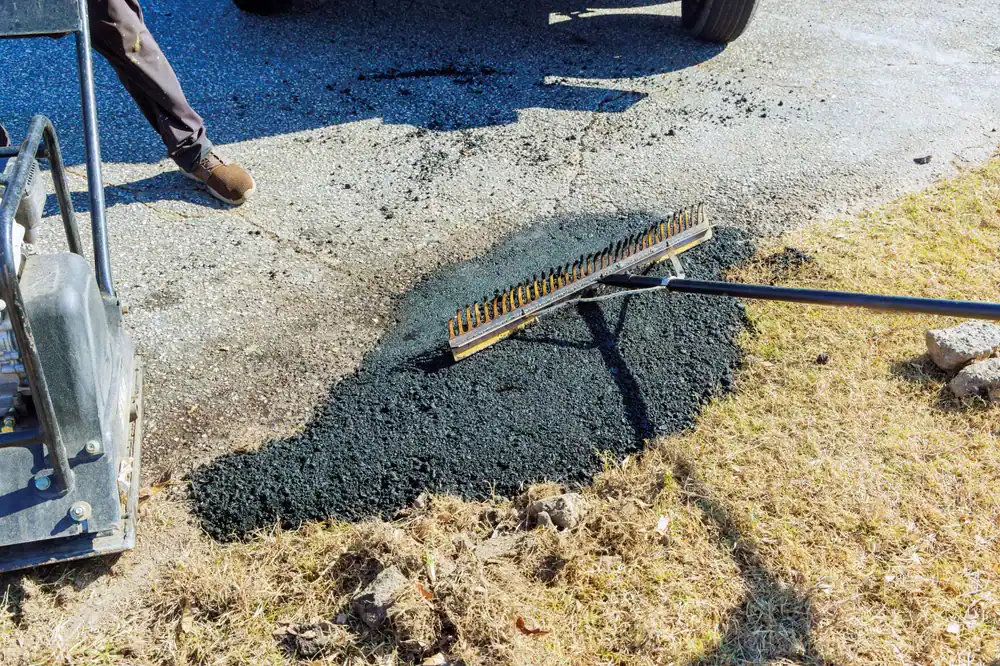
Water penetration is the bigger long-term issue. Unsealed asphalt is porous enough for water to seep in. When that water freezes, it expands, creating small cracks. Those cracks let in more water, which freezes and expands further. Within a few years, you’re looking at potholes and alligator cracking that require patching or resurfacing.
Proper maintenance extends asphalt’s lifespan significantly. Sealcoating every two to three years creates a protective barrier against water, UV damage, and oxidation. The sealant fills small cracks before they become big problems. It also restores the dark color that helps with snow melt.
The challenge is that maintenance has to happen on schedule. Skip a few years of sealcoating and the damage accelerates. By the time you notice the problem, you’re often looking at repairs that cost more than the preventive maintenance would have.
For Suffolk County properties, asphalt makes sense when you’re willing to commit to regular maintenance and you value the lower upfront cost. It’s a proven material that works in our climate when properly cared for. Just understand that “properly cared for” means consistent attention, not occasional fixes when problems become obvious.
The trends in concrete polishing and driveway materials for 2026 offer genuine improvements over what was available even a few years ago. Better densifiers, more durable sealers, and installation techniques designed for freeze-thaw climates give Long Island homeowners options that actually last.
The decision comes down to understanding your specific situation. If you have an existing concrete slab in decent structural condition, polishing it can deliver a high-end look for less than replacement would cost. If you’re starting from scratch, the choice between concrete and asphalt depends on your budget, maintenance willingness, and how long you plan to stay in the property.
What matters most is working with contractors who understand Suffolk County’s climate and soil conditions. The best material installed incorrectly will fail. A less expensive material installed properly by someone who knows Long Island’s challenges will outperform it every time. At Rolling Hills Property Services Inc., we bring that local expertise to every project, ensuring your driveway investment delivers the performance and longevity you’re paying for.
Article details:
Share:
Continue learning: